Search Results for "mukbang khỉ đầu chó" – Page 3
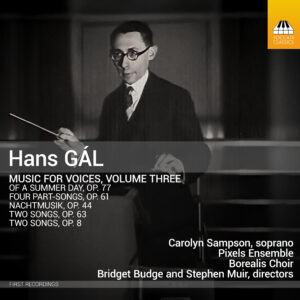
Hans Gál: Music for Voices, Volume Three
Whether in his original home of Vienna, as a conservatoire director in Mainz, or as an émigré in Edinburgh, where he became one of the mainstays of musical life, Hans Gál (1890–1987) championed choral singing as a way of directly involving people in making music: he founded and conducted a number of choirs and provided an extensive output of choral compositions. This third album of his choral music offers a vivid cross-section of music for chamber choir, featuring mixed voices, women’s voices and male-voice choir, a cappella, with solo soprano, with piano and with chamber accompaniment.
Carolyn Sampson, soprano
Pixels Ensemble
Borealis Choir
Bridget Budge, director
Stephen Muir, director
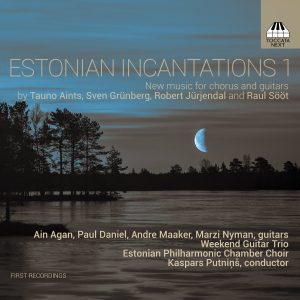
Estonian Incantations 1
This remarkable recording explores an unsuspected soundworld – that of guitars, electric and acoustic, and chorus – in new works by four contemporary Estonian composers, whose styles range from the primitivism of ancient Estonian magical incantations via plainsong-like meditation to electronic sampling.
Marzi Nyman, guitar (Tracks 1 – 2, 6)
Andre Maaker, seven-string acoustic guitar (Tracks 3, 6)
Weekend Guitar Trio (Tracks 4, 6)
Ain Agan, fretless guitar (Tracks 5, 6)
Paul Daniel, electric guitar (Tracks 5, 6)
Annika Lõhmus, vocal (Track 5)
Estonian Philharmonic Chamber Choir
Kaspars Putniņš, conductor
Robert Jürjendal, electric guitar, electronics
Tõnis Leemets, electric guitar, electronics
Mart Soo, electric guitar, electronics
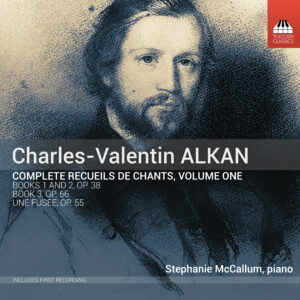
Charles-Valentin Alkan: Complete Recueils de Chants, Volume One
The wild originality of Charles-Valentin Alkan was little appreciated during his lifetime (1813-88), nor during the century which followed, when he was largely lost from sight. But now Alkan is increasingly recognised as one of the most individual personalities in all music. The five albums he called Recueils de chants — miniature tone-poems which marry Classical constraint to virtuoso Romantic excess — provide an attractive gateway to his freewheeling imagination.
Stephanie McCallum, piano
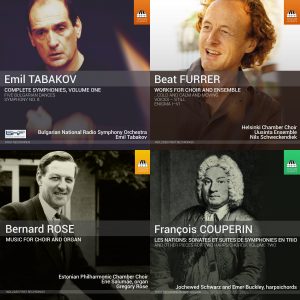
August 2016 Bundle
Included in this bundle:
- Emil Tabakov: Complete Symphonies, Volume One
- Beat Furrer: Works for Choir and Ensemble
- Bernard Rose: Music for Choir and Organ
- François Couperin: Music for Two Harpsichords, Volume Two
*TOCC0258 Not Available in HDWAV format and not included in that bundle
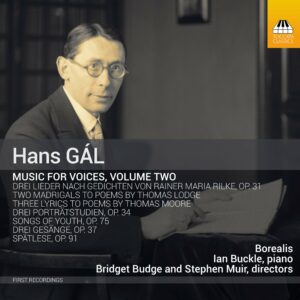
Hans Gál: Music for Voices, Volume Two
Whether in his original home of Vienna, as a conservatoire director in Germany, or as an émigré in Edinburgh, where he became one of the mainstays of musical life, Hans Gál (1890–1987) championed choral singing as a way of directly involving people in making music: he founded and conducted a number of choirs and provided an extensive output of choral compositions. This second album of Gál’s choral music offers a vivid cross-section of his music for chamber choir, featuring mixed voices, women’s voices and male-voice choir, both a cappella and with piano, and ranging across four decades
Borealis
Ian Buckle, piano (Tracks 1–3, 15–17, 23–25)
Bridget Budge, director (Tracks 1–17, 23–25)
Stephen Muir, director (Tracks 18–22)
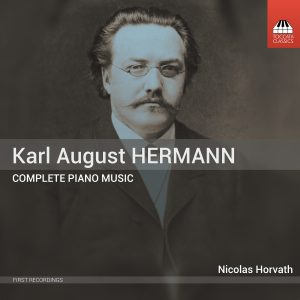
Karl August Hermann: Complete Piano Music
Linguist, journalist, composer, choir-leader, songwriter, historian, literary philologist and encyclopaedist, Karl August Hermann (1851–1909) has long been recognised as one of the founder-figures of Estonian national awakening in the second half of the nineteenth century. But in spite of his cultural and historical significance, his output of piano pieces has been overlooked until now. This first recording reveals them to be charming miniatures, blending echoes of Chopin and Grieg with the essence of Estonian folksong.
Nicolas Horvath, piano
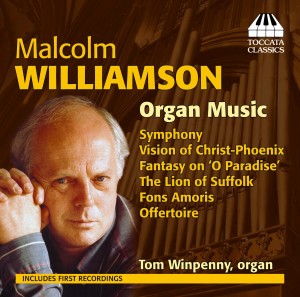
Malcolm Williamson: Organ Music
Malcolm Williamson (1931-2003), Master of the Queen's Music from 1975 until his death, was a gifted pianist and organist as well as a prolific composer. His music, which began to make an impact soon after his arrival in Britain from Australia in 1953, naturally includes a substantial number of works for the organ, among them the monumental Symphony of 1960. His writing for organ is strikingly powerful in its originality and its eclectic mix of styles, ranging from lyrical introspection to dazzling virtuosity.
Tom Winpenny, organ
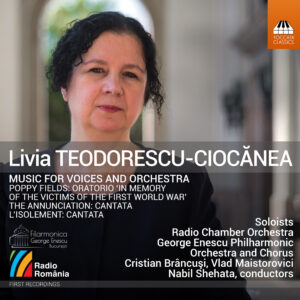
Livia Teodorescu-Ciocănea: Music for Voices and Orchestra
The composer and pianist Livia Teodorescu-Ciocănea, born in Galați, eastern Romania, in 1959, brings together ancient and modern in her music: echoes of the modal sounds of Romanian folk-music blend with considerations of timbre to generate a palette of colours that is both contemporary and ageless. All three works here use the voice – solo and in chorus – to touch on aspects of the human condition, suggesting both drama and ritual.
George Enescu Philharmonic Orchestra & Chorus
Radio Chamber Orchestra
Iosif Ion Prunner, chorus master
Cristian Brâncuși
Vlad Maistorovici
Nabil Shehata
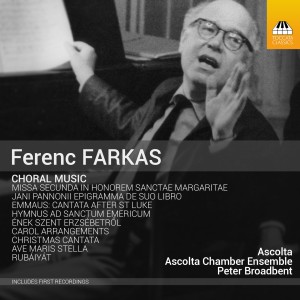
Ferenc Farkas: Choral Music
Toccata Classics continues its exploration of the music of the Hungarian composer Ferenc Farkas (1905–2000) with this selection from his huge output of choral music, ranging in mood from the folklike simplicity of the Missa Secunda in honorem Sanctae Margaritae and his bright carol settings via the asperity of some late a cappella pieces to the fresh and buoyant Christmas Cantata. This recording is also the first by the new London-based chamber choir Ascolta.
Ascolta; Ascolta Chamber Ensemble; Peter Broadbent, conductor;
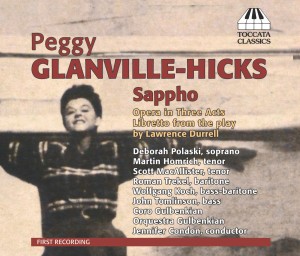
Peggy Glanville-Hicks: Sappho
Sappho, the last grand opera of Australian composer Peggy Glanville-Hicks (1912-90), was written in her stone cottage on Mykonos in 1963. Never heard before this recording, Sappho reflects Glanville-Hicks' fascination with the orient and folk music, encapturing the colours of ancient Greece, with a heroic brass fanfare and epic writing for chorus, haunting woodwind solos and shimmering percussion evoking the stillness of crystal island waters. Deborah Polaski, who creates the role of the disenchanted Sappho, describes it as 'the kind of music that singers want to sing'. The libretto, based on Lawrence Durrell's verse-play, incorporates fragments of Sappho's own verse.
Deborah Polaski, soprano: Sappho
Martin Homrich, tenor: Phaon
Scott MacAllister, tenor: Pittakos
Roman Trekel, baritone: Diomedes
Wolfgang Koch, bass-baritone: Minos
Sir John Tomlinson, bass: Kreon
Jacquelyn Wagner, soprano: Chloe/Priestess
Bettina Jensen, soprano: Joy
Maria Markina, mezzo soprano: Doris
Laurence Meikle, baritone Alexandrian
Coro Gulbenkian, choir
Orquestra Gulbenkian, orchestra
Jennifer Condon, conductor
Double Disc!
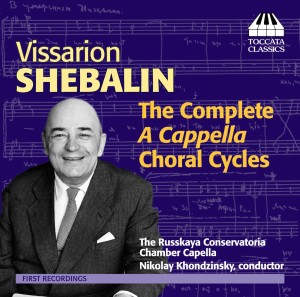
Vissarion Shebalin: The Complete A Cappella Choral Cycles
The Siberian-born Vissarion Shebalin (1902-63) is best known for his instrumental music, which includes five symphonies and nine string quartets, some of which have been heard on CD, but this is the first recording of the eight delightful, and very Russian, choral cycles he wrote from 1949. Shebalin had to endure much hardship: along with Shostakovich, a close friend and colleague, he was one of the composers condemned in the infamous 1948 Party congress in Moscow; and in later life he fought to overcome a series of crippling strokes. These tribulations he faced with understated but unshakable optimism, as these touching choruses reveal.
Russkaya Conservatoria Chamber Capella, choir
Nikolay Khondzinsky, conductor
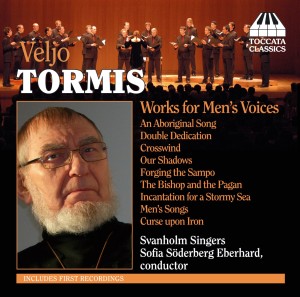
Veljo Tormis: Works for Men’s Voices
The Estonian composer Veljo Tormis (born in 1930) has carved a unique position for himself in contemporary music. By marrying the quasi-minimalist rhythmic vigour of Estonian runic singing – a tradition some 3,000 years old – with the extended techniques of modern choral writing, he has created a body of music tingling with excitement, energy and power. Many of the works on this CD – where the composer, playing shaman drum and anvil, joins one of Scandinavia’s brightest young choirs – draw on folk sources in a reaffirmation of Estonian identity; others evoke the forces of nature as a metaphor for political upheaval.
Svanholm Singers, choir
Sofia Söderberg Eberhard, conductor
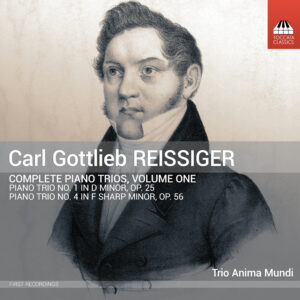
Carl Gottlieb Reissiger: Complete Piano Trios, Volume One
In his day the now-forgotten Carl Gottlieb Reissiger (1798–1859) was highly esteemed, both as conductor and composer; indeed, his presence in Dresden from 1826 made it one of the main operatic centres in Germany. He wrote nine operas himself, as well as a huge quantity of vocal music (including at least twelve Masses), and his large output of chamber music boasts no fewer than 27 piano trios. These two early exemplars in this first-ever complete recorded cycle of those trios have a Mendelssohnian elegance and clarity, deepened here and there by a touch of Beethovenian pathos. Schumann was an enthusiast: ‘When I think of Reissiger’s trios, the words lovely and jewel-like come to mind. These choice and lovely works remind one of a chain of flowers. […] His music never fatigues the ear, but holds our attention to the very end’.
Trio Anima Mundi

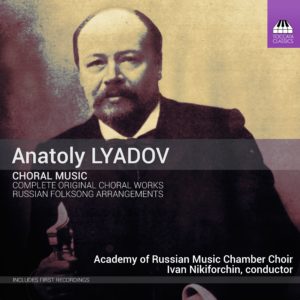
Anatoly Lyadov: Choral Music
Lyadov’s handful of orchestral works have become concert favourites, but his choral music is as good as unknown. It falls into three main categories: religious chants, folksong arrangements and original compositions. All three confirm Lyadov’s status as a kind of Fabergé of music: they blend exquisite craftsmanship and delicate beauty.
The Academy of Russian Music Chamber Choir
Ivan Nikiforchin, choirmaster and conductor