Search Results for "D-Day Operations Manual Battle of Normandy" – Page 3
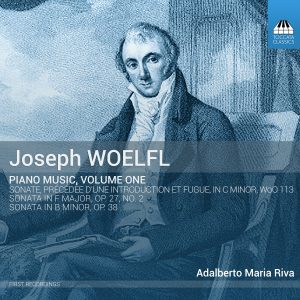
Joseph Woelfl: Piano Music, Volume One
Joseph Woelfl (1773–1812), a friend of the Mozart family from childhood, was one of the best-known musicians of his day: he was regarded as a rival of Beethoven in Vienna and a worthy successor to Haydn in the musical life of London. His late-Classical piano music sits between Mozart, Haydn and Clementi and looks forward to Schubert and Mendelssohn. This first-ever project to examine it in any detail hopes to rescue Woelfl’s once starry reputation from the folds of history.
Adalberto Maria Riva, piano
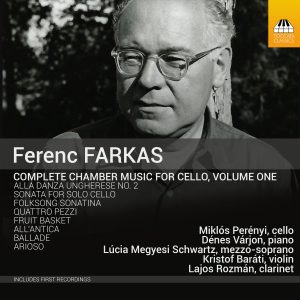
Ferenc Farkas: Complete Chamber Music for Cello, Volume One
Toccata Classics continues its exploration of the music of the Hungarian composer Ferenc Farkas (1905–2000) with this first of two releases of his chamber works for cello. As with previous albums in this series, the music here features the characteristics that make Farkas’ music so appealing: catchy tunes, transparent textures, buoyant rhythms and a fondness for Baroque forms and folk-dances. Some of these pieces speak a tougher language that show Farkas to have been in touch with his times, but it is the infectious melodic appeal of most of the music here that carries the day.
Miklós Perényi, cello
Dénes Várjon, piano (Tracks 1 – 8 , 12–28)
Lúcia Megyesi Schwartz, mezzo-soprano (Tracks 17 – 28)
Kristóf Baráti, violin (Tracks 17 – 28)
Lajos Rozmán, clarinet (Tracks 17 – 28)
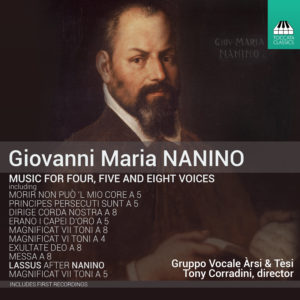
Giovanni Maria Nanino: Music for Four, Five and Eight Voices
Giovanni Maria Nanino (1544–1607) was one of the major Italian composers of late-Renaissance polyphony. A successor of Palestrina as maestro di cappella at Santa Maria Maggiore in Rome, Nanino produced a modest but expertly crafted body of sacred music, and his madrigals, too, enjoyed widespread popularity. He also became the most influential teacher of composition in late-sixteenth-century Rome. But despite the prestige he enjoyed in his own day, his music has been almost entirely forgotten. This recording – the first to be dedicated to his music – reveals it to have struck a remarkable balance between beauty, passion and dignity, between darkness and light.
Gruppo Vocale Àrsi & Tèsi
Tony Corradini, director
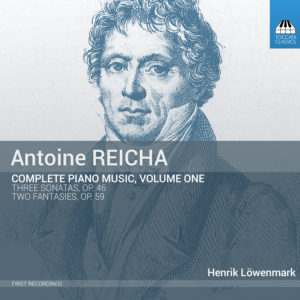
Antoine Reicha: Complete Piano Music, Volume One
For two hundred years the piano music of the Czech-born composer Antoine Reicha (1770–1836) – friend of Haydn and Beethoven, teacher of Berlioz, Liszt and Franck – has been buried treasure. Reicha was an important influence on composers of the next generation (indeed, Berlioz was happy to lift a few ideas from him) but apart from an innovative set of fugues his piano works have remained unknown since his own day. Both encompassing Baroque practices and looking forward to the twentieth century, they are full of harmonic and other surprises that show this liveliest of musical minds at work.
Henrik Löwenmark, piano
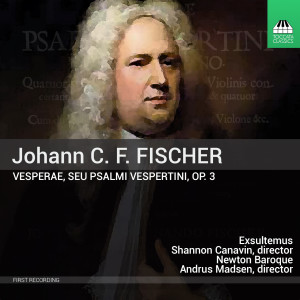
Johann Caspar Ferdinand Fischer: Vesperae, Op. 3
In his day Johann Caspar Ferdinand Fischer (1656–1746) was renowned as one of the major musicians in southern Germany, especially for his distinctly French keyboard music. His vocal music, by contrast, which has been far less thoroughly explored, looked to Italy for its models, as his captivating 1701 setting of the Vespers reveals. In keeping with the practice of the time, this first recording of Fischer’s Vespers includes music from elsewhere in his output, as well as two sonatas by the Munich-based Johann Christoph Pez (1664–1716).
Exsultemus
Shannon Canavin, director
Newton Baroque
Andrew Madsen, director, organ
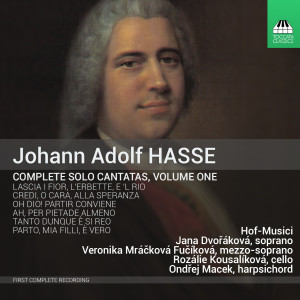
Johann Adolf HASSE: Complete Solo Cantatas, Volume One
In his own day Johann Adolf Hasse (1699–1783) was enormously popular as a writer of operas – Burney described him as ‘superior to all other lyric composers’. His chamber cantatas were written for private performance in the palaces of the powerful, where Hasse enjoyed the patronage of the very highest ranks of society: some of his cantatas may even have been sung by the empress Maria Theresa herself. But with the eclipse of his fame after his death, these works were scattered across Europe, and this first complete recording was made possible only by many years of detective work. They reveal, even on this smaller scale, the keen sense of drama that animated his operas.
Featuring:
Hof-Musici
Jana Dvořáková, soprano
Veronika Mráčková Fučíková, mezzo-soprano
Rozálie Kousalíková, Baroque cello
Ondřej Macek, harpsichord
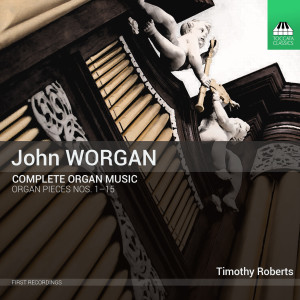
John WORGAN: Complete Organ Music
The organist and harpsichordist John Worgan (1724–90) was one of the most highly respected musicians in the London of his day: Handel admired his playing, and Burney described him as ‘very masterly and learned’. Worgan was the organist of Vauxhall Gardens and of a number of London churches and naturally composed for his own instruments. Most of his music is lost, but his fifth son, James Worgan, also a musician, had fifteen of his father’s organ pieces published after his death. Here they are performed on the organ of St Botolph’s without Aldgate (perhaps England’s oldest surviving church organ), where Worgan himself was organist from 1753 until his demise – the perfect vehicle for this quirky but proud music.
Timothy Roberts, Organ
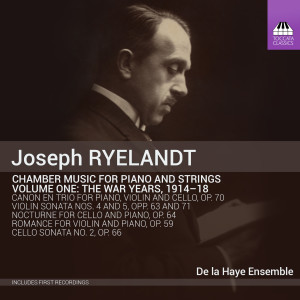
Joseph RYELANDT: Chamber Music For Piano And Strings, Volume One: The War Years, 1914–18
The Belgian composer Joseph Ryelandt (1870–1965) was a humble and reverent man, writing in 1940: ‘If it is God’s will that my works be propagated some day in the future, then it will happen’. Toccata Classics cannot knowingly claim divine intervention as explanation of this first release in a series exploring Ryelandt’s chamber music for piano and strings but offers this entirely unknown but thoroughly attractive repertoire – honest and sincere music downstream from Debussy, d’Indy and Fauré – as evidence of a long life well lived.
De la Haye Ensemble
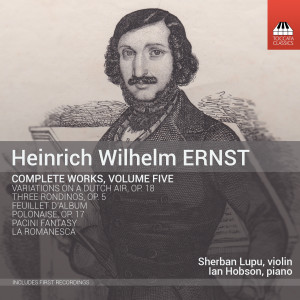
Heinrich Wilhelm Ernst: Complete Works, Volume Five
Heinrich Wilhelm Ernst (1812–65) was one of the leading musicians of his day, a friend of Berlioz, Chopin, Liszt and Mendelssohn, and for Joseph Joachim ‘the greatest violinist I ever heard’. But the popular encore pieces by which Ernst is remembered today represent only a fraction of his output. This fifth CD – in series of seven presenting all his compositions for the first time – shows his mastery of large- and small-scale forms: the Polonaise de Concert and Variations on the National Anthem are grand and brilliant compositions for the concert hall, while the sparkling operatic miniatures and tender arrangements are altogether more intimate.
Sherban Lupu, violin
Ian Hobson, piano
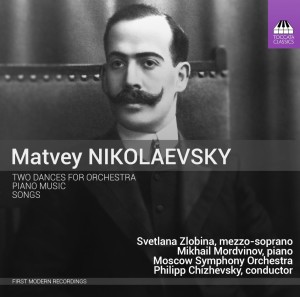
Matvey Nikolaevsky: Songs and Dances
The Roaring Twenties roared in Russia as well as in Europe and America, to an extent generally unsuspected in the west. This CD reveals for the first time the light music of a minor master of the day, Matvey Nikolaevsky (1882–1942), whose songs and dances were hits in the early years of the Soviet Union. His style evolved effortlessly from the salon music of the late nineteenth century to the foxtrots, Charlestons and tangos popular during the relatively liberal New Economic Policy introduced by Lenin in 1921 and which Soviet audiences continued to enjoy after the NEP was abolished by Stalin in 1928.
Svetlana Zlobina, mezzo-soprano; Mikhail Mordinov, piano; Moscow Symphony Orchestra; Philipp Chizhevsky, conductor;
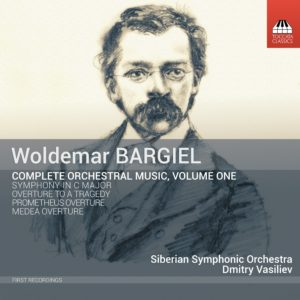
Woldemar Bargiel: Complete Orchestral Music, Volume One
Woldemar Bargiel (1828-97) was one of the best-known composers of his day, an important teacher and Clara Schumann's half-brother, but his music has been largely forgotten. His only symphony has a Beethovenian drive, and his three published orchestral overtures, which are symphonic poems in all but name, lie downstream from Schumann, with a Brahmsian weight and power.
Siberian Symphony Orchestra, Dmitry Vasilyev
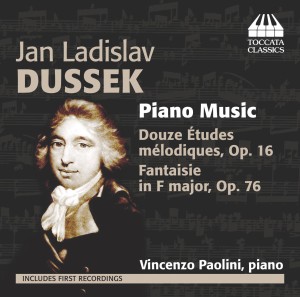
Jan Ladislav Dussek: Piano Music
The compositions of the Czech-born Jan Ladislav Dussek (1760-1812) show the Classical style gradually taking on the expressive characteristics of Romanticism, foreshadowing composers like Beethoven, Chopin, Schubert and Schumann. The Douze Études mélodiques (also published as Leçons progressives) offer a sort of musical United Nations of the day, its Polish, Russian, Scottish, Spanish, Turkish and other national elements intended to appeal to the contemporary fashion for the exotic. His F major Fantaisie is in effect an eight-movement suite, presenting an array of musical forms and capturing the improvisatory spirit and harmonic exploration of the fantasia.
Vincenzo Paolini, piano
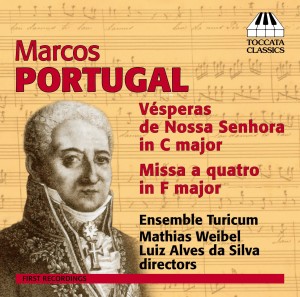
Marcos António Portugal: Choral Music
The Portuguese-Brazilian composer Marcos António Portugal (1762-1830) was best known in his day for his fifty or so operas, but he also composed a huge body of more than 160 religious choral works. The two here — in their first performances in modern times — illustrate his conservative Classical style as well as the operatic influences on his sacred music, but the absence of female voices from the chorus and violins from the orchestra bring an unexpectedly dark colour.
Ensemble Turicum, ensemble
Mathias Weibel, director
Luiz Alves da Silva, director
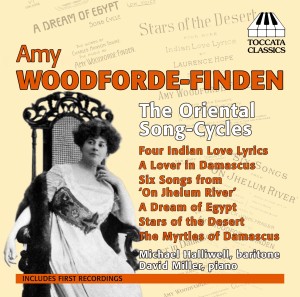
Amy Woodforde-Finden: The Oriental Song-Cycles
Amy Woodforde-Finden (1860-1919) wrote a number of 'oriental' song-cycles, one of which, the Four Indian Love Lyrics of 1902, contained the 'Kashmiri Song' — beginning 'Pale hands I loved beside the Shalimar' — that became a runaway success in its own day. These ballads have long since fallen from favour, but they contain plenty of honest sentiment, good tunes and splashes of local colour — and their hints of inter-racial love and lesbian romance must have given a real frisson to their contemporary audiences.
Michael Halliwell, baritone
David Miller, piano
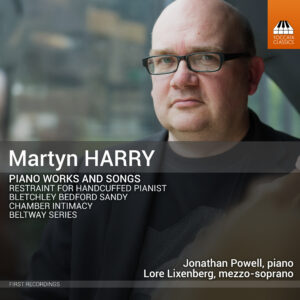
Martyn Harry: Piano Works and Songs
Baseball, Bach, a disused railway line and the use of music to torture prisoners might be unexpected inspirations behind the work of a composer who is an Oxford professor by day. But the piano music of Martyn Harry – born in Crawley, West Sussex, in 1964 – proves to be a wild, kaleidoscopic mix of just such unlikely influences: Satie, Sorabji, American minimalism, Prokofiev, Silvestrov and more, all intended to exercise the technique of his good friend, the fireball pianist Jonathan Powell, whose early death in December 2025 shocked the musical world. There is a gleeful, almost manic quality to much of this music that found a counterpart in the unflagging energy of Powell’s playing. A song-cycle setting six early Anna Akhmatova poems likewise taps into the tension she found in intimacy, releasing a surprising degree of passion.
Lore Lixenberg, mezzo-soprano
Jonathan Powell
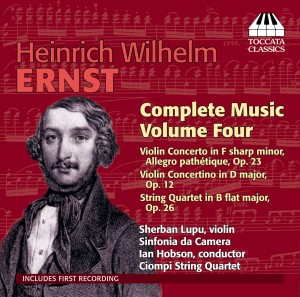
Heinrich Wilhelm Ernst: Complete Music, Volume Four
Heinrich Wilhelm Ernst (1812-65) was one of the leading musicians of his day, a friend of Berlioz, Chopin, Liszt and Mendelssohn, and for Joseph Joachim 'the greatest violinist I ever heard'. But the popular encore pieces by which Ernst is remembered today represent only a fraction of his output. This fourth CD — in a series of seven presenting all his compositions for the first time — contains some of his most important compositions: an early Concertino with a melancholy slow movement and charming waltz finale; the fiendishly difficult Concerto that had a deep influence not only on Liszt's Piano Sonata but also the Brahms and Sibelius violin concertos; and the late String Quartet, with echoes of Beethoven and Mendelssohn and an inwardness, charm and energy all of its own.
Sherban Lupu
Ciompi String Quartet
Sinfonia da Camera
Ian Hobson