Search Results for "D-Day Operations Manual Battle of Normandy" – Page 2
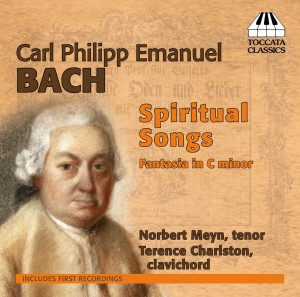
C. P. E. Bach: Spiritual Songs
C. P. E. Bach's two collections of religious songs, published in 1758 and 1780-81, were among the most popular eighteenth-century Lieder publications. Here a selection of them is recorded for the first time with complete texts and accompanied with the clavichord, the composer's favourite instrument, underlining their intimate nature, intended more for private devotional use than for public performance. The recording includes the 'Hamlet Fantasy' that resulted when the poet Heinrich Wilhelm von Gerstenberg imposed his paraphrase of Hamlet's soliloquy on one of C. P. E. Bach's keyboard pieces.
Norbert Meyn, tenor
Terence Charlston, clavichord
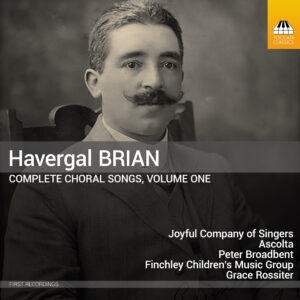
Havergal Brian: Complete Choral Songs, Volume One
The reputation of Havergal Brian (1876–1972) as a late-blossoming symphonist obscures the fact that he was an early-blossoming composer of choral music for the huge market of amateur choirs thriving in Edwardian England. His choral songs range from simple unison settings for children’s or women’s voices to harmonically complex essays intended to tax the ability of groups taking part in the choral competitions once popular in many parts of Britain.
Joyful Company of Singers
Peter Broadbent, conductor
Finchley Children’s Music Group
Grace Rossiter, conductor
Cello Accordion Ireland
The sound of the accordion is an underexploited resource in classical music; it is heard even less frequently in combination with other instruments. This recital of music by Irish composers for cello and accordion – from the nimble folk idiom of Turlough Carolan to the passionate Romanticism of more recent men and women – demonstrates just how effectively these colours blend together. And it is not just the medium which is unusual: much of this music is as good as unknown.
Adrian Mantu, cello
Dermot Dunne, accordion
The Estonian Cello
The strength and richness of Estonian classical music has its origins in two contrasting schools – the international outlook taught by Heino Eller in Tartu and the craftsmanship fostered by Artur Kapp in Tallinn. This album presents Eller’s complete output for cello and piano in its first recording, complemented by works by two of his more important students, Eduard Oja and Eduard Tubin. Villem Reimann and Herman Känd, both students of Kapp, had very different careers, Reimann an established professor in Soviet Estonia, and Känd dying unknown in American exile at only 46. This is the first recording of any of his music in over half a century.
Valle-Rasmus Roots, cello
Sten Lassmann, piano
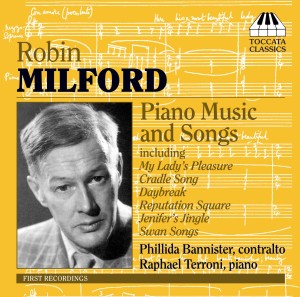
Robin Milford: Piano Music and Songs
The music of Robin Milford (1903-59) taps into that distinctly English vein of pastoral melancholy. Lying on a continuum between the work of his friends Gerald Finzi and Ralph Vaughan Williams, Milford’s voice is nonetheless unique: lyrical, gentle, unemphatic – quietly individual. The dark lyricism of the songs on this CD, reflecting the composer’s troubled life, offers a striking contrast with the buoyant, folksong-inspired dances for solo piano – Milford at his happiest.
Phillida Bannister, contralto
Raphael Terroni, piano
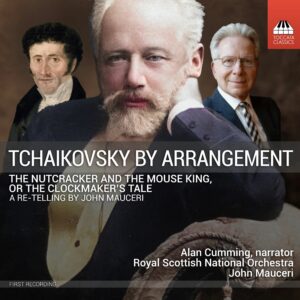
Tchaikovsky by Arrangement: The Nutcracker and the Mouse King or The Clockmaker’s Tale: A Re-telling by John Mauceri
Tchaikovsky’s ballet The Nutcracker, which has its origins in a novella by E. T. A. Hoffmann, contains some of the best-loved music ever written. But its composer wasn’t very happy with it, perhaps because the plot he was given to work with allowed him to present only a series of dances, losing the moral basis of Hoffman’s surprisingly modern tale, with its messages of inclusivity and what is now called ‘women’s agency’ – here it is the little girl who saves the prince. Hoffmann’s aspirational story continues well after the ballet ends, with the little girl, now grown up, marrying the prince, who is now king. John Mauceri has brought the ballet back to its inspiration, calling on music from elsewhere in Tchaikovsky’s orchestral output to fashion this ‘re-telling’, marrying Hoffmann’s text and Tchaikovsky’s music for the first time.
This is very much a Scottish product, by the way, even leaving aside Toccata’s Scottish origins: the orchestra is the Royal Scottish National Orchestra, John Mauceri spent seven years as music director of Scottish Opera in Glasgow, and the narrator is Alan Cumming, now a NY-based gay icon but born in Aberfeldy and brought up in Carnoustie.
Alan Cumming, narrator
Royal Scottish National Orchestra
John Mauceri, conductor
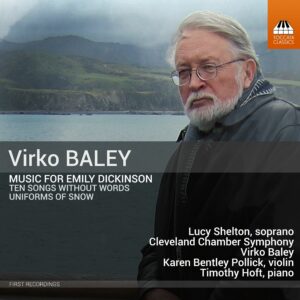
Virko Baley: Music for Emily Dickinson
Winner of the 2024 American Prize Ernst Bacon Memorial Award for the Performance of American Music, 2024
Virko Baley was born in Ukraine in 1938 and came to the USA as a refugee in 1949, eventually making his home in Las Vegas. He has long been fascinated by the poetry of Emily Dickinson, as can be heard in the two moving works recorded here – one an orchestral song-cycle setting her texts, the other a suite for violin and piano inspired by those settings. They display an acute ear for orchestral colour, a fondness for dramatic gesture and a strong sense of lyricism, occasionally inflected by distant echoes of Baley’s eastern European origins, the richness of the song-cycle placing him downstream from Mahler and Berg and the restraint of the Songs without Words occasionally evoking Arvo Pärt.
Lucy Shelton, soprano
Cleveland Chamber Symphony
Virko Baley, conductor
Karen Bentley Pollick, violin
Timothy Hoft, piano
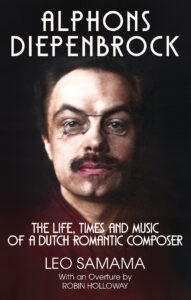
Alphons Diepenbrock: The Life, Times and Music of a Dutch Romantic Composer
by Leo Samama
With an Overture by Robin Holloway
433 Pages
15.6 x 23.4 cm
67 b/w, 35 colour images
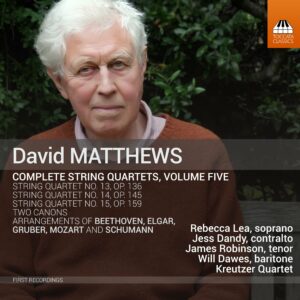
David Matthews: Complete String Quartets, Volume Five
The American critic Robert Reilly described the music on Volume One of this cycle of the complete string quartets of David Matthews (b. 1943) as ‘some of the most concentrated, penetrating writing for this medium in the past 30 years or more. It is musical thinking of the highest order and quartet writing in the great tradition of Beethoven, Bartók, Britten, and Tippett’. Matthews’ three most recent quartets call in a wide range of references. Birdsong – heard in Nos. 13 and 14 – is a standard Matthews topos; and the fugal No. 15 seems to find a middle ground between late Beethoven and folk-music. No. 13 presents the biggest surprise: it introduces four solo voices, siting the work somewhere between Berg’s Lyric Suite and Vaughan Williams’ Serenade to Music. Some touching arrangements and two canons for two Michaels – Tippett and Berkeley – complete the programme.
Rebecca Lea, soprano 8
Jess Dandy, contralto 8
James Robinson, tenor 8
Will Dawes, baritone 8
Kreutzer Quartet
Peter Sheppard Skærved and Mihailo Trandafilovski, violins
Clifton Harrison, viola
Neil Heyde, cello
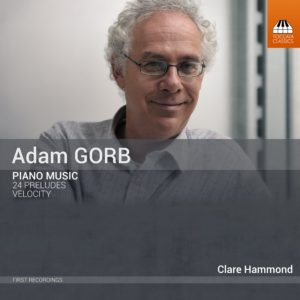
Adam Gorb: Piano Music
The 24 Preludes of Adam Gorb (born in Cardiff in 1958 and a feature of musical life in Manchester for over two decades) follow the examples of Chopin and Shostakovich in describing a cycle of fifths – though his descend, whereas Chopin’s and Shostakovich’s go up. Like those earlier exemplars, and as with the preludes of Debussy, Rachmaninov and others, Gorb’s are miniature studies of personality and mood – charming, brittle, perky, languorous, bat-flight fast, borderline violent or tender. His Velocity does what it says on the tin: it’s a wild, even manic, chase, over rhythmically dislocating ground.
Clare Hammond, piano
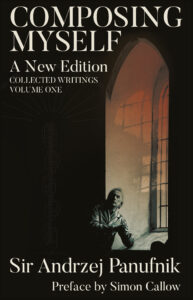
Andrzej Panufnik: Composing Myself
Preface by Simon Callow
Extent: 478 pages
20 colour & 80 b/w illustrations
Hardback
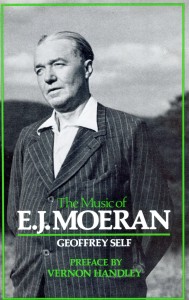
The Music of E. J. Moeran
Preface by Vernon Handley
Extant: 288
Composition: Demy octavo ~ Illustrated ~ Bibliography ~ Personalia ~ Index
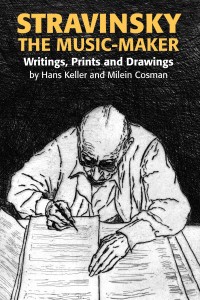
Stravinsky the Music-Maker: Writings, Prints and Drawings
Foreword by Hugh Wood
Edited by Martin Anderson
Extent: 242 pages
Composition: Royal octavo; profusely illustrated
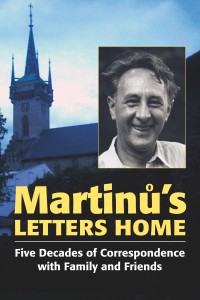
Martinů’s Letters Home: Five Decades of Correspondence with Family and Friends
Edited by Iša Popelka
Translated by Ralph Slayton
ISBN: 978-0-907689-77-5
Extent: 245 pages
Size: 16.4 x 24.1 cm
Published: March 2013
Composition: Royal octavo
Illustrations: 52
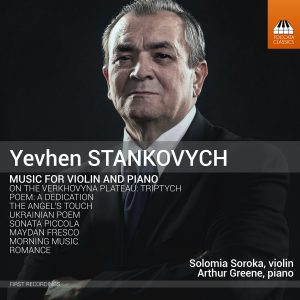
Yevhen Stankovych: Music for Violin and Piano
Yevhen Stankovych (born in 1942) is one of Ukraine’s leading contemporary composers. His music for violin and piano – almost all of it recorded here for the first time – covers a wide range of emotions, from wild highland dances that distantly recall Szymanowski to the plangent, lyrical lament of Maydan Fresco, protesting the deaths of demonstrators in Maydan Square in 2013.
Solomia Soroka, violin
Arthur Greene, piano
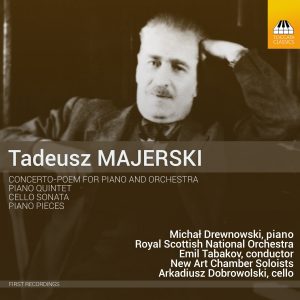
Tadeusz Majerski: Concerto-Poem and Other Works
The Polish pianist-composer Tadeusz Majerski (1888–1963), who spent his life in Lwów (now Lviv in Ukraine), has been entirely lost from sight. But he wrote some of the most interesting Polish music of his day, bringing together late-Romantic sensitivity and the modern outlook of the new age. This first album dedicated to his work presents one of his major scores, the rhapsodic Concerto-Poem for piano and orchestra, as well as two powerful chamber works and a number of representative piano miniatures.
Michał Drewnowski, piano
Royal Scottish National Orchestra (Track 1)
Emil Tabakov, conductor (Track 1)
New Art Chamber Soloists (Tracks 2–11)
Arkadiusz Dobrowolski, cello (Tracks 12-13)