Search Results for "kadir kena mental"
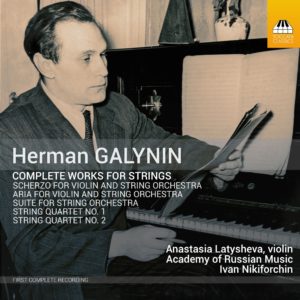
Herman Galynin: Complete Works for Strings
The intensity with which the Russian composer Herman Galynin (1922–66) lived his short life is reflected in the extraordinarily high voltage of his music. In spite of a difficult start in life – he was an orphan – his instinctive musicality combined with the impulsiveness of his personality to make him one of the best known of Soviet composers while he was a student. Although mental illness put an early end to his meteoric career, the wild, freewheeling energy of his compositions – as witness these five works for strings – leave little doubt that Galynin would have been one of the major musical voices of the second half of the twentieth century; as it is, what he did achieve is remarkable.
Anastasia Latysheva, violin (Tracks 1,2, 7-10, 11-14)
Academy of Russian Music (Tracks 1-6)
Ivan Nikiforchin, conductor (Tracks 1-6)
Arina Minaeva, violin (Tracks 7-10, 11-14)
Anastasia Bencic, viola (Tracks 7-10)
Kseniia Kharitonova, viola (Tracks 11-14)
Anna Scherbakova, cello (Tracks 7-14)
Includes first recordings
A Narrative of Paul Creston’s Three Narratives
My introduction to Paul Creston was through his Virtuoso Technique – a book of finger exercises so demanding and so unusual that I couldn’t help…
Where are the Women Composers?
Women Composers Bundle Time for a little controversy on this blog – but that’s not my aim, which is to try to understand why, when…
Jaromír Weinberger Re-Discovered
Today (well, I guess it depends on when you read this) – 8 January 2016 – marks the 120th anniversary of the birth of the…
A Conversation with Per Nørgård
The death of Per Nørgård on 28 May 2025, at a grand old 92, sent me to my ‘article bank’, to look over my writings…
Four Questions for Pärt Uusberg
An introduction from Martin Anderson: Toccata Classics has been promoting the music of Estonian composers since its early days, as I personally was, too, as…

An Infinity of Traces: Influence Without Anxiety
I often play a kind of party game with friends: each participant will offer a recording of a piece of music by a less-well-known composer,…

Recording my Tone Poems in Liepāja
The first thing I noticed was the trees. Once we were out of Riga airport, they soon crowded up to the edge of the road;…
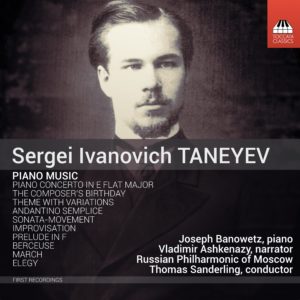
Sergei Ivanovich Taneyev: Piano Concerto, Music for solo Piano
The piano music of Sergei Taneyev (1856–1915) is one of Russian’s hidden secrets. Student and friend of Tchaikovsky, Taneyev – a formidable pianist and composer of the front rank – has never had the attention he deserves. The CD couples a first-ever recording of the only two movements he recorded of his youthful piano concerto with more premiere recordings of music for solo piano from across his career. The Four Improvisations, composed jointly by Taneyev, Rachmaninov, Arensky and Glazunov, bring a composite first recording for all four composers. And The Composer’s Birthday, for narrator and piano, four hands, was written as a light-hearted birthday present for Tchaikovsky.
Joseph Banowetz, piano
Russian Philharmonic of Moscow, orchestra
Thomas Sanderling, conductor
Vladimir Ashkenazy, narrator
Joseph Banowetz and Adam Wodnicki, piano duet
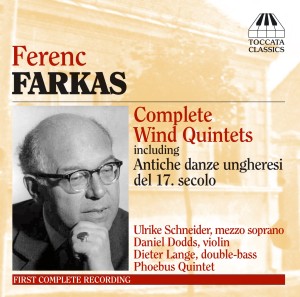
Ferenc Farkas: Complete Wind Quintets
Ferenc Farkas (1905–2000) was one of the longest-lived members of the wave of Hungarian nationalist composers which began with the rise of Béla Bartók and Zoltán Kodály. A student of Ottorino Respighi in Rome, Farkas blended Respighi’s Latin melodiousness with the Magyar folk-heritage that Bartók and Kodály had made the central element of Hungarian music. His Old Hungarian Dances of the 17th Century have become a staple of the wind-quintet repertoire; the other five works on this disk display the same irrepressible joie de vivre.
Ulrike Schneider, mezzo soprano
Daniel Dodds, violin
Dieter Lange, double-bass
Phoebus Quintet, wind quintet
Christoph Bösch, flute
Barbara Zumthurn-Nünlist, oboe
Dimitri Ashkenazy, clarinet
Martinů Roos, horn
Susan Landert, bassoon

Dvořák: ‘Songs My Great-Grandfather Taught Me’
Antonín Dvořák has long been known as one of music's supreme melodists, but his songs have not made quite the headway of his best-known works. Now 30 of them are given a new lease of life in transcriptions for violin and viola and piano by his great-grandson, Josef Suk — the viola pieces performed here on Dvořák's own instrument, restored especially for this recording. With Josef Suk joined here by Vladimir Ashkenazy, this disc offers two of the world's greatest musicians playing — together for the first time — some of its most beautiful music, in versions never heard before.
Josef Suk, violin, viola
Vladimir Ashkenazy, piano
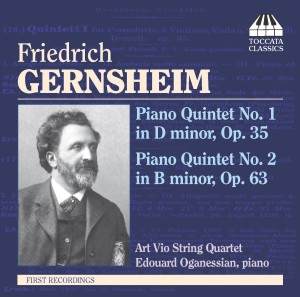
Friedrich Gernsheim: The Two Piano Quintets
The music of the German composer Friedrich Gernsheim (1839-1918) is gradually beginning to emerge in recordings, revealing him as one of the finest composers of his age. His two piano quintets are tightly constructed, powerfully argued and full of rhythmic energy, and also abound with memorable tunes. They are, in fact, both masterpieces, among the very best of German Romantic chamber music, ranking alongside the Brahms and Schumann works.
Art Vio String Quartet
Edouard Oganessian, piano
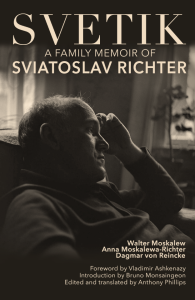
SVETIK: A Family Memoir of Sviatoslav Richter
Walter Moskalew, Anna Moskalewa-Richter and Dagmar von Reincke
Foreword by Vladimir Ashkenazy
Introduction by Bruno Monsaingeon
Translated and edited by Anthony Phillips
Extent: 462 pages
Size: 16 x 24 cm
Published: October 2015
Illustrations: c. 30 colour illustrations; c. 250 b/w illustrations
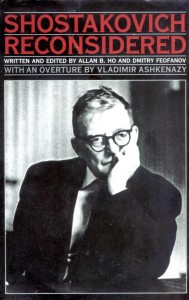
Shostakovich Reconsidered
With an overture by Vladimir Ashkenazy
Extent: 791 pages
Composition: Demy octavo ~ Illustrated ~ Appendices ~ Bibliography ~ Index
Illustrations: 16 b/w
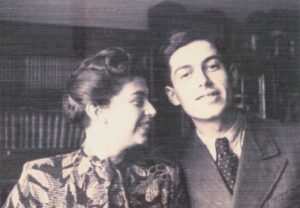
Why We Mustn’t Forget Gideon Klein: Music Triumphing in Adversity
The narrative seems to have all the ingredients of a tragic, if not epic, film. The young genius, his potential cruelly crushed by an evil…
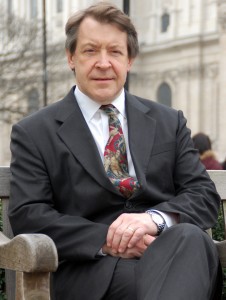
Sir Roger Gifford, former Lord Mayor of the City of London, joins Toccata Classics as Patron
We’re delighted to announce that Vladimir Ashkenazy and Osmo Vänskä, treasured Patrons of Toccata Classics, have been joined by a third luminary, Sir Roger Gifford,…