Search Results for "fc 26 coins Buyfc26coins.com is EA Sports official for FC 26 coins The transfer time was very fast..ujWi" – Page 13
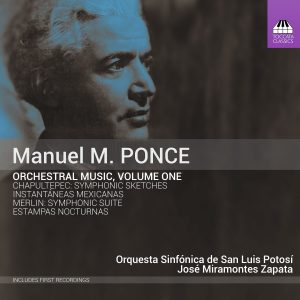
Manuel M. Ponce: Orchestral Music, Volume One
The Mexican composer Manuel María Ponce (1882–1948) is best known for a handful of popular songs and guitar pieces, and yet he left a huge legacy of some 500 works – orchestral, chamber and piano music, art songs and folksong arrangements – which together form the foundation of the Mexican national repertoire. The works recorded here – some for the first time – reveal a composer with a surefooted command of the orchestra, his early impressionism becoming infused with echoes of Mexican indigenous culture in textures of unsuspected richness.
Orquesta Sinfónica de San Luis Potosí
José Miramontes Zapata, conductor
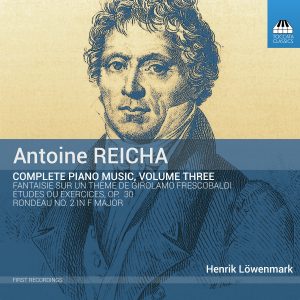
Antoine Reicha: Complete Piano Music, Volume Three
The piano music of the Czech-born composer Antoine Reicha (1770–1836) – friend of Haydn and Beethoven, teacher of Berlioz, Liszt, Franck and many others – is one of the best-kept secrets in music. He was an important influence on composers of the next generation but, apart from an innovative set of fugues, his piano works have remained almost unknown since his own day. Encompassing Baroque practices as well as looking forward to the twentieth century, they are full of harmonic and other surprises that show this liveliest of musical minds at work. Reicha’s twenty Études ou Exercices, recorded here for the first time, manage to combine his maverick inventiveness with a considerable degree of charm.
Henrik Löwenmark, piano
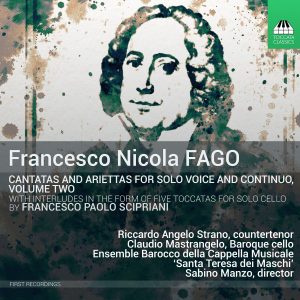
Nicola Fago: Cantatas for Solo Voice and Continuo, Volume Two
Nicola Fago (1677–1745) was one of the leading practitioners of the chamber cantata, a kind of mini-opera for voice and ensemble brought to perfection by several generations of composers working in the aristocratic courts in Naples. The six examples by Fago recorded here – for the first time – reveal him to have been a master of the genre: they are dramatic, full of rhythmic excitement and stuffed with catchy tunes. Fago’s contemporaries called him ‘Il Tarantino’, since he was born in Taranto, in the area now known as Puglia, in the heel of Italy; this recording is the second of a series of three Toccata Classics albums dedicated to Fago’s cantatas, and part of a wider exploration of Pugliese composers.
Riccardo Angelo Strano, countertenor (1)
Ensemble Barocco della Cappella Musicale ‘Santa Teresa dei Maschi’ (1, 3, 5, 7, 9, 11)
Claudio Mastrangelo, Baroque cello
Giuseppe Petrella, theorbo and Baroque guitar (3, 5)
Davide Milano, violone (3, 5, 9)
Sabino Manzo, harpsichord and director
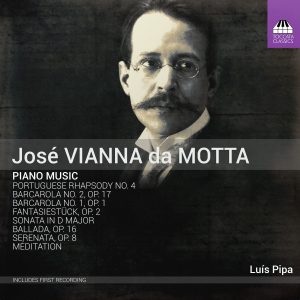
José Vianna da Motta: Piano Music
The piano music of the Portuguese virtuoso and composer José Vianna da Motta (1868–1948) absorbs Romantic influences from Beethoven, Chopin, Liszt and Brahms, adding elements from Portuguese folk-music to constitute a major step in the development of a national style for Portuguese classical music. His last piano piece, a Méditation recorded here for the first time, reveals da Motta in the visionary soundworld of late Liszt and Skryabin.
Luís Pipa, piano
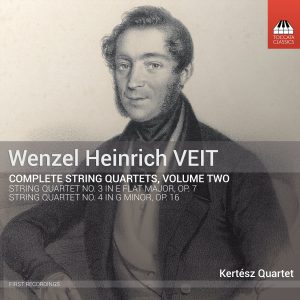
Wenzel Heinrich Veit: Complete String Quartets, Volume Two
The German-Bohemian composer Wenzel Heinrich Veit (1806–64) – Václav Jindřich Veit in Czech – is one of music’s most unjustly forgotten figures. As these first recordings of his four string quartets will show, he is not only the link between the Bohemian composers of the end of the Classical period and the wave of Czech Romanticism that began with Smetana but also an outstanding composer in his own right. His quartets trace the stylistic evolution of his time: they emerge from a debt to Haydn and Beethoven and embrace Mendelssohn and Schumann on their way to pre-echoes of Dvořák.
Kertész Quartet, playing on original instruments
Katalin Kertész and Jean Paterson, violins
Nichola Blakey, viola
Cressida Nash, cello
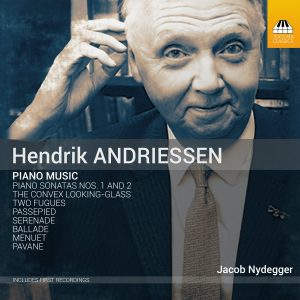
Hendrik Andriessen: Piano Music
Although much of the music of the Dutch composer Hendrik Andriessen (1892–1981) has now been explored in recordings, his works for piano largely remain to be discovered. This first conspectus of his piano music covers fifty years of composition, showing how early influences – among them Bach, Brahms, Franck, Hindemith and Ravel – were subsumed into a musical language distinguished by its textural clarity and harmonic warmth.
Jacob Nydegger, piano
https://www.youtube.com/watch?v=1HecUSA1TLQ
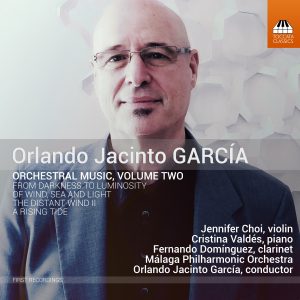
Orlando Jacinto García: Orchestral Music, Volume Two
Born in Havana in 1954, the Miami-based Orlando Jacinto García studied with Morton Feldman and has inherited some of Feldman’s concerns: his music likewise evolves gradually over slow-moving spans of time – here and there with an echo of West Coast minimalism. Like the still surface of the sea, the works on this album (three of them concertante pieces for virtuoso soloists) mirror the unhurried movement of natural phenomena, often in textures of considerable delicacy – and occasionally hinting at larger forces behind the apparent stasis.
Jennifer Choi, violin (track 1)
Cristina Valdés, piano (track 2)
Fernando Domínguez, clarinet (track 3)
Málaga Philharmonic Orchestra
Orlando Jacinto García, conductor
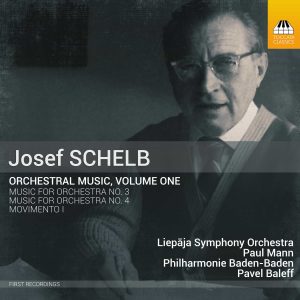
Josef Schelb: Orchestral Music, Volume One
Josef Schelb (1894–1977) is one of the better-kept secrets of German music. His output was substantial: he lost most of his early music in a bombing raid in 1942 but, as if to make up for lost time, wrote some 150 more works after that, in the tonally liberated, quasi-Expressionist contrapuntal tradition of Hindemith and Hartmann; Bartók was an important influence, too. The three pieces recorded here show Schelb capable of astonishing vitality in his mid- to late seventies: they display lean muscularity, freewheeling energy and luminous and transparent orchestration, often informed by bucolic nostalgia and lyrical melancholy.
Liepāja Symphony Orchestra (Tracks 1 – 4)
Paul Mann, conductor (Tracks 1 – 4)
Philharmonie Baden-Baden (Tracks 5 – 7)
Pavel Baleff, conductor (Tracks 5 – 7)
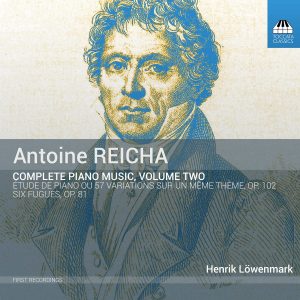
Antoine Reicha: Complete Piano Music, Volume Two
The piano works of the Czech-born composer Antoine Reicha (1770–1836) – friend of Haydn and Beethoven, teacher of Berlioz, Liszt and Franck – is one of the best-kept secrets in music. He was an important influence on composers of the next generation, but apart from an innovative set of fugues his piano works have remained almost unknown since his own day. Encompassing Baroque practices as well as looking forward to the twentieth century, they are full of harmonic and other surprises that show this liveliest of minds at work. The massive variation-set on a French gavotte recorded here for the first time reveals a composer who tempers his learning with a vivid sense of humour.
Henrik Löwenmark, piano
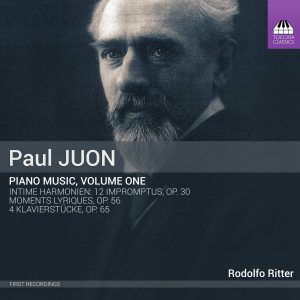
Paul Juon: Piano Music, Volume One
The Russian-born German-Swiss composer Paul Juon (1872–1940) produced a generous amount of piano music – 35 opus numbers – which has yet to be explored in any detail in recordings. This first instalment of the first-ever survey of his piano music reveals a composer close to his Russian roots but also alive to the music of his own time, in a kind of sophisticated blend of Medtner and Debussy, with folk influences from far further afield.
Rodolfo Ritter, piano
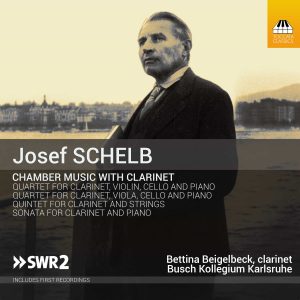
Josef Schelb: Chamber Music with Clarinet
The Karlsruhe-based Josef Schelb (1894–1977) is one of the better-kept secrets of twentieth-century German music. His output was substantial: he lost most of his early music in a bombing raid in 1942, but – as if to make up for lost time – wrote some 150 more works after that. These four, for clarinet in various chamber combinations, show his music emerging from the influence of Hindemith and Berg and developing a freewheeling energy, contrapuntal command and rhythmic charge of its own – often animated by a touch of devilish humour.
Busch Kollegium Karlsruhe
Bettina Beigelbeck, clarinet
Yasushi Ideue, violin (Tracks 5–7, 12–15)
Ayu Ideue, violin (Tracks 5–7)
Wolfgang Wahl, viola (Tracks 5–11)
Gabriela Bradley, cello (Tracks 8–11)
Bernhard Lörcher, cello (Tracks 1–7)
Manfred Kratzer, piano (Tracks 1–4)
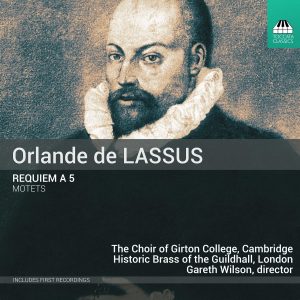
Orlande de Lassus: Requiem a 5; Motets
Lassus’ five-part setting of the Requiem is rarely heard; here it is recorded with brass for the first time, the sombre colours of the sackbuts further darkening the tone. Interweaving a number of motets, some also receiving first recordings, and a madrigal on death by one of Lassus’ contemporaries in an organ transcription, this innovative programme takes the listener on a spiritual journey, through the darkness of bereavement to the elevation of the Christian soul after death.
The Choir of Girton College, Cambridge (Tracks 1-4, 6-10, 12-14, 17)
Historic Brass of the Guildhall, London
(Jeremy West, leader) (Tracks 2-8, 10, 12-14, 17)
Lucy Morrell, organ (Tracks 3, 4, 6-8, 10-13, 16, 17)
Gareth Wilson, director
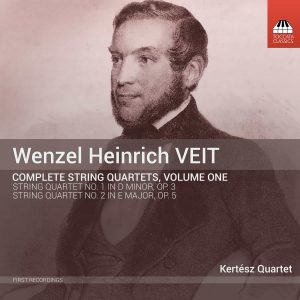
Wenzel Heinrich Veit: Complete String Quartets, Volume One
The German-Bohemian composer Wenzel Heinrich Veit (1806–64) – Václav Jindřich Veit in Czech – is one of music’s most unjustly forgotten figures. As these first recordings of his four string quartets will show, he is not only the link between the Bohemian composers of the end of the Classical period and the wave of Czech Romanticism that began with Smetana but also an outstanding composer in his own right. His quartets trace the stylistic evolution of his time: they emerge from a debt to Haydn and Beethoven and embrace Mendelssohn and Schumann on their way to pre-echoes of Dvořák.
Kertész Quartet, playing on original instruments
Katalin Kertész and Jean Paterson, violins
Nichola Blakey, viola
Cressida Nash, cello
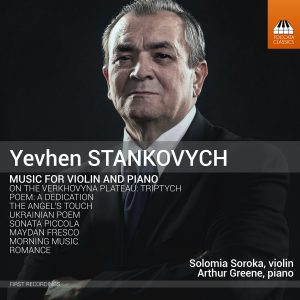
Yevhen Stankovych: Music for Violin and Piano
Yevhen Stankovych (born in 1942) is one of Ukraine’s leading contemporary composers. His music for violin and piano – almost all of it recorded here for the first time – covers a wide range of emotions, from wild highland dances that distantly recall Szymanowski to the plangent, lyrical lament of Maydan Fresco, protesting the deaths of demonstrators in Maydan Square in 2013.
Solomia Soroka, violin
Arthur Greene, piano
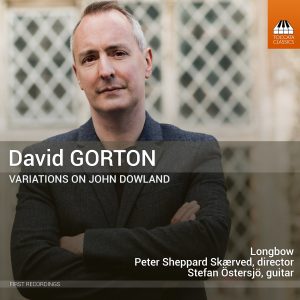
David Gorton: Variations on John Dowland
John Dowland’s pavan Lachrimae was one of the hits of the early 1600s: musicians all over Europe made their own versions of it. The English composer David Gorton (b. 1978) proves that Dowland’s fascination endures, with this album of music that has its points of departure in Dowland, linking his time and ours over a span of 400 years – with a dig at some contemporary politicians along the way.
Longbow (Tracks 1,2-12, 21)
Stefan Östersjö, eleven-string alto guitar (Tracks 13-20)
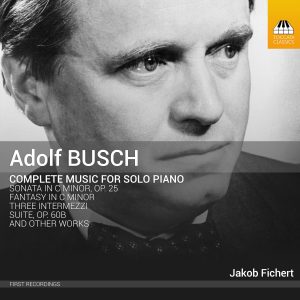
Adolf Busch: Complete Music for Solo Piano
Adolf Busch (1891–1952) is generally remembered as one of the great violinists and founder-leader of the peerless Busch Quartet. But he was also an important composer, writing in a tradition coloured by his friend and mentor Max Reger, and his output for solo piano – recorded here for the first time – shows off his natural qualities as contrapuntist and melodist, in music that is both immediately attractive and intellectually rewarding.
Jakob Fichert, piano