Search Results for "compartidos vibes girl"
Showing results for cambridge voices girl
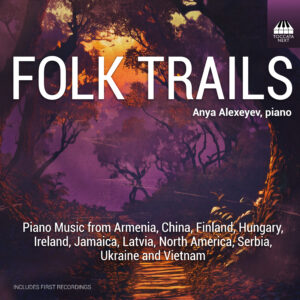
Folk Trails
Folk-music has been a resource for classical composers since the beginning of the western tradition. The violin has its own folk heritage, of course, but since you can’t lug a piano from village to village, composers for that instrument have had to dig into their own musical roots to generate a folk-based keyboard repertoire, usually with refreshing results. This recital takes the listener on a journey that spans three continents, east to west, marrying the resources of the modern concert grand with the immediacy of the folk originals.
Anya Alexeyev, piano, primo
Leslie De’Ath, secondo
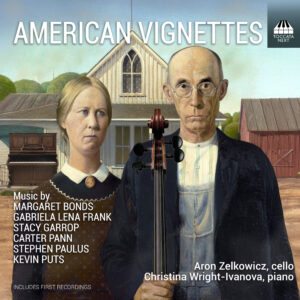
American Vignettes: Contemporary Works for Cello and Piano
Though quintessentially American in spirit, the musical snapshots in this album are as diverse as the men and women who composed them. Drawing from influences as disparate as the blues, jazz, Broadway, gospel, folksong and the wild west, these ‘American vignettes’ merge popular idioms into a new canon of the repertoire for cello and piano. The distinctive voices of six US composers, from the late twentieth and early 21st centuries, here come together to weave a virtuosic and colourful tapestry of Americana.
Aron Zelkowicz, cello
Christina Wright-Ivanova, piano
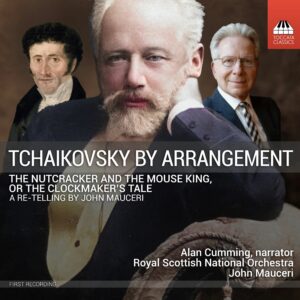
Tchaikovsky by Arrangement: The Nutcracker and the Mouse King or The Clockmaker’s Tale: A Re-telling by John Mauceri
Tchaikovsky’s ballet The Nutcracker, which has its origins in a novella by E. T. A. Hoffmann, contains some of the best-loved music ever written. But its composer wasn’t very happy with it, perhaps because the plot he was given to work with allowed him to present only a series of dances, losing the moral basis of Hoffman’s surprisingly modern tale, with its messages of inclusivity and what is now called ‘women’s agency’ – here it is the little girl who saves the prince. Hoffmann’s aspirational story continues well after the ballet ends, with the little girl, now grown up, marrying the prince, who is now king. John Mauceri has brought the ballet back to its inspiration, calling on music from elsewhere in Tchaikovsky’s orchestral output to fashion this ‘re-telling’, marrying Hoffmann’s text and Tchaikovsky’s music for the first time.
This is very much a Scottish product, by the way, even leaving aside Toccata’s Scottish origins: the orchestra is the Royal Scottish National Orchestra, John Mauceri spent seven years as music director of Scottish Opera in Glasgow, and the narrator is Alan Cumming, now a NY-based gay icon but born in Aberfeldy and brought up in Carnoustie.
Alan Cumming, narrator
Royal Scottish National Orchestra
John Mauceri, conductor
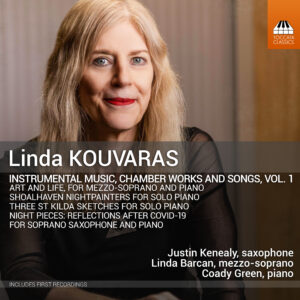
Linda Kouvaras: Instrumental Music, Chamber Works and Songs, Volume One
As with many other Australian composers, the music of Linda Kouvaras (b. 1960) has a strong sense of wide-open spaces, expressed in lyrical, elegiac melodic lines that soar over freewheeling Lisztian piano textures and atmospheric echoes of French Impressionism. In this first album of a series presenting all of her instrumental works, chamber music and songs written since 1991, she also addresses two major contemporary issues, with a duo for saxophone and piano exploring the human response to the COVID-19 pandemic and a song-cycle confronting domestic violence from a woman’s viewpoint.
Justin Kenealy, saxophone
Linda Barcan, mezzo-soprano
Coady Green, piano
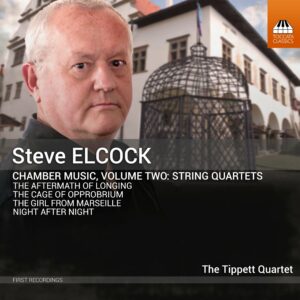
Steve Elcock: Chamber Music, Volume Two: String Quartets
The English composer Steve Elcock (b. 1957) spent years writing music without ever expecting it to be heard: based in rural France, he worked as a translator, composing in his spare time. The emergence of his orchestral and chamber music on Toccata Classics over the past few years has led to his being acclaimed as one of the most important composers at work today. This recording of his four works (to date) for string quartet confirms that judgement: all in single spans, they generate tension and energy in equal measure – animated, in one of them, by a lively sense of humour.
The Tippett Quartet
John Mills and Jeremy Isaac, violins
Lydia Lowndes-Northcott, viola
Božidar Vukotić, cello
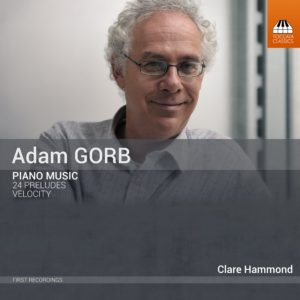
Adam Gorb: Piano Music
The 24 Preludes of Adam Gorb (born in Cardiff in 1958 and a feature of musical life in Manchester for over two decades) follow the examples of Chopin and Shostakovich in describing a cycle of fifths – though his descend, whereas Chopin’s and Shostakovich’s go up. Like those earlier exemplars, and as with the preludes of Debussy, Rachmaninov and others, Gorb’s are miniature studies of personality and mood – charming, brittle, perky, languorous, bat-flight fast, borderline violent or tender. His Velocity does what it says on the tin: it’s a wild, even manic, chase, over rhythmically dislocating ground.
Clare Hammond, piano
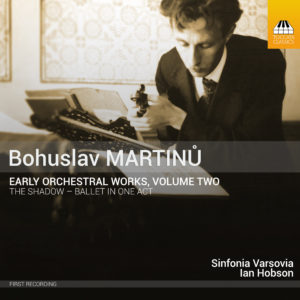
Martinů: Early Orchestral Works, Volume Two
Martinů’s mature orchestral works are now a mainstay of the repertoire. But the generous quantity of orchestral music he wrote between his late teens and early thirties is as good as unknown; some of it, indeed, has never even been performed. That’s the case with the ballet Stín (‘The Shadow’) from 1916, which has its world premiere in this recording – astonishingly, in view of the quality of the music it contains. Although the action of the ballet is dark – a girl dances with her shadow in the presence of Death – Martinů’s score presents a series of remarkably buoyant and cheery dances.
Dorota Szczepańska, offstage soprano
Anna Maria Staśkiewicz, violin
Agnieszka Kopacka, piano
Sinfonia Varsovia
Ian Hobson, conductor

An Infinity of Traces: Influence Without Anxiety
I often play a kind of party game with friends: each participant will offer a recording of a piece of music by a less-well-known composer,…
Toccata e due CD: Rediscovering Early Martinů – Part III
Volume One of the Martinů Early Orchestral Works series brought much satisfaction to all involved. Martin Anderson was delighted by the quality of the new…
Coming in from the Unknown
English composer Steve Elcock describes his emergence from total obscurity At the age of seventeen, I sat the entrance examination to go to Oxford to…

First Posting to the Toccata Blog: Opening-up Classical Music
Welcome to the first posting on my new blog. Quick introduction for those who don’t know me: I run the CD label Toccata Classics and…
24 Preludes Inspired by Debussy
It all began with a strange thought: what if a piece of music should suddenly forget all about itself, with only its name left behind…
My Relationship With The Piano — The Briefest of Histories
I started making up melodies, harmonies, rhythms and colours on the piano before I could read and write. But my real love affair with the…
Remembering Alice Herz-Sommer
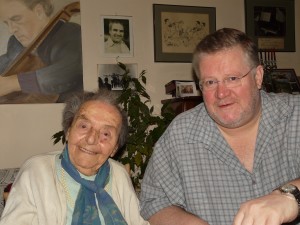
News has come through of the death this morning, 23 February 2014, of Alice Herz-Sommer, at the age of 110. Alice had become an icon,…
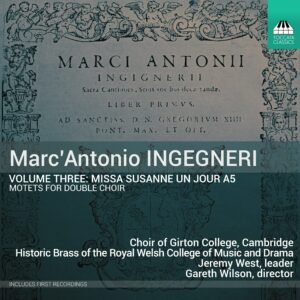
Marc’ Antonio Ingegneri, Volume Three: Missa Susanne un jour a5
The Cremonese composer Marc’Antonio Ingegneri (c. 1535/36–92) is chiefly remembered as the teacher of Claudio Monteverdi while, for well nigh 500 years, his own achievements were left to sit in the shadows. This third in a series of pioneering recordings from the Choir of Girton College, Cambridge, reveals Ingegneri to have been one of the masters of his age, writing music of breathtaking richness and beauty: the works heard here combine learned, intricate counterpoint with the kind of sheer sonic thrill that brings a shiver of physical excitement. It is, of course, religious music, but it is also extraordinarily passionate, to a degree not previously heard, nor for centuries to come, until the rise of the great Romantic choral works.
Choir of Girton College, Cambridge (1, 2, 4–6, 9–12, 16)
Historic Brass of the Royal Welsh College of Music and Drama (1–7, 9–14)
Jeremy West, leader (3)
Emily Nott, organ (8)
Felix Elliott, organ (15)
Gareth Wilson, director
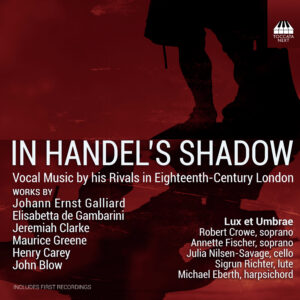
In Handel’s Shadow: Vocal Music by his Rivals in 18th-Century London
The figure of George Frideric Handel cast a long shadow over musical London in the first half of the eighteenth century, condemning many of his contemporaries – fine composers themselves – to long years of obscurity. This recording throws light into forgotten corners and discovers some glittering gems, some of them demanding dazzling vocal fireworks from their performers. Several of these composers set scenes from Classical mythology or Old Testament narratives – but they also explore the underside of the Baroque psyche in one of David’s darkest psalms and in a representation of Arcadian madness.
Lux et Umbrae
Robert Crowe, soprano and artistic director
Annette Fischer, soprano
Julia Nilsen-Savage, cello
Sigrun Richter, archlute
Michael Eberth, harpsichord