Search Results for "27 Inch UltraGear™ evo AI GM9" – Page 2
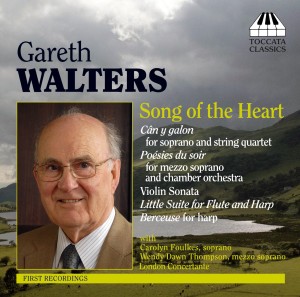
Gareth Walters: Song-Cycles and Chamber Music
The Welsh composer Gareth Walters (1928-2012) studied with Jean Rivier and Olivier Messiaen in Paris in the early 1950s, inheriting a formal elegance which characterised his music ever after, enhanced on this disc by a nocturnal, serenade-like quality. The two song-cycles on this disc — C√¢n y galon ('Song of the Heart'), set in Welsh, on aspects of love, and Poésies du soir, which evoke the calm of summer evenings — share the song-writing clarity of Britten, whose early encouragement galvanised Walters' career as a composer. They enclose the buoyant, Celtic-coloured Little Suite for Flute and Harp, the expansive Violin Sonata and the gentle Berceuse for harp.
Carolyn Foulkes, soprano
Sally Pryce, harp
Adam Walker, flute
Adam Summerhayes, violin
Nicola Eimer, piano
Wendy Dawn Thompson, mezzo soprano
London Concertante, ensemble
Gregory Rose, conductor
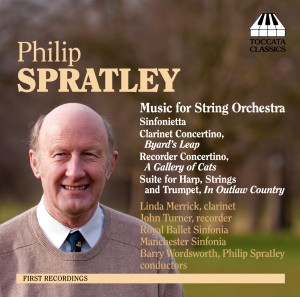
Philip Spratley: Music for String Orchestra
This CD reveals a fresh, original and immediately attractive voice in British music. Philip Spratley, born in Nottinghamshire in 1942, has his roots in English folksong and his compositions are strongly evocative of the countryside — though animated by a rhythmic vivacity and drive that recalls Shostakovich, Britten and Tippett. Spratley's music also abounds in memorable melodies, and his ability to write tunes with the ring of folksong about them reveals him as a true heir of Holst and Vaughan Williams.
Philip Spratley, conductor
Linda Merrick, clarinet
John Turner, recorder
Tracey Redfern, trumpet
Eira Lynn Jones, harp
Royal Ballet Sinfonia, orchestra
Barry Wordsworth, conductor
Manchester Sinfonia, orchestra
Vytautas Bacevičius: Piano Music, Volume Three
The Lithuanian pianist and composer Vytautas Bacevičius (1905–70) – exiled to the New World by the outbreak of the Second World War – is one of the undiscovered pioneers of the twentieth century. This third volume of his piano music presents works written between 1926 and 1959 and shows the evolution of his musical language from the post-Skryabin style of the early works, via the influence of Debussy, Prokofiev and Stravinsky, to a highly individual modernism that can occasionally nod to the jazz of his adoptive New York. It is a testament to the strength of Bacevičius’ personality that his musical identity remains consistent even as his manner evolves – his individuality is never in doubt, not least because of his enduring fondness for a playful gesture.
Gabrielius Alekna, piano
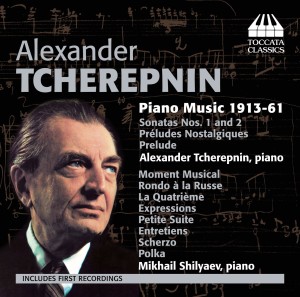
Alexander Tcherepnin: Piano Music 1913-61
This unusual album begins with archival recordings, in excellent sound, of the Russian-born composer-pianist Alexander Tcherepnin (1899-1977) playing some of his most memorable piano music. The early Sonata No. 1 (1918-19) is a brilliant, virtuosic study in dramatic Slavic romanticism; the atmospheric late Sonata No. 2 (1961), never commercially recorded by the composer, stands as a paragon of elegant modernism in continuous thematic evolution. The second part of the CD, performed by the Russian pianist Mikhail Shilyaev, presents a selection of attractive, rarely heard works from various periods in Tcherepnin's career, further illustrating his Prokofiev-like fondness for spiky humour, pungent harmony and crisp melody.
Alexander Tcherepnin, piano
Mikhail Shilyaev, piano
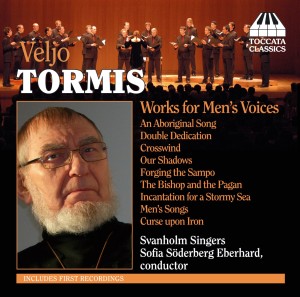
Veljo Tormis: Works for Men’s Voices
The Estonian composer Veljo Tormis (born in 1930) has carved a unique position for himself in contemporary music. By marrying the quasi-minimalist rhythmic vigour of Estonian runic singing – a tradition some 3,000 years old – with the extended techniques of modern choral writing, he has created a body of music tingling with excitement, energy and power. Many of the works on this CD – where the composer, playing shaman drum and anvil, joins one of Scandinavia’s brightest young choirs – draw on folk sources in a reaffirmation of Estonian identity; others evoke the forces of nature as a metaphor for political upheaval.
Svanholm Singers, choir
Sofia Söderberg Eberhard, conductor
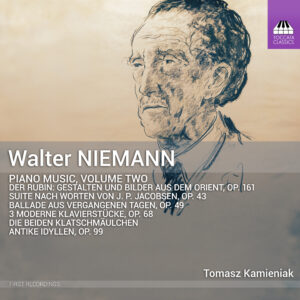
Walter Niemann: Piano Music, Volume Two
The largest part of the output of the Hamburg-born composer and writer Walter Niemann (1876–1973), a student of both Humperdinck and Reinecke, is piano music: an astonishing 1,000 or so pieces, divided into 189 opus numbers. Most of them are lyrical miniatures in a warm and approachable late-Romantic style, some evoking the music of the past – often with a touching degree of dignity and restraint, but also with an occasional flash of good humour.
Tomasz Kamieniak, piano
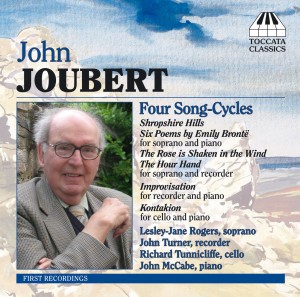
John Joubert: Song-Cycles and Chamber Music
The music of John Joubert – born in 1927 in Cape Town, a student at the Royal Academy of Music in London in the 1940s and ’50s, and Birmingham-based since 1962 – has a strong sense of melody, his beguiling lyricism combining with an acute sensitivity to words to produce songs that are both colourful and evocative. These four song-cycles pay tribute to the places and poets that inspired them. And his chamberworks, drawing on a rich instrumental palette and haunting melodic lines, are memorable and dramatically effective.
Lesley-Jane Rogers, soprano
John Turner, recorder
Richard Tunnicliffe, cello
John McCabe, piano
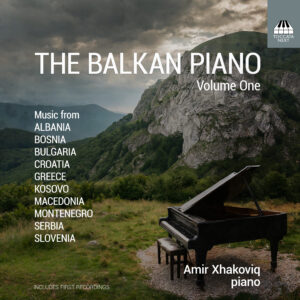
The Balkan Piano, Volume One
The composing traditions of the ten Balkan countries are as good as unknown in the rest of the world. In this revelatory piano recital, the Albanian pianist Amir Xhakoviq presents a glittering array of keyboard jewels from his own country and its neighbours, ranging from wild and energetic toccatas to timeless evocations of bells and other ancient traditions, with a surprisingly wide range of references, from folk-music to Scarlatti and jazz. As ‘Volume One’ indicates, this album is intended as the first of a series that will continue to explore the unfamiliar music of the Balkans.
Amir Xhakoviq, piano
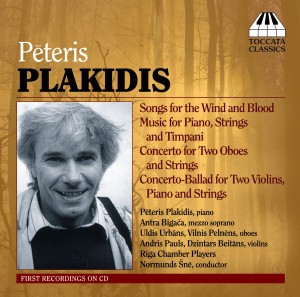
Pēteris Plakidis: Music for String Orchestra
The music of Pēteris Plakidis (1947-2017) is rooted in the melodic character of Latvian folk-music, which imbues all his works with a remarkable strength and beauty. Renaissance and Baroque polyphony and forms, such as fugue, chaconne, canon and variation, provide the strong internal organisation that binds together a remarkable and moving synthesis of disparate elements. Although Plakidis shares some points of contact with the 'Holy Mystics’ among other Baltic composers, such as Arvo Pärt and Pēteris Vasks, his own music evokes the meditative power of nature and the distinct character of his Latvian roots. From these four works a unique voice emerges, a musical personality full of harmonic warmth, rhythmic excitement and dramatic lyricism.
Pēteris Plakidis, piano
Antra Bigača, mezzo soprano
Uldis Urbāns, oboe
Vilnis Pelnēns, oboe
Andris Pauls, violin
Dzintars Beitāns, violin
Riga Chamber Players, chamber orchestra
Normunds Šnē, conductor
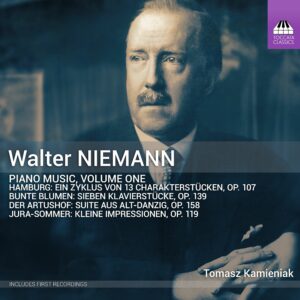
Walter Niemann: Piano Music, Volume One
The largest part of the output of the Hamburg-born composer and writer Walter Niemann (1876–1973), a student of both Humperdinck and Reinecke, is piano music: an astonishing 1,000 or so pieces, divided into 189 opus numbers. Most of them are lyrical miniatures in a warm and approachable late-Romantic style, some evoking the music of the past. Occasionally, though, as in Hamburg, a recollection of scenes from his childhood, a degree of mild dissonance indicates his desire to stay true to his memories of growing up in a port city.
Tomasz Kamieniak, piano
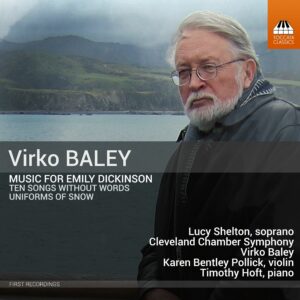
Virko Baley: Music for Emily Dickinson
Winner of the 2024 American Prize Ernst Bacon Memorial Award for the Performance of American Music, 2024
Virko Baley was born in Ukraine in 1938 and came to the USA as a refugee in 1949, eventually making his home in Las Vegas. He has long been fascinated by the poetry of Emily Dickinson, as can be heard in the two moving works recorded here – one an orchestral song-cycle setting her texts, the other a suite for violin and piano inspired by those settings. They display an acute ear for orchestral colour, a fondness for dramatic gesture and a strong sense of lyricism, occasionally inflected by distant echoes of Baley’s eastern European origins, the richness of the song-cycle placing him downstream from Mahler and Berg and the restraint of the Songs without Words occasionally evoking Arvo Pärt.
Lucy Shelton, soprano
Cleveland Chamber Symphony
Virko Baley, conductor
Karen Bentley Pollick, violin
Timothy Hoft, piano

William Beaton Moonie: Chamber and Instrumental Music, Vol. One: Music for Solo Piano
The music of the Edinburgh composer William Beaton Moonie (1883–1961) is as good as unknown. This first-ever album devoted to his piano music reveals a figure downstream from Schumann, Brahms and Grieg, writing in a conservative Romantic idiom coloured by echoes of the folk-music of his native Scotland. Many of these pieces, indeed, are concerned to evoke images of the Scottish countryside or suggest aspects of Scottish history.
Christopher Guild, piano
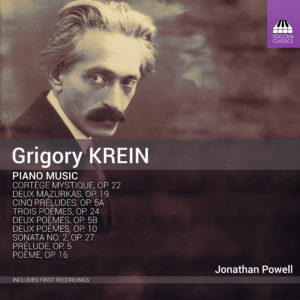
Grigory Krein: Piano Music
Grigory Krein (1879–1955), a member of an astonishing dynasty of Russian-Jewish musician-composers, was recognised by his contemporaries as one of the major composers of his day. His piano music charts a stylistic evolution from the early influence of Grieg, Reger (with whom he studied) and Debussy towards a more complex and chromatic language with harmonies that synthesise the sound-worlds of Skryabin and Szymanowski; there’s also an echo of the rhapsodic Celtic wildness of Bax. Indeed, all of these pieces are informed by a remarkable sense of energy – latent in some and given its head in others. .
Jonathan Powell, piano
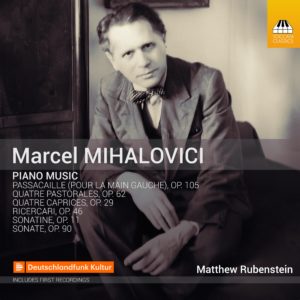
Marcel Mihalovici: Piano Music
The ‘École de Paris’ was a group of composers from central and eastern Europe who made the French capital their home in the 1920s and ’30s. One of their number was the Romanian Marcel Mihalovici, born in Bucharest in 1898 and based in Paris from 1919 until his death in 1985 – one of the most significant of twentieth-century composers who has yet to receive the recognition he deserves. This first album dedicated to his piano music traces his stylistic evolution, the early blend of French insouciance, echoes of eastern European folk-music and Neo-Classical contrapuntal clarity gradually taking a tougher turn and blending Bartók and Bach. It ends with a monumental passacaglia for the left hand alone, one of the most daunting summits of the piano literature.
Matthew Rubenstein, piano
All Except * First recordings
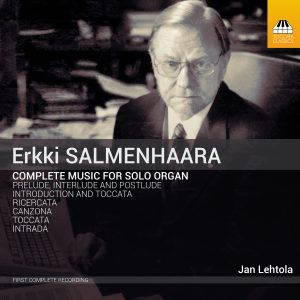
Erkki SALMENHAARA: Complete Music for Organ Solo
As composer, musicologist and critic, Erkki Salmenhaara (1941–2002) was one of the major figures in Finnish musical life in the second half of the twentieth century. His music for organ charts his stylistic evolution, from a modernism influenced by his teacher, György Ligeti, to triadic harmonies spiced with dissonance. Even so, all these works manifest his fondness for the ability of the organ to generate massive and powerful blocks of sound, giving this music a monumental character in keeping with the grand spaces of the buildings in which it is usually heard.
Jan Lehtola, organ of Turku Cathedral
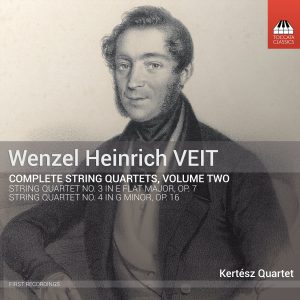
Wenzel Heinrich Veit: Complete String Quartets, Volume Two
The German-Bohemian composer Wenzel Heinrich Veit (1806–64) – Václav Jindřich Veit in Czech – is one of music’s most unjustly forgotten figures. As these first recordings of his four string quartets will show, he is not only the link between the Bohemian composers of the end of the Classical period and the wave of Czech Romanticism that began with Smetana but also an outstanding composer in his own right. His quartets trace the stylistic evolution of his time: they emerge from a debt to Haydn and Beethoven and embrace Mendelssohn and Schumann on their way to pre-echoes of Dvořák.
Kertész Quartet, playing on original instruments
Katalin Kertész and Jean Paterson, violins
Nichola Blakey, viola
Cressida Nash, cello