Search Results for "fc 26 coins Buyfc26coins.com is EA Sports official for FC 26 coins The transfer time was very fast..ujWi" – Page 10
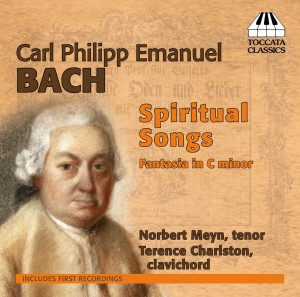
C. P. E. Bach: Spiritual Songs
C. P. E. Bach's two collections of religious songs, published in 1758 and 1780-81, were among the most popular eighteenth-century Lieder publications. Here a selection of them is recorded for the first time with complete texts and accompanied with the clavichord, the composer's favourite instrument, underlining their intimate nature, intended more for private devotional use than for public performance. The recording includes the 'Hamlet Fantasy' that resulted when the poet Heinrich Wilhelm von Gerstenberg imposed his paraphrase of Hamlet's soliloquy on one of C. P. E. Bach's keyboard pieces.
Norbert Meyn, tenor
Terence Charlston, clavichord
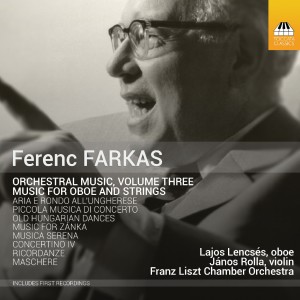
Ferenc Farkas: Orchestral Music, Volume Three — Music for Oboe and Strings
This third release in a series of recordings of orchestral music by the Hungarian composer Ferenc Farkas (1905-2000) — this time featuring works for oboe and strings — highlights the characteristics that make his music so appealing: catchy tunes, transparent scoring, buoyant rhythms and a fondness for Baroque forms and folk-dances. Two chamber pieces featuring the oboe and cor anglais offer textural contrast.
Lajos Lenscés, oboe
János Rolla, violin
Franz Liszt Chamber Orchestra
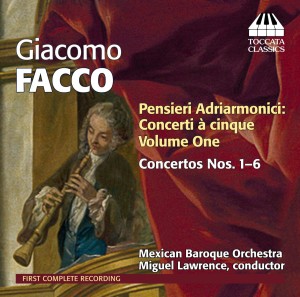
Giacomo Facco: Pensieri Adriarmonici: Concerti à cinque, Volume One
Giacomo Facco (1676-1753), born near Venice, was active in southern Italy as violinist, choirmaster and teacher before his appointment to the Spanish royal court around 1720. Although highly esteemed in his own time, particularly as a composer of vocal music, Facco had disappeared from musical history until a set of his twelve Pensieri Adriarmonici — concertos for three violins, viola, cello and basso continuo — were discovered in a Mexican library in 1962. Bright and buoyant, they have much in common with the music of Vivaldi, Albinoni, Marcello and Facco's other Venetian contemporaries — but are here given a distinct twist with a basso continuo of vihuela and guitarrón, as they might have been performed in eighteenth-century Mexico.
Manuel Zogbi, violin
Mexican Baroque Orchestra, chamber orchestra
Miguel Lawrence, director
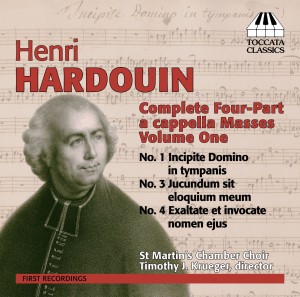
Henri Hardouin: Complete Four-Part a cappella Masses, Volume One
Henri Hardouin (1727-1808) was a chorister in Rheims Cathedral, rising swiftly through the ranks to become maître de chapelle — until the French Revolution disbanded religious establishments. As a priest he was in potential danger and seems to have gone into hiding until, in 1794, the death of Robespierre allowed him to resume his duties. Hardouin's six four-part masses, published in 1772, are unusual for their time in being a cappella, and they enjoyed wide circulation in pre-Revolutionary France. Since then they have been roundly neglected — an omission this two-CD survey intends to rectify.
St. Martin’s Chamber Choir
Timothy J. Krueger, conductor
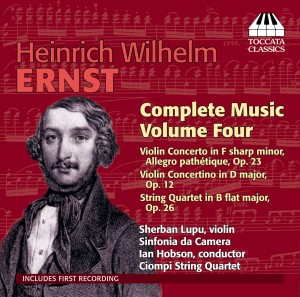
Heinrich Wilhelm Ernst: Complete Music, Volume Four
Heinrich Wilhelm Ernst (1812-65) was one of the leading musicians of his day, a friend of Berlioz, Chopin, Liszt and Mendelssohn, and for Joseph Joachim 'the greatest violinist I ever heard'. But the popular encore pieces by which Ernst is remembered today represent only a fraction of his output. This fourth CD — in a series of seven presenting all his compositions for the first time — contains some of his most important compositions: an early Concertino with a melancholy slow movement and charming waltz finale; the fiendishly difficult Concerto that had a deep influence not only on Liszt's Piano Sonata but also the Brahms and Sibelius violin concertos; and the late String Quartet, with echoes of Beethoven and Mendelssohn and an inwardness, charm and energy all of its own.
Sherban Lupu
Ciompi String Quartet
Sinfonia da Camera
Ian Hobson
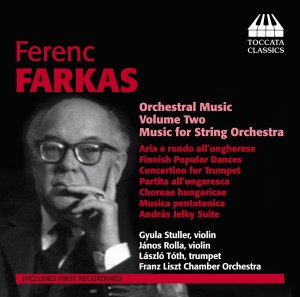
Ferenc Farkas: Orchestral Music, Volume Two
This second release in a series of recordings of orchestral music by the Hungarian composer Ferenc Farkas (1905-2000) — this time featuring works for strings — highlights the characteristics that make his music so appealing: catchy tunes, transparent scoring, buoyant rhythms and a fondness for Baroque forms and folk-dances.
Gyula Stuller, violin
János Rolla, violin
László Tóth, trumpet
Franz Liszt Chamber Orchestra, chamber orchestra
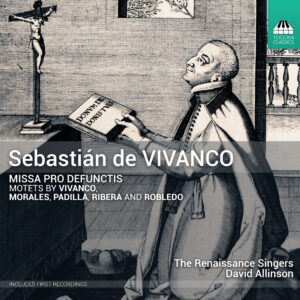
Sebastián de Vivanco: Missa Pro Defunctis; Motets
Spanish Renaissance polyphony has a reputation for florid, intricate contrapuntal textures and dark colours. Sebastián de Vivanco (c. 1551–1622), born in Ávila but active for most of his life in Salamanca, stands apart from his contemporaries: his music explores a much wider range of colours and techniques than that of, say, Victoria. In his more experimental and dramatic motets, some of which are heard here, he points the way towards the new Baroque. But in the calm sobriety of his Requiem, now reconstructed and recorded for the first time, he honours the Iberian tradition of unhurried chant-driven polyphony, all the more moving for its uncluttered clarity and exquisitely lovely chordal sequences.
The Renaissance Singers
David Allinson, director
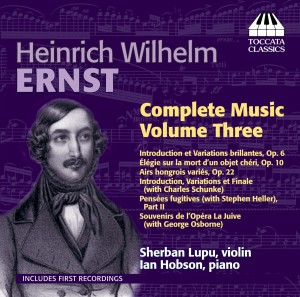
Heinrich Wilhelm Ernst: Complete Music, Volume Three
Heinrich Wilhelm Ernst (1812-65) was one of the leading musicians of his day, a friend of Berlioz, Chopin, Liszt and Mendelssohn, and for Joseph Joachim 'the greatest violinist I ever heard'. But the popular encore pieces by which Ernst is remembered today represent only a fraction of his output. This third CD — in a series of seven presenting all his compositions for the first time — shows the full range of his creativity and charm. The Élégie sur la mort d'un objet chéri is written in his most moving and melancholy vein, and the Airs hongrois variés push the virtuoso violin to its absolute limits. Between these extremes lie the lyricism of the Pensées fugitives, the inventiveness of his treatment of two Halévy operas and the high spirits of his fantasy on a Strauss waltz.
Sherban Lupu, violin
Ian Hobson, piano
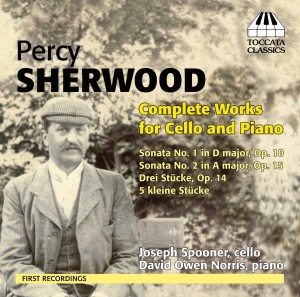
Percy Sherwood: Complete Works for Cello and Piano
The Anglo-German composer Percy Sherwood, born in 1866, seems to have slipped through the cracks of history, although he has an impressive output of orchestral, chamber, choral and instrumental music to his credit. He was once an important figure in his native Dresden, where he owned an imposing villa, but after moving to Britain at the beginning of the First World War he faded from view and by the time of his death in London in 1939 his music was as good as forgotten. This first CD in a series of Sherwood recordings — the first-ever dedicated to his music — reveals a major lost Romantic, with a style that is both lyrical and passionate.
Joseph Spooner, cello
David Owen Norris, piano
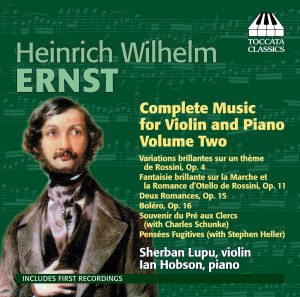
Heinrich Wilhelm Ernst: Complete Music for Violin and Piano, Volume Two
Heinrich Wilhelm Ernst (1812-65) was one of the leading musicians of his day, a friend of Berlioz, Chopin, Liszt and Mendelssohn, and for Joseph Joachim 'the greatest violinist I ever heard'. But the popular encore pieces by which Ernst is remembered today represent only a fraction of his output. This second CD — in a series of six presenting his complete violin works for the first time — combines brilliant display and expressive melody: the Otello Fantasy and Rossini Variations show Ernst developing Paganini's inheritance, and the Boléro, Two Romances and Pensées fugitives show why he was such a favourite in Parisian salons.
Sherban Lupu, violin
Ian Hobson, piano
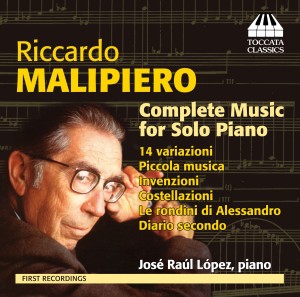
Riccardo Malipiero: Complete Music for Solo Piano
The Italian composer Riccardo Malipiero (1914-2003), nephew of the better-known Gian Francesco Malipiero, was one of the pioneers of twelve-tone technique in Italy. His six published piano works — recorded here for the first time — encapsulate half-a-century of development, from the post-Respighian 14 variazioni of 1938, via the Bachian Invenzioni and the virtuosic Costellazioni, to the classicism of the Diario second of 1985. But Malipiero's concern was more with individuality of expression than with modernist dogma, and he was happy to break the rules in pursuit of colour and variety.
José Raúl López, piano
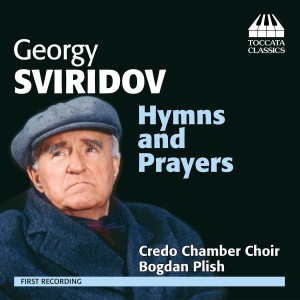
Georgy Sviridov: Hymns and Prayers
Gyorgy Sviridov (1915-98) saw himself as part of the thousand-year continuum of Russian culture, giving its resonance full expression in the monumental choral cycle Hymns and Prayers, written over a ten-year period from 1987 to 1997; he completed it only weeks before he died. Extraordinarily beautiful and profoundly moving, Hymns and Prayers is perhaps the most important Russian choral composition since the liturgies of Tchaikovsky and Rachmaninov. At this time of tension between Russia and Ukraine, here a Ukrainian choir sings a Russian masterpiece.
Credo Chamber Choir, cond. Bogdan Plish; Ivanna Bondaruk, soprano; Yuliya Zuveya, mezzo soprano; Roman (Podlubnyak), celibate deacon, tenor; Roman Pachashynsky, tenor; Nazar Yakobenchuk, baritone; Tarasiy (Mudrak), archdeacon, bass;
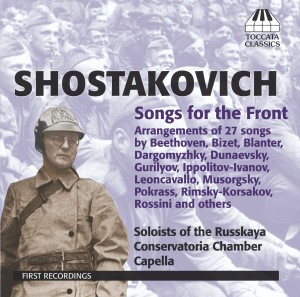
Dmitry Shostakovich: Songs for the Front
During the Siege of Leningrad, which lasted from 1941 to 1944, Shostakovich was famously photographed in a fireman's outfit on the burning rooftops. But he also made a musical contribution to the defence of the city, arranging a series of songs — operatic arias, classical numbers and popular Soviet hits — for voices, violin and cello. The musicians then climbed into the back of a truck and were driven to the front, where they performed to the soldiers. The cheeky, folky — and defiantly Russian — insouciance of many of the songs, recorded here for the first time, must have brought a ray of hope and humour to the cold and hungry troops.
Soloists of the Russkaya Conservatoria Chamber Capella
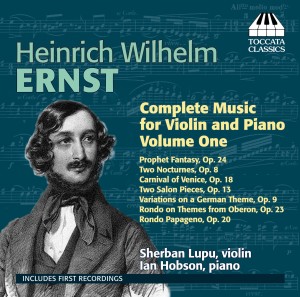
Heinrich Wilhelm Ernst: Complete Music for Violin and Piano, Volume One
Heinrich Wilhelm Ernst (1812-65) was one of the leading musicians of his day, a friend of Berlioz, Chopin, Liszt and Mendelssohn, and for Joseph Joachim 'the greatest violinist I ever heard'. But the popular encore pieces by which Ernst is remembered today represent only a fraction of his output. This series of six CDs presents his complete violin works for the first time, revealing one of the instrument's most accomplished and memorable composers. The first disc shows him in a range of moods, from the mystery and grandeur of the Prophet Fantasy and the Chopinesque poetry of the Two Nocturnes to the bizarre whimsy of The Carnival of Venice and infectious high spirits of the Rondo Papageno — the nineteenth-century virtuoso violin both in introspective melancholy and at its most dazzlingly flamboyant.
Sherban Lupu, violin
Ian Hobson, piano
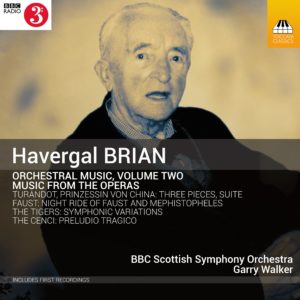
Havergal Brian: Orchestral Music, Volume Two
The English composer Havergal Brian (1876-1972) is renowned for his 32 symphonies, 21 of them — written after his 80th birthday — constituting one of the most remarkable Indian summers in the history of music. It is less well known that Brian also composed five operas; since none of them has yet been staged, this CD reveals for the first time some of the remarkably inventive and powerful orchestral pieces hidden within those scores.
BBC Scottish Symphony Orchestra, orchestra
Garry Walker, conductor
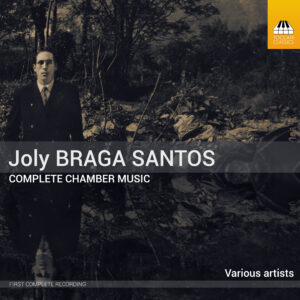
Joly Braga Santos: Complete Chamber Music
Joly Braga Santos (1924–88) was one of the most important composers in twentieth-century Portugal. In his early works his fondness for modal harmony, absorbed from the Portuguese masters of the Renaissance, and his busy counterpoint combine to make him sound surprisingly close to such particularly English composers as Vaughan Williams and Moeran. Although his harmonic language became more astringent with time, it retained a burly sense of humour and a powerful charge of energy, often infused with the spirit of Portuguese folk-dance.
Various Artists
3 CD Box Set Includes:
TOCC0207 – Joly Braga Santos: Complete Chamber Music, Vol. 1
TOCC0588 – Joly Braga Santos: Complete Chamber Music, Vol. 2
TOCC0588 – Joly Braga Santos: Complete Chamber Music, Vol. 3