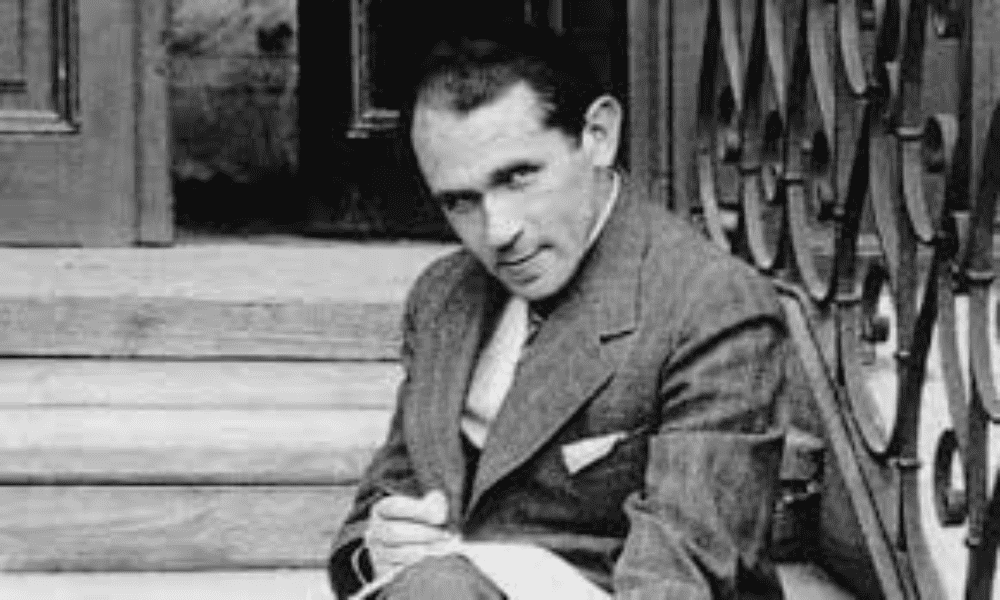
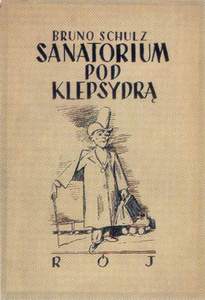
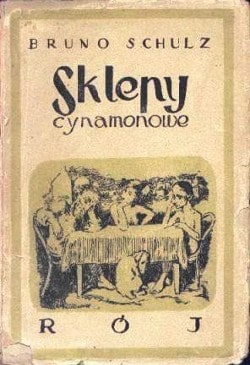
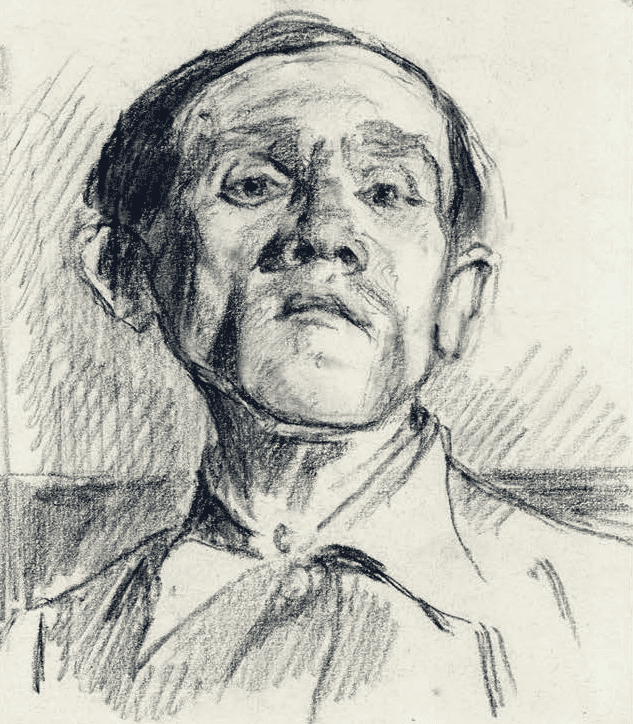
Bruno Schulz was a Polish-Jewish writer and artist who lived most of his life in Drohobych – then in Austrian Galicia, now in Ukraine. He was born in 1892, making him a near-contemporary of several important literary figures in central and eastern Europe, such as the Russian Boris Pasternak, the Czech Karel Čapek and the Yugoslavian Ivo Andrić. At university Schulz initially studied architecture, before returning to the school where he had been a pupil, to teach drawing and crafts. To amuse his students he would tell stories; perhaps some of these fed into those he was later to publish. His world was the closed one of family and work in what was a provincial city, this despite the fact that the putative ownership of Drohobych passed between Austro-Hungary, republican Ukraine, republican Poland, Soviet Ukraine and the Nazi regime. Schulz largely kept contemporary turmoil out of his work, but in the end the arbiters of terror finally found him. Schulz published two slim volumes of short stories: Sklepy Cynamonowe (‘Cinnamon Shops’ – sometimes called in English ‘The Street of Crocodiles’) in 1934 1, and Sanatorium Pod Klepsydrą (‘Sanatorium Under the Sign of the Hourglass’) in 1937 2. A third book, The Messiah, was left unfinished at his death, and the manuscript was lost during the war. During German occupation in 1942 Schulz met his death at the hands of a Nazi officer as he was coming back from the shops, having collected his ratio – a loaf of bread.
As if typifying the changing political circumstances of Drohobych, when some murals of Schulz’s were discovered in the house once occupied by a Nazi officer who protected him as a ‘necessary Jew’, there was a cultural tug of war between competing groups – Polish, Ukrainian and Jewish. Ultimately the matter was settled when representatives of Yad Vashem, The World Holocaust Remembrance Center, removed some fragments of the mural and transported them to Jerusalem. Since then arrangements have been made by all parties that have soused the flames of the original controversy. The question, ‘Who does Bruno Schulz belong to?’ seems to have been answered in this way. His reputation continues to grow.
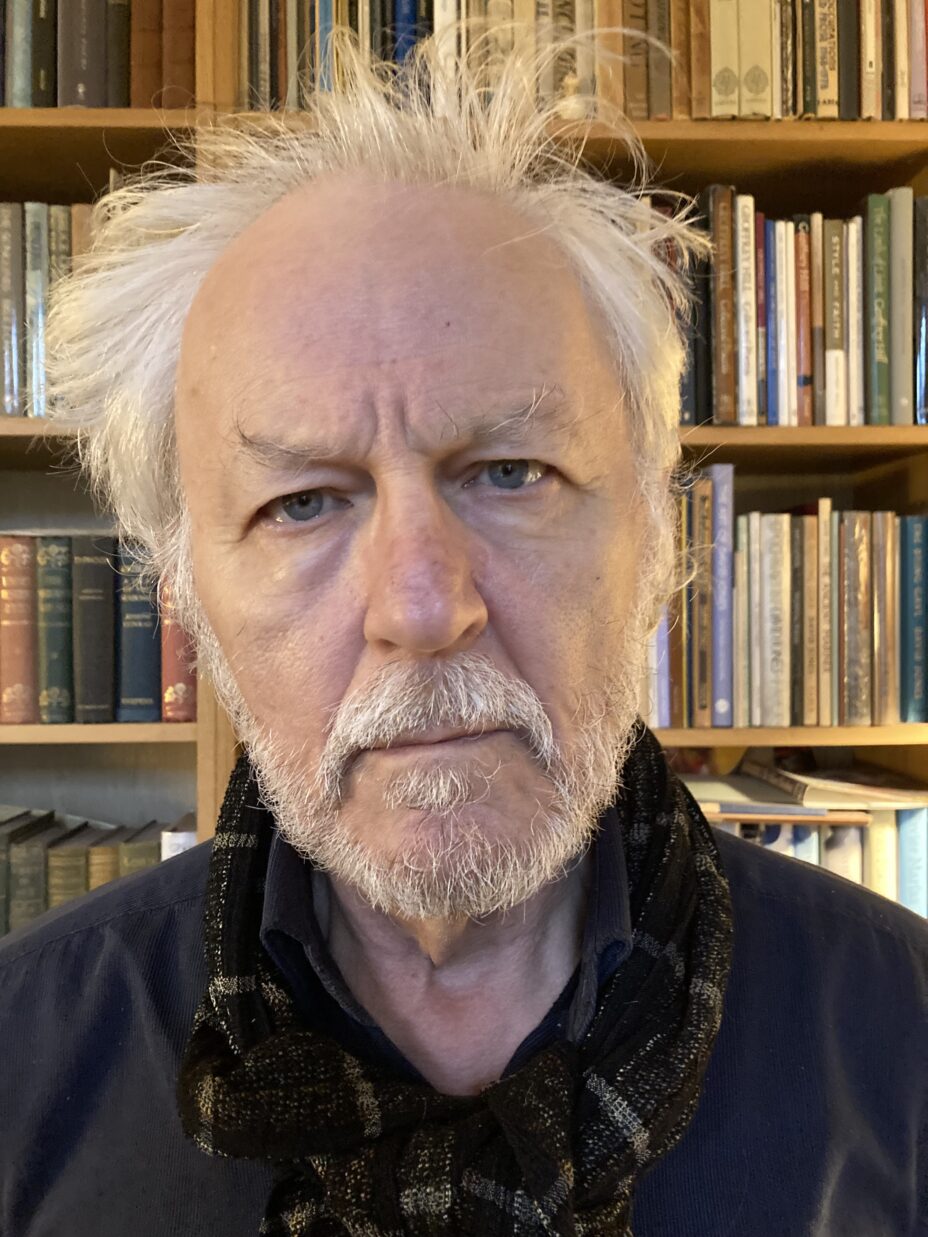
Marius Kociejowski is a poet, essayist and writer of travel books of a wholly non-touristic nature. Among his books are Collected Poems (Carcanet, 2019), The Pigeon Wars of Damascus (Biblioasis, 2010) and God’s Zoo: Artists, Exiles, Londoners (Carcanet, 2014). He is the joint-dedicatee, together with Jonathan Powell, of my Piano Concerto No. 3, ‘After Bruno Schulz’ (released on Toccata Classics tocc 0803 in June 2026).
MK What first drew you to Bruno Schulz’s work?
DHJ About 30 years ago I was in the basement of a second-hand bookshop in Charing Cross Road – in the straining posture needed to reach a book located at floor level – and I pulled out a copy of Letters and Drawings of Bruno Schulz.3 I didn’t know who Schulz was but was immediately taken with his startling artworks that seemed to combine the Expressionism of George Grosz and the Decadence of Félicien Rops – bitter, satirical implications coupled with fetishistic elements. Turning to the writing I found a similar fondness for the grotesque but also a lighter, more child-like aspect. Gradually I acquired other books by Schulz but outside my reading I wasn’t aware of what I now know was the growing importance his work was assuming. And what drew you to him?
MK I first discovered Bruno Schulz in the wonderful ‘Writers from the Other Europe’ series, edited by Philip Roth, and issued by Penguin Books in America. Amazingly, when I wrote to Penguin here urging them to consider publishing it, they showed no interest whatsoever. I approached other publishers with similar results. After the publication of the first English edition of Cinnamon Shops (1963),which was not exactly a publishing success — it was remaindered and when the remainder failed to sell it was pulped—and Hourglass Under the Sign of the Sanitorium (1979), Schulz remained largely in the shadows until Picador published The Collected Works in 1998. At last the word was out, Schulz was on everyone’s lips, and I began to resent the fact he was no longer my secret. What drew me to his work immediately was the sense of there being somewhere in the world ‘the Book’ that would put all others in the shade, which would provide all the answers to all the questions regarding our existence. I have devoted much of my life to searching for that book. Cinnamon Shops was ‘it’, of course, but the problem is that once ‘the Book’ is found, one needs to find another and then another. It’s what comes over me every time I step inside a second-hand bookshop, especially one I’d never been to before. Although I have found that secret book many times over, in different forms and in varying degrees, I am still driven by the notion that I have yet to find it. Call it, if you like, my Polish neurosis.

DHJ And I thought Schulz was my secret! When I met you about ten years ago I am certain that Schulz was mentioned by one or other of us within a few minutes. It wasn’t long before we had the idea of joining forces to make an opera, drawing upon the life and work of Schulz but in a way that would make it hard to distinguish between the biography and the stories he wrote. The opera was stalled.
MK And yet, maybe because of the endless dramatic possibilities his writing offers, there is another dimension that could be considered. This morning I gave your concerto a second listen. What struck me with considerable force this time was the balletic aspect of the music. Suddenly I saw Bruno Schulz as he appears in photographs of him and in his self-portraits, in an oversized striped suit, in all of his physical awkwardness dancing like one of the mannequins in his stories. Visually, thematically, it made complete sense. That’s what the music captures in my view – a sense of the macabre intermingled with the sublime, particularly in that wonderful section in the third movement where you draw upon Klezmer influences.
DHJ You’re right – his stories have enormous amounts of balletic movement. For instance, if you think of the Józef’s4 father’s crazy aviary in the attic – you can imagine a ballet scene with all these birds that have hatched out in deformed, grotesque forms, flying around. And then of course the father turns into a condor, so you could actually have one dancer emerging from another as a different being – a kind of pas de deux with himself.
MK You could present the final scene as a kind of dance of death. You wouldn’t have to show guns on stage – any violence would be offstage as in ancient Greek theatre. Dancers fall one by one, or leave the stage to go to their deaths, like the nuns in Poulenc’s Dialogues of the Carmelites.
DHJ Oh, that terrible guillotine!
MK Yes. The nuns walk off stage to be guillotined. So you could have gunshots offstage and the dancers fall to the floor, or perhaps they disappear to meet their fate.
DHJ I have reflected on the many deaths that Józef’s father experiences in the stories. In one of them Adela the servant just sweeps him away, since he becomes desiccated to such an extent that he’s become a pile of dust. Symbolically, the father as the root of the tribe is reduced to nothing, implying the death of an entire race. In what I envisaged as the final scene of the opera, he is swept off the stage with a broom, to the accompaniment of the military drum patterns that you hear very frequently in the concerto – those drums are taken directly from that last scene of the opera for which I did actually write all the music – it’s just Adela sweeping, humming a trite little tune, and the drums.
MK A baleful tragic element.
DHJ Schulz wrote in Polish.
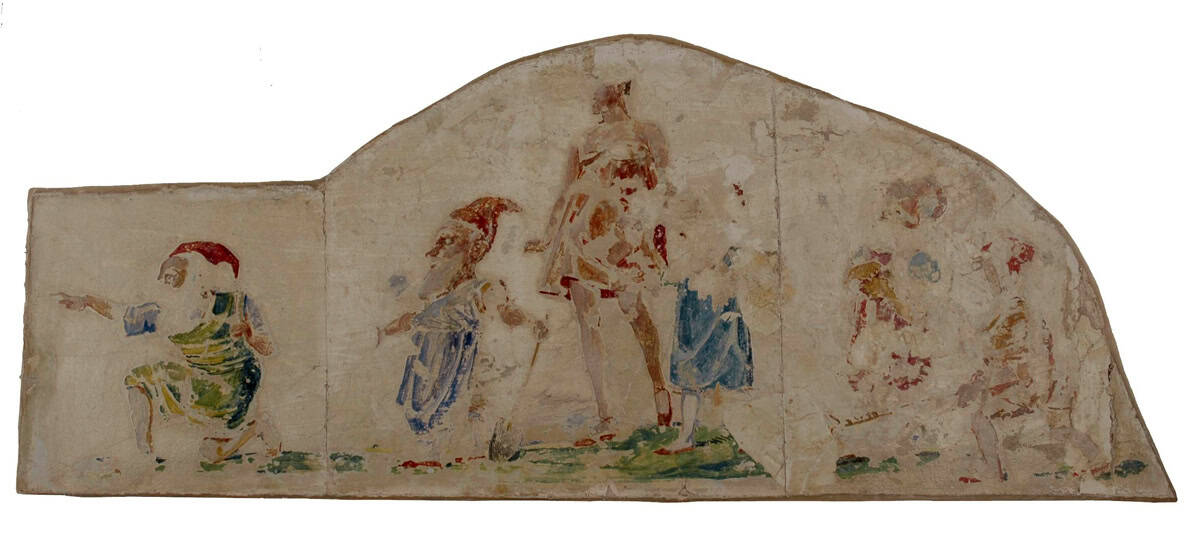
MK Kafka, with whom he’s often compared, wrote not in Czech but in German. Poles will tell you that Schulz’s Polish is very fine, highly exacting, which is a challenge to bring across into English at times. Although the tendency now to is consider him a Jewish writer — I have no problem with this — he was first and foremost a Polish writer. It is just one reason why I was appalled by Mossad’s theft5, and removal to Israel, of his murals in Drohobycz, which he painted for the children of an exceptionally brutal Gestapo officer just in order to stay alive. Schulz belongs to world literature, then Polish, then Jewish literature.
DHJ Hasn’t there been some controversy about the earliest translations?
MK Yes, and critics are right to criticise Schulz’s first translator, Celina Wieniewska, for having ‘domesticated’ Schulz a little. I wish I’d met her, an eccentric figure often seen with her wig at a tilt. This was back in the 1970s when I first encountered Cinnamon Shops – or The Street of Crocodiles, as it was retitled for the American edition. It is, mind you, a good title. When I phoned Wieniewska to ask if we could meet and discuss Schulz, she said: ‘Certainly not! I’m a married woman!’. She was in her seventies then. I have little doubt the more recent translations are an improvement on hers. One could argue that she felt she had to make Schulz palatable to English readers. Still, I have a tendency, unreliable though it is, to stick with the translator who first brings a favourite author into English. Among those who immediately come to mind are Constance Garnett whose translations of Chekhov, Dostoevsky and Gogol are unsurpassable and then, of course, Edwin and Edwina Muir with their at times over-scrubbed translations of Kafka. More recent translators may improve on, and sometimes correct, those earlier translations, but all too often they make them worse. I have a deep respect for those pioneering figures, although thank goodness we have the likes of Robert and Elizabeth Chandler whose translations of Vasily Grossman and Andrey Platonov outstrip earlier efforts by an enormous distance. The same may be said of Michael Hofmann’s translations of Joseph Roth. Mind you, I should have loved to have set that miracle-worker of translators, Antonia Lloyd-Jones, on Schulz. This said, Wieniewska’s ‘Bruno’ has a special place in my heart. You have a freer hand, of course, in that you have translated his life and work into music, which is not to say the burden of responsibility is not immense.
DHJ In English – and I assume this has been carried over from the Polish – there is an opulence to the language that is like smelling lilies that are on the turn… almost a sickly quality to the language, as if Schulz had a desire to go beneath things, literally into the roots, into the slime. He wants to go behind reality into myth.
MK And so let’s speak of your ‘translation’ and how reality and myth relate to your musical treatment of Schulz.
DHJ By not using anything really specific but getting behind the idea of individual stories and exploring the conflict between the imagination with the freedom, I think that presupposes, and the impositions of a rogue state that wishes to eradicate entire classes of people based on ideology. The individual with their own private myth, against an ideology that has no imagination and is literally witless. The concerto form has sometimes been described in terms of the individual (soloist) against the collective (orchestra), although in my piece these lines of demarcation are blurred, both entities being caught up in the drama and even switching sides.
MK To return to your use of Klezmer, I thought that there was a danger of that section falling into mere pastiche but just as I feared this might happen, the Klezmer interlude is swept up in what one might call the original intention of the music. The folk element disappears back into your own work – I’m not saying this is bad; actually it’s my favourite passage in the whole piece. What I’m saying is that you have successfully resolved a problem that might have become critical.
DHJ The Klezmer episode (which incidentally is strictly notated, albeit in improvisatory style) couldn’t have gone on any longer in the sense that it must have been clear to Bruno Schulz that his cultural milieu was about to be swept away – it couldn’t go on. The Klezmer episode is a little window onto that culture before it is smashed. The tragedy for Schulz is that he nearly escaped. He was days away from getting the papers he needed to break out of the ghetto. Where he would have gone I have no idea. This made me think of Majer Bogdanski6, because he was someone who miraculously did escape. Bruno was on the cusp of making that bid for freedom.
MK And he might have made it but for the fact that he went out to get the bread ration and was shot. It goes back to a rivalry between the two German officers. One of the officers was using a Jew as a pimp to supply the Germans with girls. An argument broke out between the two officers. The one who was using Bruno for errands and as a painter of the murals in his children’s bedroom shot the pimp dead. In a tit-for-tat killing Bruno was then shot and killed.7 But regardless of this episode I doubt whether Bruno would have survived anyway, given that the ghetto was liquidated. And of course with Bruno’s death we lost his great work, The Messiah, which he gave to a friend for safekeeping. It has never been seen since.
DHJ The trail must be very cold by now.
MK Yet there’s the story, whether true or not, that Bruno’s biographer Jerzy Ficowski8 was phoned up one day by a Russian officer who said that he knew where the manuscript was, hidden among the miles and miles of filing cabinets kept in the old KGB archives. This would have been around the time when security in such matters was relaxed under Gorbachev and Yeltsin, only to be tightened again under Putin.
DHJ So what happened?
MK Ficowski never heard from the man again, but then it may have been a cruel hoax. I want to come back to the mannequins and perhaps the animals too.
DHJ I’m struck by the way in which Schulz makes things move that aren’t supposed to, including things that are supposed to be dead – the endless resurrections of the father for example. Mannequins aren’t supposed to move – unless they are in an episode of Doctor Who.9 The mannequin is a plastic and rigid transformation of a human. In robotic form I imagine many of them as soldiers marching in ranks. This may well be a picture that comes to the minds of listeners in the polka and march sections of my concerto. But these soldiers cannot be tucked away in a fairy tale as in The Nutcracker – they are real and terrifying. It is a scene suitable for a ballet, of course. I’m intrigued by the way in which Schulz works with transformation. The father gets turned into a vulture, a cockroach, a crab. His wife decides to cook him in his crab form but nobody wants to eat him. Miraculously the father survives the cooking process and scuttles off. There’s an analogy in music: themes can be subjected to all sorts of mutations. You can take a radiant, lyrical melody and twist a knife in its back – turn it into something grotesque like a marching automaton. Liszt was a master at this kind of thematic transformation. He is a terribly important composer to me for all sorts of reasons, not least for his radical approach to structure which tends to get obscured by the virtuoso element.
MK I am sure that ideas derived from Schulz’s writings fed into the New Polish Theatre – Grotowski, Kantor, etc.10 You know, as in the Kantor play where each character has a plastic dummy strapped to their back. And the weird recollection of childhood with the banging of the lids of the school desks and the reliving of early trauma11. So much of Bruno is tied up with his childhood and so much of experimental theatre derives from him, from the way memory comes back to haunt us and how we try to transform it to escape its implications. I can’t imagine that Kantor wasn’t aware of Schulz. And it was no surprise that the Théâtre de Complicité found such a rich vein of creativity in their staged version of The Street of Crocodiles.
DHJ As the Quay brothers did in their film, Sanatorium Under the Sign of the Hourglass. I certainly wanted to use material in the concerto that felt child-like – with the feeling of a nursery rhyme, although nothing is actually quoted directly. This is the innocence that is about to be debased.
MK It requires no great stretch of the imagination to envisage a stage production using your music. The opera hasn’t happened but perhaps something else will.
DHJ Let’s wait and see.
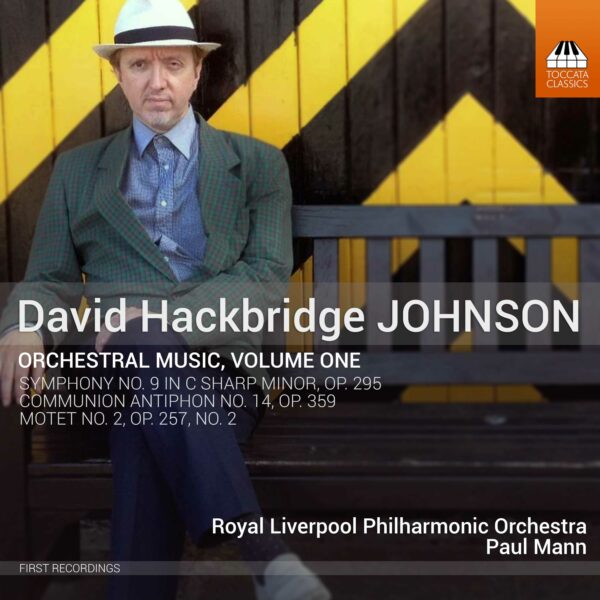
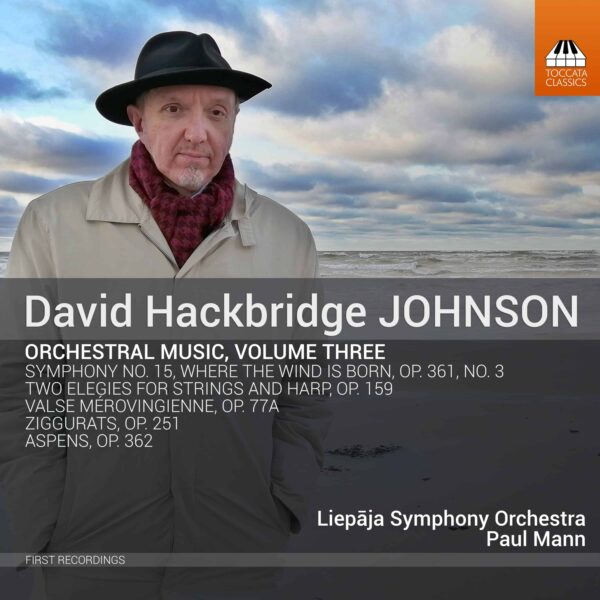
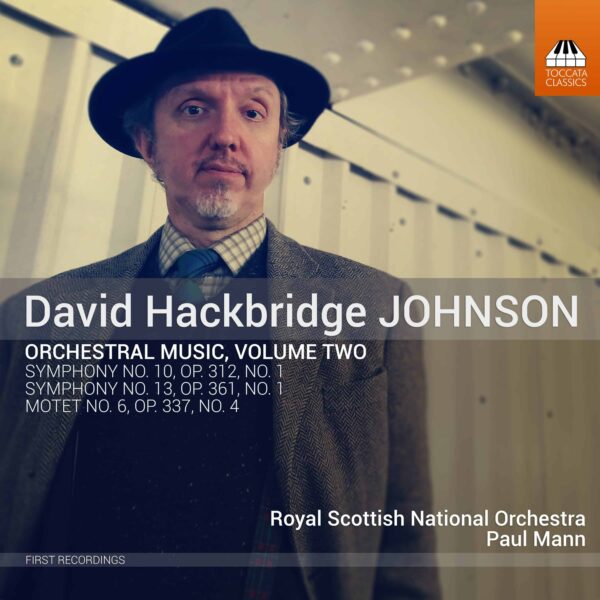
David Hackbridge Johnson Recordings on Toccata Classics
- Rój, Warsaw, 1933; English translation by Celina Wieniawska in Cinnamon Shops and Other Stories, Macgibbon & Kee, London, 1963; US title: The Street of Crocodiles, Walker & Company, New York, 1963. ↩︎
- Rój, Warsaw, 1937; transl. Celina Wieniawska, Penguin, Harmondsworth, 1979. ↩︎
- Edited by Jerzy Ficowski, Harper Row, New York, 1988. ↩︎
- Józef is the name Schulz gives himself in his stories. ↩︎
- There was certainly a theory that Mossad was involved in the removal of mural fragments, but it is now generally accepted that Yad Vashem provided the agency. ↩︎
- Majer Bogdanski (1912–2005) was a friend of my grandmother, a keen amateur singer and violinist of classical music but more importantly, a living repository of Yiddish songs and poetry which he had learned in Łódź before World War Two, the corpus of which he added to by means of his own poetry and compositions. Majer’s spirit shone into my early years; he remained in love with life despite losing all his relatives in the Holocaust. During the war he had been in the Polish Army, was imprisoned by the Russians, lost his family (including his young wife) to the Nazis, and he ended up in a prison camp hundreds of miles north of Archangelsk, before being let out when the Molotov–Ribbentrop Pact was violated by the Nazi invasion of the Soviet Union. He eventually made it to the East End of London. ↩︎
- The two officers were Karl Günther and Felix Landau (1910–83). Perhaps the latter’s children delighted in Schulz’s murals while their father planned ‘shooting exercises’ against defenceless Jews. Schulz was one of over 250 Jews whom the SS shot at random that day. ↩︎
- Jerzy Ficowski (1924–2006) was a Polish poet and prose writer, who travelled with the Polish Gypsies and wrote about them. He was Schulz’s most important post-war advocate. His biography of Schulz, Regiony wielkiej herezji (1967), translated as Regions of the Great Heresy (Twisted Spoon Press, Prague/Norton, New York, 2003),is essential reading. ↩︎
- The mannekin-like Autons first appeared in the Doctor Who series ‘Spearhead from Space’ in 1970. ↩︎
- Jerzy Grotowski (1933–99); Tadeusz Kantor (1915–90). ↩︎
- Kantor’s theatre piece, Dead Class (1975) ↩︎