Search Results for "thannyunt official"
Showing results for tennt official
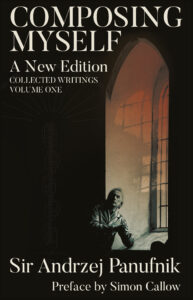
Andrzej Panufnik: Composing Myself
Preface by Simon Callow
Extent: 478 pages
20 colour & 80 b/w illustrations
Hardback
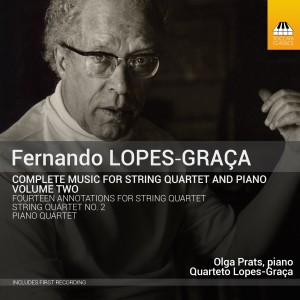
Fernando Lopes-Graça: Complete Music for String Quartet and Piano, Volume Two
As a committed socialist, the Portuguese composer Fernando Lopes-Graça (1906–94) faced repression from Salazar’s right-wing dictatorship: his works were banned and he was stripped of his official positions. Lopes-Graça responded in music, evolving a feisty, wiry Bartókian style that drew on Portuguese folk-music. This recording features Lopes-Graça’s own Bechstein piano, played by Olga Prats, who worked closely with him.
Olga prats, piano; Quarteto Lopes-Graça
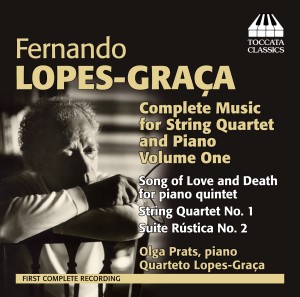
Fernando Lopes-Graça: Complete Music for String Quartet and Piano, Volume One
As a committed socialist, the Portuguese composer Fernando Lopes-Graça (1906-94) faced repression from Salazar's right-wing dictatorship: his works were banned and he was stripped of his official positions. Lopes-Graça responded in music, evolving a feisty, wiry Bartókian style that drew on Portuguese folk-music. This recording features Lopes-Graça's own Bechstein piano, played by Olga Prats, who worked closely with him.
Olga Prats, piano
Quarteto Lopes-Graça, string quartet
Too Many Symphonies? — Part two: Fridrich Bruk
Having traversed the symphonies of Robert Keeley in Part One of this brief survey (Too Many Symphonies – Part One – posted on 9 March…

An Infinity of Traces: Influence Without Anxiety
I often play a kind of party game with friends: each participant will offer a recording of a piece of music by a less-well-known composer,…
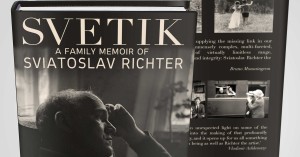
Sviatoslav Richter: The Pianist and the Person
In the autumn of 1959 I was beginning my final year at Oxford. A friend called David Tempest, like me a piano nut, asked me…
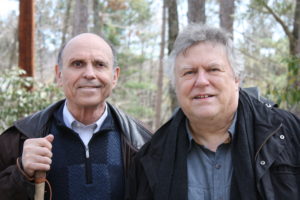
Adopt a Composer — Jürgen Thym and Samuel Adler
One of the most rewarding aspects of my activities as a musicologist has been following the life and works of living composers – be they…
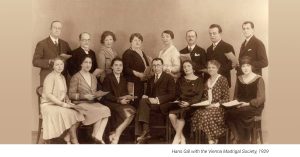
Songs of Love, Sorrow and Satire (And Not Forgetting the Baboon!): Recording Hans Gál’s Music for Voices
One of the proudest, happiest and most surreal moments in my singing career to date has been uttering the final notes of a choral concert…
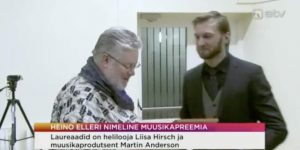
An Estonian Excursion for the Heino Eller Award
Toccata Classics has now released five albums of the piano music of the Estonian composer Heino Eller – enough for Toccata founder Martin Anderson to…
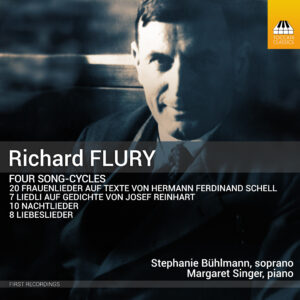
Richard Flury: Four Song-Cycles
The output of Richard Flury (1896-1967), one of Switzerland’s most prolific composers, ranges from operas and ballets to symphonies, instrumental concertos, sacred and secular vocal works, chamber music and no fewer than 181 songs with piano accompaniment. These four song-cycles, written between 1920 and 1946, contain 45 of them, their concision nonetheless embracing an expansive, Romantic style of which Schumann himself might have approved. The prevailing mood is one of an open-hearted sincerity, occasionally enlivened by a dash of humour.
Stephanie Bühlmann, soprano
Margaret Singer, piano