Search Results for "mac dee old picture"
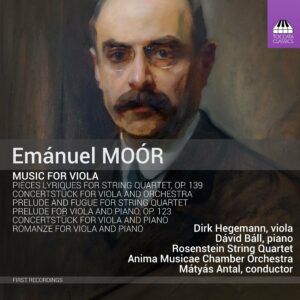
Emánuel Moór: Music for Viola
The works of Emánuel Moór (1863–1931) ought to be celebrated as among the major achievements of Romantic music, but because of Moór’s peripatetic life – he was born in Hungary, studied in Vienna (with Bruckner), performed in the US and across Europe, became a UK citizen and settled and died in Switzerland – no country has claimed and promoted him to the degree he deserves. Moór’s musical language offers a deeply satisfying blend of contrapuntal mastery and ardent lyricism, as the works on this album – written for or involving the viola – demonstrate. In time he will be recognised as one of the masters of his age.
Dirk Hegemann, viola
Dávid Báll, piano (Tracks 3, 8, 9)
Rosenstein String Quartet (Tracks 1–2, 4–7):
Michael Hsu and SooEun Lee, violins
Dirk Hegemann, viola
Markus Tillier, cello
Anima Musicae Chamber Orchestra (Track 10)
Mátyás Antal, conductor (Track 10)
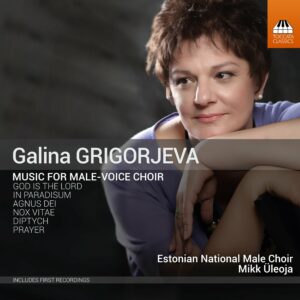
Galina Grigorjeva: Music for Male-Voice Choir
The choral music of Galina Grigorjeva – born in Simferopol in Ukraine in 1962 and based in Tallinn, in Estonia, since 1994 – is deeply rooted in the traditions of the Orthodox Church and in ancient Russian and Slavonic folklore. Although clearly by a contemporary composer, her works have a timeless, even hypnotic, quality that seems to reach back through the ages. She has been working with the Estonian National Male Choir – one of the finest in a country full of choirs – for some years now, and some of the works here were composed or arranged specifically for this recording.
Theodor Sink, cello (8, 9)
Aleksandr Mihhailov, bass (3)
Aleksander Arder, tenor (7)
Margus Vellmann, tenor (7, 9)
Grigori Rutškin, tenor (9)
Estonian National Male Choir
Mikk Üleoja, conductor
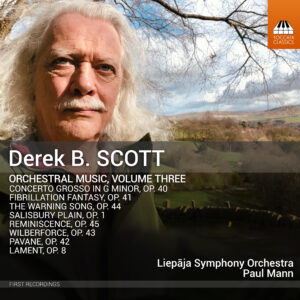
Derek B. Scott: Orchestral Music, Volume Three
Derek Scott, born in Birmingham in 1950, has an international reputation as an historian of the British music hall and other forms of light entertainment. But he is an outstanding composer in his own right – a master craftsman and natural tunesmith, who manages to unite good humour, unerring technique and deep feeling in music of immediate appeal. Although the works recorded here represent his most recent harvest of orchestral music, for many of them he revisited material composed earlier in his career, using it as the basis for a series of new scores, some exhibiting a very English sense of whimsy, others concerned with deeper matters – one, indeed, inspired by the war in Ukraine. This album has been released with remarkable speed: it was recorded only on 15–18 May this year.
Liepāja Symphony Orchestra
Paul Mann, conductor
Ingus Novicāns, horn
Līga Baltābola and Jānis Baltābols, violins
Klāvs Jankevics, cello
Gertruda Jerjomenko, harpischord
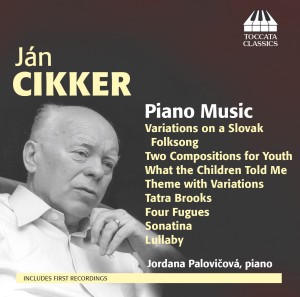
Ján Cikker: Piano Music
Ján Cikker (1911-89) was one of the leading Slovak composers of the twentieth century, with no fewer than nine operas to his credit. Cikker was also a fluent pianist and his piano music — little known even in his native Slovakia (this disc features several first recordings) — sits downstream from Szymanowski and Janáček, similarly blending folk influences with an echo of French impressionism.
Jordana Palovičová, piano
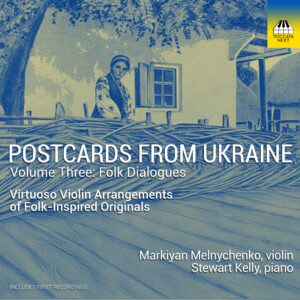
Postcards from Ukraine, Volume Three: Folk Dialogues
The first album of Postcards from Ukraine gave a potted history of Ukrainian music in the form of a series of miniatures for piano and violin, and the second presented four outstanding chamber works by important Ukrainian composers. This third instalment brings six new arrangements of Ukrainian folksongs, for violin and piano, by Markiyan Melnychenko, integrating them into a programme of folksong and -dance arrangements by some of his best-known virtuoso predecessors.
Markiyan Melnychenko, violin
Steward Kelly, piano
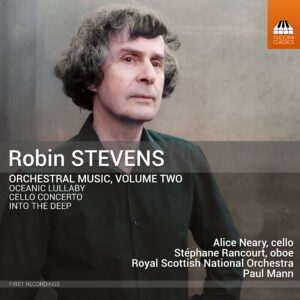
Robin Stevens: Orchestral Music, Volume Two
The compositional career of Robin Stevens, Welsh-born (in 1958) and Manchester-based, is divided into two periods, separated by a period of illness. The first produced mainly chamber music and works for the church that employed him; restored to health, he found an appetite for larger forms, writing three substantial concertos and a number of other orchestral works. Stevens’ big-boned, four-movement Cello Concerto is something of a younger cousin of Britten’s Cello Symphony, casting the orchestra in kaleidoscopic discussion with the soloist, in moods that range from the humorous to the heroic. Here it sits between a charming orchestral miniature and a searching symphonic poem. In all three works Stevens’ mastery of orchestral colour allows the musical discourse to unfold almost as wordless drama.
Alice Neary, cello
Stéphane Rancourt, oboe
Royal Scottish National Orchestra
Paul Mann, conductor
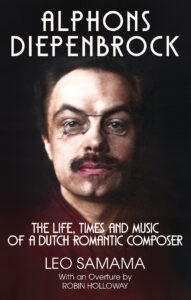
Alphons Diepenbrock: The Life, Times and Music of a Dutch Romantic Composer
by Leo Samama
With an Overture by Robin Holloway
433 Pages
15.6 x 23.4 cm
67 b/w, 35 colour images
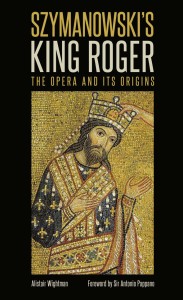
Szymanowski’s King Roger: The Opera and its Origins
Foreword by Antonio Pappano
Extent: 171 pages
Size: 24.1 x 16.4 cm
Extent: 171 pages
Composition: Royal octavo
Illustrations: 26
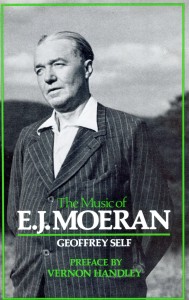
The Music of E. J. Moeran
Preface by Vernon Handley
Extant: 288
Composition: Demy octavo ~ Illustrated ~ Bibliography ~ Personalia ~ Index
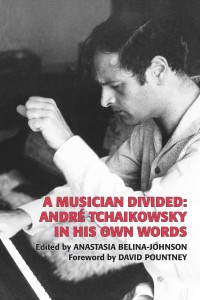
A Musician Divided: André Tchaikowsky in his Own Words
Edited by Anastasia Belina-Johnson
Foreword by David Pountney
Extant: 434
Composition: Royal octavo ~ Recordings of André Tchaikowsky's Music ~ André Tchaikowsky's Recordings ~ Index of Tchaikowsky's Music ~ General Index ~ CD of André Tchaikowsky in recital
Illustrations: 72
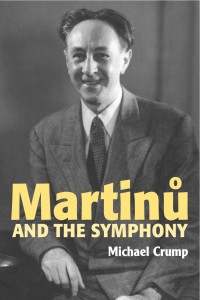
Martinů and the Symphony
Extent: 550 pages
Composition: Royal octavo
Illustrations: 9 half-tones; 199 music exx.
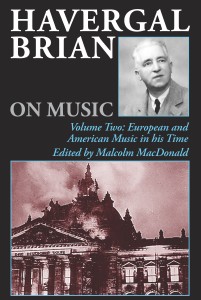
Havergal Brian on Music: Volume Two: European and American Music in his Time
Edited by Malcolm MacDonald
Extent: 458 pages
Composition: Demy octavo ~ Index
A Conversation with Per Nørgård
The death of Per Nørgård on 28 May 2025, at a grand old 92, sent me to my ‘article bank’, to look over my writings…
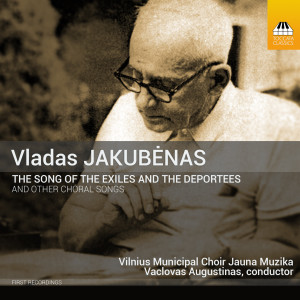
Vladas Jakubėnas: The Song of the Exiles and The Deportees and Other Choral Songs
The Lithuanian Vladas Jakubėnas (1904–78) is one of a lost generation of Baltic composers. A student of Schreker in Berlin, he returned home to help build the musical culture of his country. But the Nazi invasion and Soviet occupation drove him into exile and, after five years in refugee camps in Germany, he settled in Chicago, playing an important role in the Lithuanian diaspora in North America. These choral songs show the deep identification of his late-Romantic style with the folk-music of the land he was forced to leave behind.
Vilnius Municipal Choir Jauna Muzika
Jurgita Mintautiene, soprano
Gintautas Skliutas, tenor
Dainius Jozenas, piano
Vaclovas Augustinas, conductor
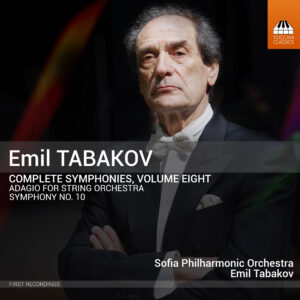
Emil Tabakov: Complete Symphonies, Volume Eight
The symphonies of the Bulgarian composer-conductor Emil Tabakov (b. 1947) explore the darker side of the human spirit in monumental scores as austere as they are powerful, his language sitting somewhere between Shostakovich, Varèse, Pettersson and Simpson in its fierce, explosive energy and elemental drive. His Tenth Symphony (2018) opens with the first of many wild outbursts that occasionally give way to islands of uneasy calm. The inconsolable sorrow of the slow movement finally boils up into an epic passage of colossal anger. By way of contrast, the scherzo opens in a mood of mischievous humour that soon spirals into a swirling, headlong, white-knuckle ride. Like the first movement, the finale sets off with the untrammelled power of a raging flood; it abates only briefly, to reveal a blasted landscape suggesting Kafka’s ‘There is hope – but not for us’. The Symphony is prefaced here by a dignified, deeply felt symphonic essay for strings, an epitaph for lost love
Sofia Philharmonic Orchestra
Emil Tabakov, conductor
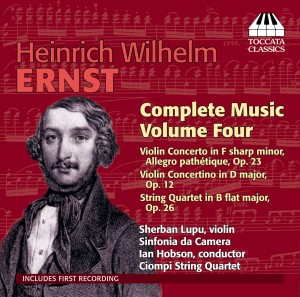
Heinrich Wilhelm Ernst: Complete Music, Volume Four
Heinrich Wilhelm Ernst (1812-65) was one of the leading musicians of his day, a friend of Berlioz, Chopin, Liszt and Mendelssohn, and for Joseph Joachim 'the greatest violinist I ever heard'. But the popular encore pieces by which Ernst is remembered today represent only a fraction of his output. This fourth CD — in a series of seven presenting all his compositions for the first time — contains some of his most important compositions: an early Concertino with a melancholy slow movement and charming waltz finale; the fiendishly difficult Concerto that had a deep influence not only on Liszt's Piano Sonata but also the Brahms and Sibelius violin concertos; and the late String Quartet, with echoes of Beethoven and Mendelssohn and an inwardness, charm and energy all of its own.
Sherban Lupu
Ciompi String Quartet
Sinfonia da Camera
Ian Hobson