Search Results for "kupi lover nangis original" – Page 3
Showing results for kbp lover nazis original
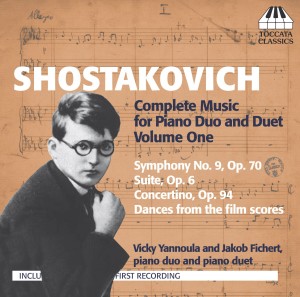
Shostakovich: Complete Music for Piano Duo and Duet, Volume One
Much of Shostakovich’s orchestral music was first heard in versions he prepared for piano four hands or two pianos – but most of these transcriptions have languished unheard since those early performances. This series uncovers all the transcriptions prepared by Shostakovich himself, coupling them with all his original music for piano duo and duet. It begins with the first recording of his four-hand version of the Ninth Symphony.
Vicky Yannoula and Jakob Fichert, piano duo, piano duet
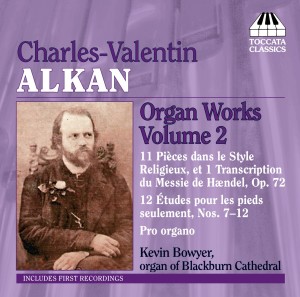
Charles-Valentin Alkan: Organ Works, Volume Two
In the last three decades the staggeringly original piano music of Charles-Valentin Alkan (1813-88) has emerged from the darkness that surrounded it over the previous century and today features regularly in recital programmes. But Alkan’s music for organ – much of it initially conceived for the now obsolete pedal-piano – is no less powerful and imaginative, although little of it had been recorded before Kevin Bowyer began this survey. His first recording of this repertoire drew ecstatic reviews from the critics; this second instalment (of three) offers music and playing of equal quality.
Kevin Bowyer, organ
Charles-Valentin Alkan: Organ Works, Volume One
In the last three decades the staggeringly original piano music of Charles-Valentin Alkan (1813-88) has emerged from the darkness that had surrounded it over the past century and now it features regularly in the repertoire of some of today’s best young pianists. But Alkan’s organ music – no less powerful and imaginative – has yet to become known, even to a specialist public. This is the first of three CDs presenting all of Alkan’s unrecorded music for organ.
Kevin Bowyer, organ
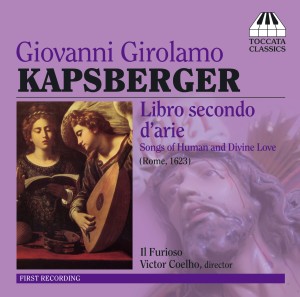
Giovanni Girolamo Kapsberger: Libro secondo d’arie — Songs of Human and Divine Love
Giovanni Girolamo Kapsberger (1580–1651) was one of the most innovative and original composers in early seventeenth-century Rome, and a virtuoso on the lute and chitarrone, or theorbo. His Second Book of Arias, published in Rome in 1623, for one and two voices, are extraordinary works that reveal both his vivid imagination in setting poetry to music, and his flair for dramatic gestures, making him one of the most quintessentially 'Baroque’ composers of his time.
Il-Furioso
Victor Coelho, director
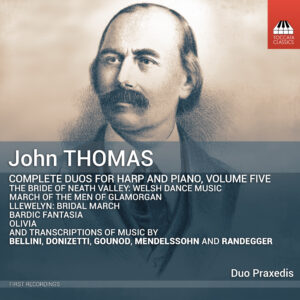
John Thomas: Complete Duos for Harp and Piano, Volume Five
The Welshman John Thomas (1826–1913), harpist to Queen Victoria, wrote prolifically for his own instrument, both for solo harp and for duos of two harps or harp and piano – a combination where the different sounds of the two instruments enhance the clarity of the texture. Thomas’ original works use the elegant Romantic style of his own day, but he often drew on Welsh folksong for his inspiration and left a generous legacy of transcriptions, especially of operatic favourites. Although some of his music was intended for the Victorian drawing room, other pieces require a virtuoso technique – and all of it has a thoroughly engaging melodic appeal. This fifth album of his duets for harp and piano ends a series that has seen the revival of music unheard for over a century and a half.
Duo Praxedis
Praxedis Hug-Rütti, harp
Praxedis Geneviève Hug, piano
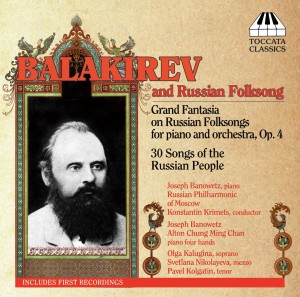
Balakirev and Russian Folksong
Mily Balakirev (1837–1910) – the leader of the group of Russian composers known as 'the Mighty Handful’ – was influenced by folksong from the very start of his career. His expansive Grand Fantasia on Russian Folksongs for piano and orchestra is one of his very first compositions, written when he was seventeen. And the 30 Folksongs of the Russian People for piano duet, folksong-arrangements from the other end of his career, show his deep understanding of the sources, which he endows with dignity and colour. Each of his arrangements is preceded on this CD by the original folksong, illuminating Balakirev’s perceptive approach to this fascinating material.
Joseph Banowetz, piano
Russian Philharmonic of Moscow, orchestra
Konstantin Krimets, conductor
Olga Kalugina, soprano
Svetlana Nikolaeva, mezzo soprano
Pavel Kolgatin, tenor
Joseph Banowetz and Alton Chung Ming Chan, piano duet
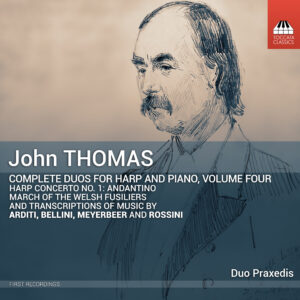
John Thomas: Complete Duos for Harp and Piano, Volume Four
Harpist to Queen Victoria, the Welsh composer John Thomas (1826–1913) also wrote prolifically for his own instrument, both for solo harp and for duos of two harps or harp and piano – a combination where the different sounds of the two instruments enhance the clarity of the texture. Thomas’ original works use the elegant Romantic style of his own day, but he often drew on Welsh folksong for his inspiration and also left a generous legacy of transcriptions, especially of operatic favourites. Although some of his music was intended for the Victorian drawing room, other pieces require a virtuoso technique – and all of it has a thoroughly engaging melodic appeal.
Duo Praxedis
Praxedis Hug-Rütti, harp
Praxedis Geneviève Hug, piano
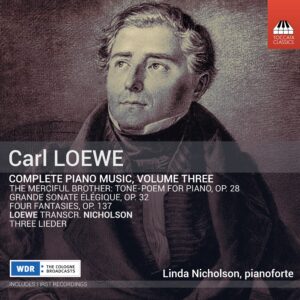
Carl Loewe: Complete Piano Music, Volume Three
Known in his lifetime as ‘the north German Schubert’, Carl Loewe (1796–1869) is remembered today chiefly as a composer of songs and ballads. Yet there is a considerable body of piano music that is strikingly innovative in content, expression and harmony, containing the germs of ideas later taken up by composers such as Wagner and Liszt. Loewe was unquestionably a brilliantly original talent, a major figure in ushering in the Romantic era – with the remarkable Four Fantasies of 1854 heard here ‘documenting’ in music the contemporary emigration of German families to the United States. This third volume of Linda Nicholson’s survey of his piano music on historical instruments concludes its first-ever complete recording on any kind of piano.
Linda Nicholson, Erard piano, c. 1839
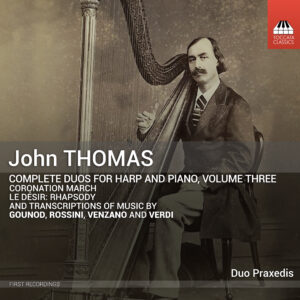
John Thomas: Complete Duos for Harp and Piano, Volume Three
Harpist to Queen Victoria, the Welsh composer John Thomas (1826–1913) also wrote prolifically for his own instrument, both for solo harp and for duos of two harps or harp and piano – a combination where the different sounds of the two instruments enhance the clarity of the texture. Thomas’ original works use the elegant Romantic style of his own day, but he also left a generous legacy of transcriptions, especially of operatic favourites. Although some of his music was intended for the Victorian drawing room, other pieces require a virtuoso technique – and all of it has a thoroughly engaging melodic appeal.
Duo Praxedis
Praxedis Hug-Rütti, harp
Praxedis Geneviève Hug, piano
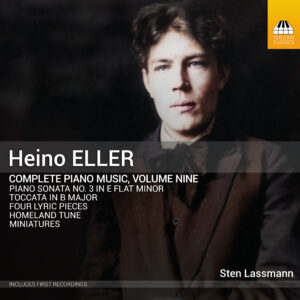
Heino Eller: Complete Piano Music, Volume Nine
The piano music of Heino Eller (1887–1970), a total of 206 works, is not only the largest part of his output: it is also the largest body of works in Estonian classical music. But most of these pieces are unknown, even though the best of them are original contributions to the twentieth-century piano repertoire, with Eller’s sensitive lyricism underpinned by gentle humour and an occasional epic tone. This ninth and final volume in its first-ever complete recording prefaces his expansive Piano Sonata No. 3 with a series of charming miniatures and ends with the emblematic anthem Homeland Tune, a musical embodiment of Estonian national feeling.
Sten Lassmann, piano
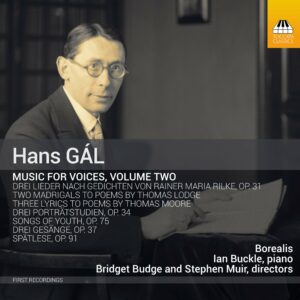
Hans Gál: Music for Voices, Volume Two
Whether in his original home of Vienna, as a conservatoire director in Germany, or as an émigré in Edinburgh, where he became one of the mainstays of musical life, Hans Gál (1890–1987) championed choral singing as a way of directly involving people in making music: he founded and conducted a number of choirs and provided an extensive output of choral compositions. This second album of Gál’s choral music offers a vivid cross-section of his music for chamber choir, featuring mixed voices, women’s voices and male-voice choir, both a cappella and with piano, and ranging across four decades
Borealis
Ian Buckle, piano (Tracks 1–3, 15–17, 23–25)
Bridget Budge, director (Tracks 1–17, 23–25)
Stephen Muir, director (Tracks 18–22)
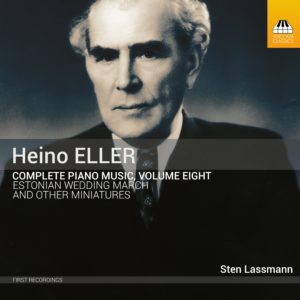
Heino Eller: Complete Piano Music, Volume Eight
The piano music of the Estonian composer Heino Eller (1887–1970), a total of 206 works, is not only the largest part of his output; it is also the largest body of works in Estonian classical music. Most of these pieces are unknown, even though the best of them are original contributions to the twentieth-century piano repertoire, with Eller’s sensitive lyricism underpinned by gentle humour and an occasional epic tone. This eighth volume brings music from half a century of music, from 1912 to 1960 – mostly miniatures but each of them full of atmosphere and personality.
Sten Lassmann, piano
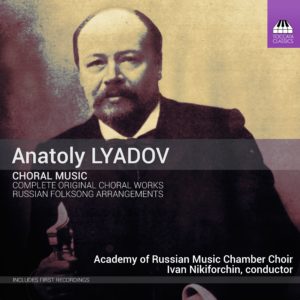
Anatoly Lyadov: Choral Music
Lyadov’s handful of orchestral works have become concert favourites, but his choral music is as good as unknown. It falls into three main categories: religious chants, folksong arrangements and original compositions. All three confirm Lyadov’s status as a kind of Fabergé of music: they blend exquisite craftsmanship and delicate beauty.
The Academy of Russian Music Chamber Choir
Ivan Nikiforchin, choirmaster and conductor
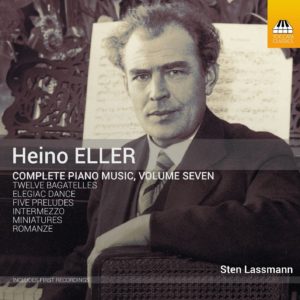
Heino Eller: Complete Piano Music, Volume Seven
The piano music of the Estonian composer Heino Eller (1887–1970), a total of 206 works, is not only the largest part of his output: it is also the largest body of works in Estonian classical music. But most of these pieces are unknown, even though the best of them are original contributions to the piano repertoire of the twentieth century, with Eller’s sensitive lyricism underpinned by gentle humour and an occasional epic tone. This seventh volume brings music from half a century, from 1912 to 1961– mostly miniatures but each of them full of atmosphere and personality.
Sten Lassmann, piano
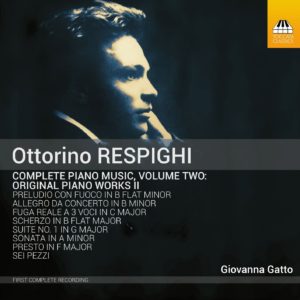
Ottorino Respighi: Complete Piano Music, Volume Two
Respighi’s orchestral works are some of the most popular in the mainstream repertoire. His output of piano music, by contrast, is as good as unknown, and this Toccata Classics series will be the first-ever to present it all: original works and transcriptions alike, for solo piano, piano four hands and two pianos. The prentice works on this second volume of solo works reveal a Respighi with roots in the high-Romantic past of Schumann, Chopin and Brahms, but they also show the first signs of his later interest in the Italian pre-Baroque.
Giovanna Gatto piano
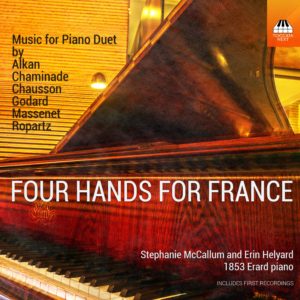
Four Hands for France: Music for Piano Duet
Playing four-hands piano was both vital in the dissemination of music in the nineteenth century and also a popular domestic activity. The French composers recorded here span the Romantic century, from the salon charm of Chaminade and Massenet and the virtuosity of Alkan’s wild dance to the innocence of the family music-room in pieces by Chausson, Godard and Ropartz. The original 1853 Parisian Erard piano on which this recording was made combines warmth with bell-like clarity due to its straight stringing, allowing it to produce a surprising variety of appealing, expressive textures.
Stephanie McCallum (primo) and Erin Helyard (secondo)
Piano Erard 1853