Michael Brough: 25 Picture-Preludes for Piano, Op. 19
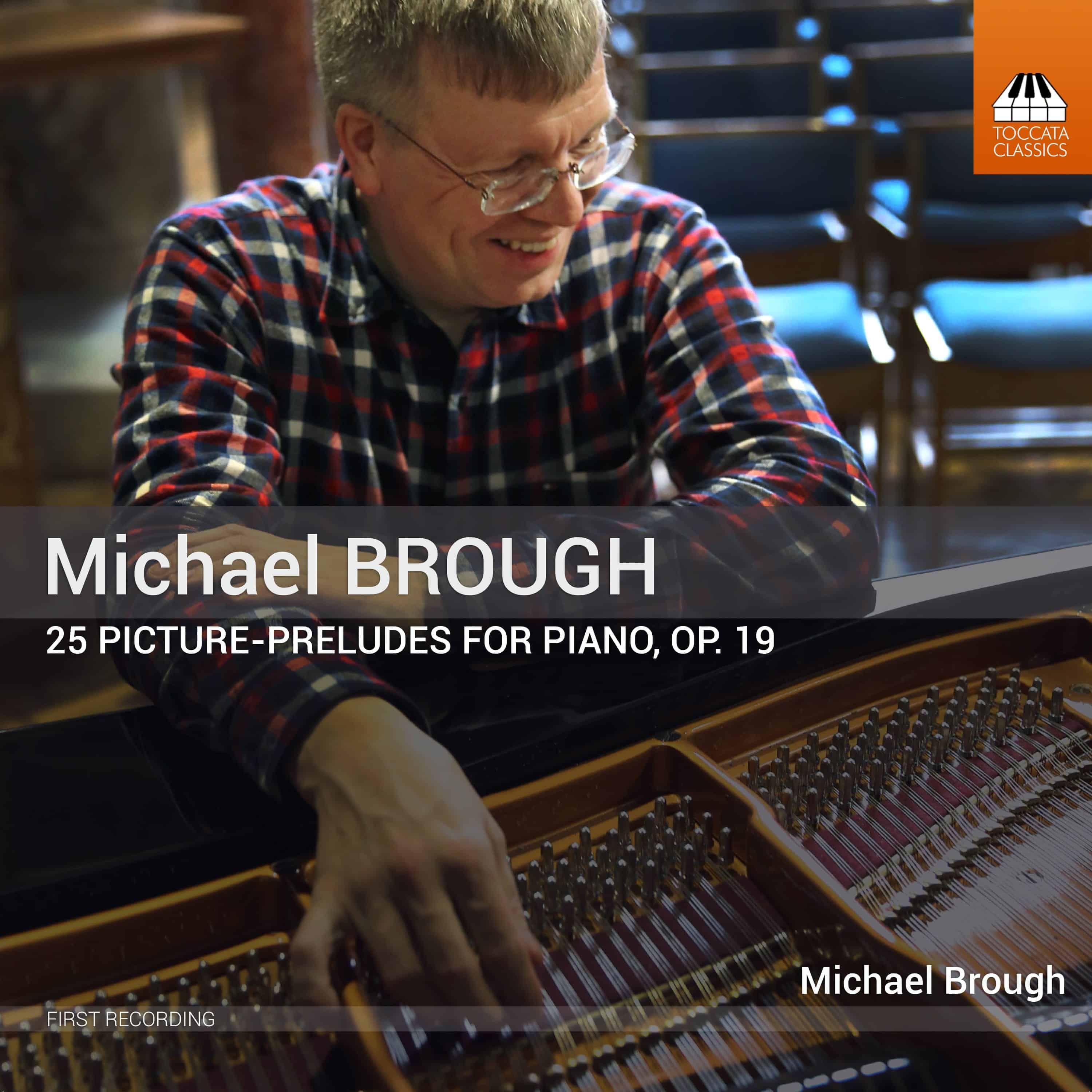
Late in 2013 the English pianist, organist and composer (and solicitor) Michael Brough, born in Yorkshire in 1960, sat down at his piano and began to improvise the first of what would become 25 Picture-Preludes, in the major and minor keys. Like Rachmaninov’s Études-Tableaux and Medtner’s Skazki, these short pieces are intended to stimulate a response in the listener’s imagination – and Rachmaninov and Medtner are audible influences on Brough’s bluesy, late-Romantic musical language.
Michael Brough, piano
Listen To This Recording:
-
25 Picture-Preludes for Piano, Op. 19
- No. 1 in B minor
- No. 2 in D major
- No. 3 in F major
- No. 4 in D minor
- No. 5 in F minor
- No. 6 in A flat major
- No. 7 in G minor
- No. 8 in B flat major
- No. 9 in G sharp minor
- No. 10 in B major
- No. 11 in C minor
- No. 12 in E flat major
- No. 13, no key
- No. 14 in F sharp major
- No. 15 in E flat minor
- No. 16 in G major
- No. 17 in E minor
- No. 18 in A major
- No. 19 in F sharp minor
- No. 20 in C major
- No. 21 in A minor
- No. 22 in E major
- No. 23 in C sharp minor
- No. 24 in B flat minor for the left hand only
- No. 25 in D flat major
FIRST RECORDINGS

Klassisk Musikk :
‘Samlet sett er stykkene en serie med kjærlige portretter av sine inspirasjonskilder, vakkert arrangert for klaveret. Som klaviaturspiller og komponist vet Brough tydelig hva han gjør. […] For noen kan den varmt romantiske stilen, med gjenklang fra sent 1800- /tidlig 1900-tallskomponister som Rachmaninov eller Medtner, virke reaksjonært; for andre kan det som appellerer mest med syklusen.[…] Ikke desto mindre, en svært (stillfaren) underholdende samling, fint produsert med utmerket lyd.’
English translation:
‘Overall, the pieces are a series of loving portraits of their inspirations, beautifully arranged for the piano. As a keyboard player and composer, Brough clearly knows what he is doing. […] To some, the warmly romantic style, with echoes of late 19th/early 20th century composers such as Rachmaninov or Medtner, may seem reactionary; to others, what appeals most about the cycle may be.[…] Nevertheless, a very (quietly) entertaining collection, nicely produced with excellent sound.’
—Guy Rickards, Klassisk Musikk