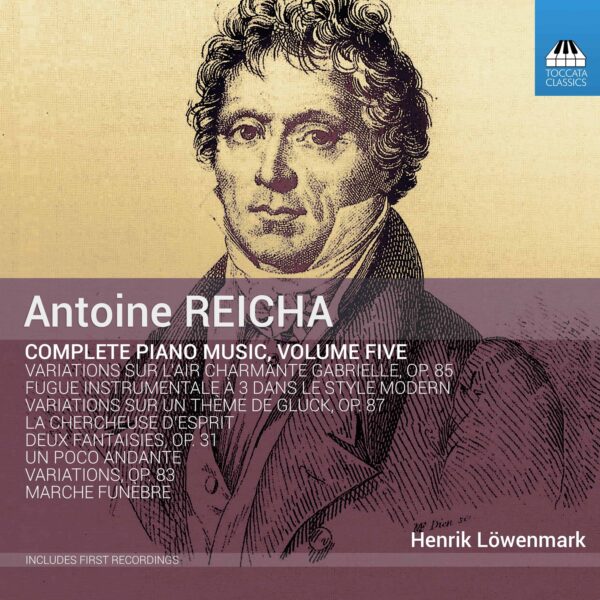
Antoine Reicha: Complete Piano Music, Volume Two
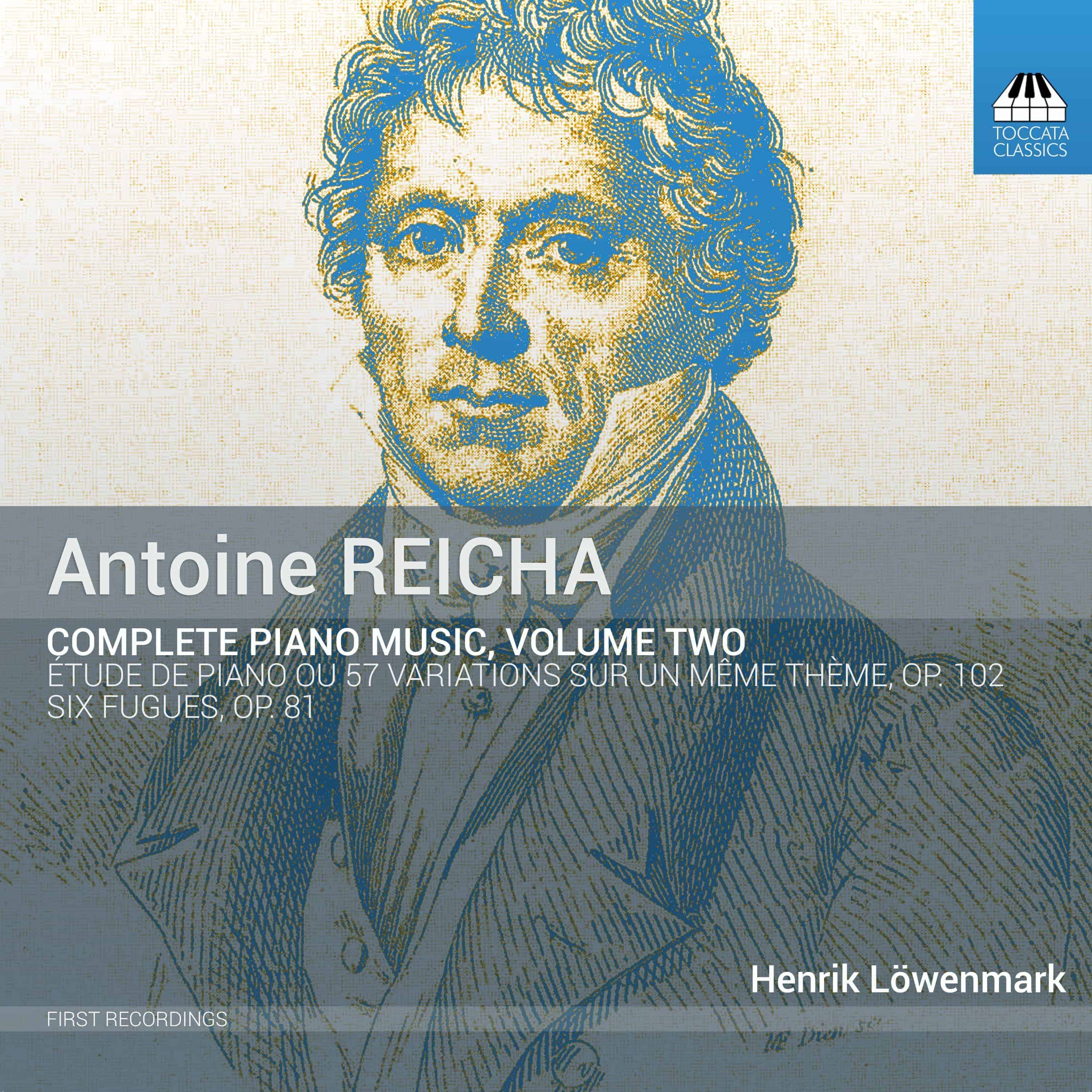
The piano works of the Czech-born composer Antoine Reicha (1770–1836) – friend of Haydn and Beethoven, teacher of Berlioz, Liszt and Franck – is one of the best-kept secrets in music. He was an important influence on composers of the next generation, but apart from an innovative set of fugues his piano works have remained almost unknown since his own day. Encompassing Baroque practices as well as looking forward to the twentieth century, they are full of harmonic and other surprises that show this liveliest of minds at work. The massive variation-set on a French gavotte recorded here for the first time reveals a composer who tempers his learning with a vivid sense of humour.
Henrik Löwenmark, piano
Listen To This Recording:
-
Six Fugues, Op. 81 (publ. c. 1810)
- No. 1 in C minor – Allegro
- No. 2 in E major – Allegro
- No. 3 in C major – Allegro moderato
- No. 4 in E flat major – Allegro assai
- No. 5 in E minor – Allegro
- No. 6 in F minor – Allegro
- Allegretto poco andante
- Variation 1
- Variation 2
- Variation 3
- Variation 4
- Variation 5
- Variation 6
- Variation 7
- Variation 8
- Variation 9
- Variation 10
- Variation 11
- Variation 12
- Variation 13
- Variation 12: Reprise
- Variation 14
- Variation 15
- Variation 16
- Variation 17
- Variation 18
- Variation 19
- Variation 20
- Variation 21, Marcia
- Variation 22
- Variation 23
- Variation 24
- Variation 25, La Bizarre
- Variation 26
- Variation 27
- Variation 28
- Variation 29, Folies dEspagne
- Variation 30
- Variation 31
- Variation 32
- Variation 33
- Variation 34
- Variation 35
- Variation 36
- Variation 37
- Variation 38, Pastorale
- Variation 39, La Tempete
- Variation 40, Le Calme
- Variation 41
- Variation 42
- Variation 43
- Variation 44
- Variation 45
- Variation 46
- Variation 47
- Variation 48
- Variation 49
- Variation 50
- Variation 51, Le Badinage
- Variation 52
- Variation 53
- Variation 54, Le Desespoir
- Variation 55, La Chasse
- Variation 56
- Variation 54: Reprise
- Variation 57
- Rondo – Allegretto
Étude de piano ou 57 variations sur un même thème, suivies d’un Rondeau, Op. 102 Thème
MusicWeb International :
‘The performances make the best case possible for the music with sympathetic playing throughout.’
—Jonathan Woolf, MusicWeb International
Nineteenth-Century Music Review :
‘His piano music is special, however, as this genre best reflects Reicha’s multidisciplinary approach as a music theorist, pedagogue and composer. […]
Löwenmark has published and presented musicological essays about Reicha’s piano music,and he provides very detailed historical and analytical liner notes for this series. This series thus provides a well-balanced platform from which to get acquainted with Reicha’s musical, pedagogical and theoretical thinking. […]
The other work of volume 2,the Variations, op. 102, are a good example of Reicha’s synthesis of both compositional and pianistic variety. This quite virtuosic work, based on a simple 10-bar Gavotte from Grétry’s opera Panurge dans l’île de Lanternes (1785) truly surprises with breathtaking scales, inspired use of the extreme ranges of the instrument, and rhythmic vitality in the variations. In addition, the composer indicates a subtle use of the pedal in the score, and very distinct pianistic articulation in some of the variations. […] In sum, this piece indicates his capacity for inspired, playful and at times humorous approaches to piano instruction. […] Löwenmark provides an in-depth analysis that is worth reading and makes it even more exciting to explore this unique piece in its entirety. […]
The pianist treats this variety with superb technical skill and a deep understanding for the stylistic features of Reicha’s music. He dissects contrapuntal complexity with analytical transparency. Each variation receives subtle attention, and the dynamic range of Löwenmark’s interpretation is impressive. This can be seen with the often indicated ‘forte’ vs. ‘piano’ phrases that Löwenmark articulates clearly without exaggerating the dynamic contrast. […] The often-complex rhythmic combinations between right and left hand are performed with lucid exactness, again contributing to the analytical transparency of his playing beyond any technical limits. The sustain pedal is used with caution, which supports a clear articulation of the melodic lines. Adagio variations such as No. 19 are carefully carved out, as the melodic line contains subtle ornamentations against a chordal accompaniment. The expressive intensity of this texture is striking and very well mastered by the pianist. His attention to rhythmic details is impressive and fits perfectly the expressive range of the variations.
With the ‘Marcia’ (variation 21) a series of more complex and articulated character variations follow that provide another level of performance challenges. Löwenmark resolves these with ease and entertaining playfulness. Legato–staccato contrasts in variations 22 and 23 are meticulously articulated, as is the hemiolic ‘trick’ elaborated in the con fuoco variation 24. The pianist carefully pronounces rhythmic and metric irregularities, for instance also present in variation 25,‘La Bizarre’, that show Reicha’s interest in challenging technical approaches.
A particularly striking combination are variations 38 and 39, the former called ‘Pastorale’, with a hint of Chopinesque expression, the latter a massive fortissimo ‘Tempête’ of Lisztian dimensions. Löwenmark’s performance of these variations shows the wide range of his stylistic flexibility in building breathtaking contrasts. […] Löwenmark handles these contrasts with ease and convincing stylistic character. The variety of performative approaches in these 57 variations does not exhaust the pianist’s abilities in finding the right voice of each and every variation in this set that lasts a total of 43 minutes. […] One can’t deny some stylistic reference to Beethoven in this piece, and Löwenmark’s performance again matches its character with phenomenal exactitude and creativity.’
—Frank Heidlberger, Nineteenth-Century Music Review
BBC Music Magazine :
‘The fugues with which Henrik Löwenmark begins his second volume of Reicha recordings show the influence of Bach and Handel, but possess what Löwenmark describes as a more expressive language; Löwenmark delivers them with a ringing clarity.’
—Michael Church, BBC Music Magazine