Search Results for "fc 26 coins Buyfc26coins.com is EA Sports official for FC 26 coins The transfer time was very fast..ujWi" – Page 6
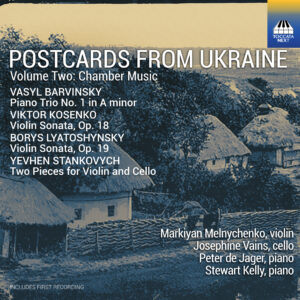
Postcards from Ukraine, Volume Two: Chamber Music
The first album of Postcards from Ukraine gave a potted history of Ukrainian music in the form of a series of miniatures for piano and violin. In this second instalment four representative chamber works demonstrate how quickly music in Ukraine developed its own identity – although all four composers here had to contend with repression by the authoritarian regime to the north. One of them, Vasyl Barvinsky, even spent ten years in the Gulag, with his manuscripts destroyed by the Soviet authorities. Upon his release, unbowed, he set about reconstructing those lost scores, though he died before he could complete the task. His glorious A minor Piano Trio gives an indication of what was nearly lost – and how much remains to be discovered.
Markiyan Melnychenko, violin
Josephine Vains, cello
Peter de Jager, piano
Stewart Kelly, piano

Music from Malmö, Volume 1: Three New Concertos for Bass Clarinet
Concertos for bass clarinet are rare enough; this album brings three new ones to swell those limited ranks. It presents the fruit of a series of interlocking international co-operations, between orchestras in Sweden, the UK and USA, with American, British and Swedish composers and, at the heart of the undertaking, the bass clarinettist of the Malmö Symphony Orchestra, Carl-Johan Stjernström. All three composers exploit the huge range of colours the bass clarinet can offer, in music that ranges from the fierce and dramatic to the sunny and easy-going. The album also inaugurates a Toccata Next series providing a platform for the musicians of the Malmö Symphony Orchestra.
Carl Johan Stjernström, bass clarinet
Benjamin Schmid, violin
Musica Vitae
Malmö Symphony Orchestra
Joachim Gustafsson, conductor
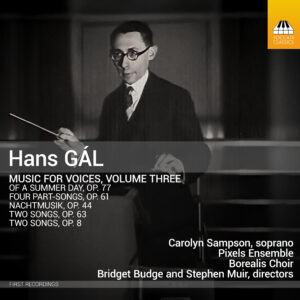
Hans Gál: Music for Voices, Volume Three
Whether in his original home of Vienna, as a conservatoire director in Mainz, or as an émigré in Edinburgh, where he became one of the mainstays of musical life, Hans Gál (1890–1987) championed choral singing as a way of directly involving people in making music: he founded and conducted a number of choirs and provided an extensive output of choral compositions. This third album of his choral music offers a vivid cross-section of music for chamber choir, featuring mixed voices, women’s voices and male-voice choir, a cappella, with solo soprano, with piano and with chamber accompaniment.
Carolyn Sampson, soprano
Pixels Ensemble
Borealis Choir
Bridget Budge, director
Stephen Muir, director
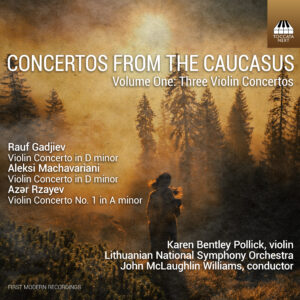
Concertos from the Caucasus, Volume One: Violin Concertos
In the early years of the twentieth century a first wave of composers in the Caucasus laid down the basis of their national schools by grafting the outlines of western classical music onto local folk traditions. By mid-century a second generation took up the challenge more thoroughly, their compositions confidently handling the large forms of the concert hall, though still drawing on regional idioms. The Soviet orthodoxy of the day expected its composers to abide by the rules, but the three composers heard here – two Azeris and a Georgian, all young men when they wrote the violin concertos on this album – brought something fresh and individual to the task, marrying east and west, form and freedom, tradition and originality.
Karen Bentley Pollick, violin
Lithuanian National Symphony Orchestra
John McLaughlin Williams, conductor
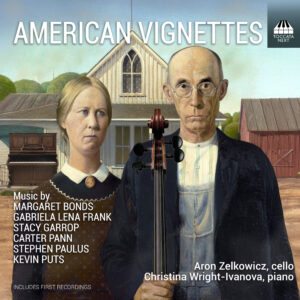
American Vignettes: Contemporary Works for Cello and Piano
Though quintessentially American in spirit, the musical snapshots in this album are as diverse as the men and women who composed them. Drawing from influences as disparate as the blues, jazz, Broadway, gospel, folksong and the wild west, these ‘American vignettes’ merge popular idioms into a new canon of the repertoire for cello and piano. The distinctive voices of six US composers, from the late twentieth and early 21st centuries, here come together to weave a virtuosic and colourful tapestry of Americana.
Aron Zelkowicz, cello
Christina Wright-Ivanova, piano
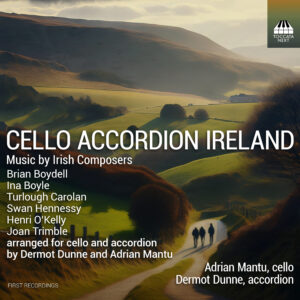
Cello Accordion Ireland
The sound of the accordion is an underexploited resource in classical music; it is heard even less frequently in combination with other instruments. This recital of music by Irish composers for cello and accordion – from the nimble folk idiom of Turlough Carolan to the passionate Romanticism of more recent men and women – demonstrates just how effectively these colours blend together. And it is not just the medium which is unusual: much of this music is as good as unknown.
Adrian Mantu, cello
Dermot Dunne, accordion
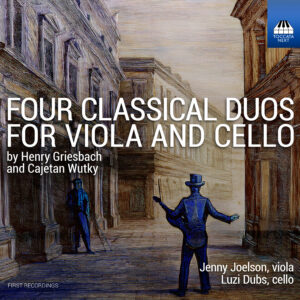
Four Classical Duos for Viola and Cello
For the past two centuries or so, making music has largely been a public business, with paying audiences listening to professional musicians. But for most of western history, outside of formal and religious occasions and local festivities, music-making was largely a domestic affair, with individuals playing for their own pleasure. Most of the music written for the drawing room has long been lost from sight, and its composers forgotten, the two heard here – the Austrian Cajetan Wutky and German-English John Henry (né Justus Heinrich) Griesbach – being cases in point. Their Haydnesque string duos, only recently rescued from obscurity in modern publications, hint at the pleasure their first patrons would have found in performing them.
Jenny Joelson, viola
Luzi Dubs, cello
Folk Trails
Folk-music has been a resource for classical composers since the beginning of the western tradition. The violin has its own folk heritage, of course, but since you can’t lug a piano from village to village, composers for that instrument have had to dig into their own musical roots to generate a folk-based keyboard repertoire, usually with refreshing results. This recital takes the listener on a journey that spans three continents, east to west, marrying the resources of the modern concert grand with the immediacy of the folk originals.
Anya Alexeyev, piano, primo
Leslie De’Ath, secondo
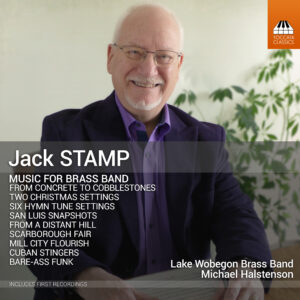
Jack Stamp: Music for Brass Band
Born in Maryland in 1954, John Stamp – universally known as ‘Jack’ – is a well-known figure, both as conductor and composer, in the symphonic wind-band movement that flourishes in US universities. But the sound of the brass band familiar in the UK has long been an enthusiasm, and his involvement with brass bands on both sides of the Atlantic – particularly the Minneapolis-based Lake Wobegon Brass Band, which takes its name from Garrison Keillor’s fictional Minnesota town – has generated a number of works which bring elements of the British brass tradition to audiences in the US Mid-West, imbuing them with a catchy rhythmic swing.
Steve Ecklund, horn
Bill Chouinard, organ
Lake Wobegon Brass Band
Michael Halstenson, conductor
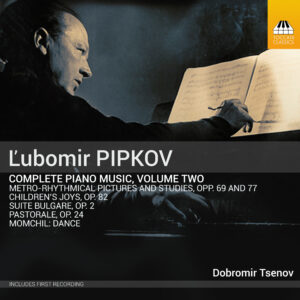
Ľubomir Pipkov: Complete Piano Music, Volume Two
Ľubomir Pipkov (1904–74) was one of the leading members of the so-called ‘second generation’ of Bulgarian composers. In later life he became fascinated with the ancient heritage of Bulgarian folk-music, producing a series of what he called ‘metro-rhythmical studies’ – piano miniatures that combine melodic immediacy and rhythmic complexity, with a character that might be loosely characterised as sounding like ‘Prokofiev meets Bartók in the Balkans’. Indeed, Pipkov saw in the irregular rhythms of Bulgarian folk-dance a parallel with the rhythmic experimentation in contemporary composers like Debussy, Ravel and Stravinsky.
Dobromir Tsenov, piano
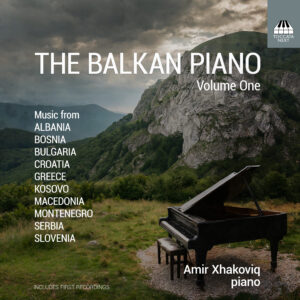
The Balkan Piano, Volume One
The composing traditions of the ten Balkan countries are as good as unknown in the rest of the world. In this revelatory piano recital, the Albanian pianist Amir Xhakoviq presents a glittering array of keyboard jewels from his own country and its neighbours, ranging from wild and energetic toccatas to timeless evocations of bells and other ancient traditions, with a surprisingly wide range of references, from folk-music to Scarlatti and jazz. As ‘Volume One’ indicates, this album is intended as the first of a series that will continue to explore the unfamiliar music of the Balkans.
Amir Xhakoviq, piano
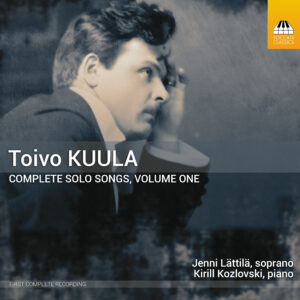
Toivo Kuula: Complete Solo Songs, Volume One
Toivo Kuula (1883–1918) is one of the many composers who died at a tragically young age – 35 in his case, the result of an alcohol-fuelled pub brawl. The striking quality of the music he wrote during his short life points to the immensity of the loss not only to Finnish culture but to music more generally – as this first album of two, presenting his entire output of songs for solo voice and piano, makes abundantly clear. The range of moods captured here is striking, from cheery folksongs to dark existentialist contemplations of the meaning of life and death. The most passionate of them generate an operatic intensity in their short span, in a style that balances directness of expression and rich late-Romantic harmonies.
Jenni Lättilä, soprano
Kirill Kozlovski, piano
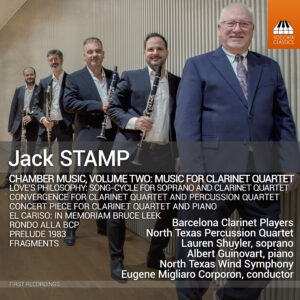
Jack Stamp: Chamber Music, Volume Two
Celebrating his 70th birthday on March 5th, the American composer John Stamp (b. 1954) – universally known as ‘Jack’ – is a familiar figure in the worlds of the symphonic wind-band movement that flourishes in US universities and of the brass band on both sides of the Atlantic. When the Barcelona Clarinet Players asked him for a new work, and then proposed this album, he had to create the repertoire from scratch. The range of moods he has generated here is surprisingly wide, from gentle night-music that caresses the ear, via jaunty fugal textures and buoyant counterpoint, to catchy dance-rhythms that set the foot tapping.
Barcelona Clarinet Players
North Texas Percussion Quartet
Lauren Shuyler, soprano
Albert Guinovart, piano
North Texas Wind Symphony
Eugene Migliaro Corporon, conductor
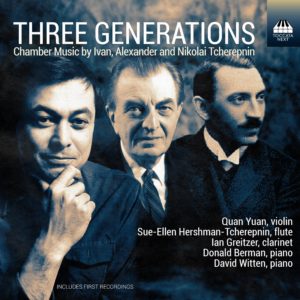
Three Generations
This album explores music by three father-and-son generations of the Tcherepnin family of composers: Nikolai, Alexander and Ivan. Although each wrote a wide range of scores, from solo pieces to operas and ballets, this recording focuses on their chamber music, presenting pieces spanning 95 years. Nikolai’s works for violin and piano reveal a late-Romantic, post-Tchaikovskian sensibility, whereas those of Alexander have a more modern, twentieth-century touch, closer to the style of his friend Sergei Prokofiev (a student of Nikolai Tcherepnin). Ivan is represented by two works — early and late – for flute, clarinet and piano, which have an improvisatory and playful quality.
Quan Yuan, violin (Tracks 1–9)
Sue-Ellen Hershman-Tcherepnin, flute (Tracks 10, 11)
Ian Greitzer, clarinet (Track 11)
David Witten, piano (Tracks 1–10)
Donald Berman, piano (Track 11)
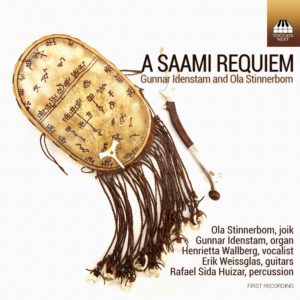
A Saami Requiem
A Saami Requiem is an extraordinary meeting-place of musical cultures – western classical, Sámi yoik, Nordic folk-dance, electric rock, blues, improv and more. It takes the form of a journey to Saajva, the Kingdom of Death in Sámi religious practice. With it the Swedish organist Gunnar Idenstam and Sámi artist Ola Stinnerbom provide a parallel to the Christian Requiem, with Ola Stinnerbom as Noite, the shaman who acts as guide to the Kingdom of Death – and back to this life, celebrated in the uplifting closing hymn. Some of the percussion sounds are sampled from traditional Sámi drums made by Ola Stinnerbom after ancient models; the electric guitars provide a link to rock groups like Deep Purple and King Crimson; and Gunnar Idenstam’s unmistakable style marries the French organ tradition with the alluring world of Swedish folk-music.
Ola Stinnerbom, yoik (Tracks 2–14)
Gunnar Idenstam, organ (Tracks 1–7, 9–14)
Henrietta Wallberg, vocalist (Tracks 7, 8, 10)
Erik Weissglas, guitars (Tracks 3–6, 9, 12–14)
Rafael Sida Huizar, percussion (Tracks 3–6, 8, 10–14)
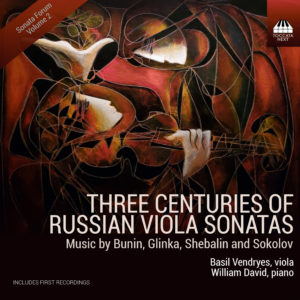
Three Centuries of Russian Viola Sonatas
The Russian viola sonata is a rare bird, not least because the instrument itself was frowned upon by the Soviet authorities; as a result Russian music for the viola has a rather patchy history. It begins in earnest in 1931, when the 1825 Sonata by Mikhail Glinka, ‘the father of Russian music’, was reconstructed from his sketches by Vadim Borisovsky, ‘the father of the Russian viola’. Thereafter, musicians and composers worked together to expand the repertoire. The relationship between the composer Revol Bunin and the violist Rudolf Barshai resulted in a sonata of 1955 which deserves wider currency. Although half a century apart, the Shebalin and Sokolov sonatas have something unusual in common: both were created as part of a triptych, alongside sonatas for violin and cello. All four composers knew how to make the viola sing – though this lyricism is often animated by moments of drama and excitement.
Basil Vendryes, viola
William David, piano