Search Results for "fc 26 coins Buyfc26coins.com is EA Sports official for FC 26 coins The transfer time was very fast..ujWi" – Page 2
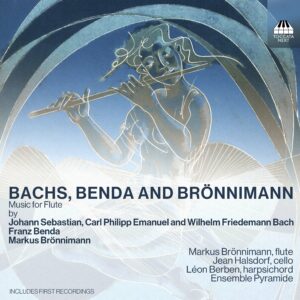
Bachs, Benda and Brönnimann
Four of the composers on this recording met in real life – in Potsdam, in spring 1747. In this album they are reunited, joined by the flautist-composer who brings their encounter to life once more, the Swiss-born Markus Brönnimann. The stylistic contrasts between works three centuries apart serve to accentuate their strengths, the formal elegance of the earlier pieces underlining the expressive liberty of the recent ones. Brönnimann combines the two worlds with his luminous arrangement of one of the best-known of all classical compositions.
Markus Brönnimann, flute
Jean Halsdorf, cello (Tracks 1–3, 7–9, 11–13, 15–18)
Léon Berben, harpsichord (Tracks 1–3, 7–9, 11–13, 15–18)
Ensemble Pyramide (Tracks 4–6, 10)
Markus Brönnimann, flute Barbara Tillmann, oboe
Ulrike Jacoby, violin
Muriel Schweizer, viola
Anita Jehli, cello
Marie Trottmann, harp
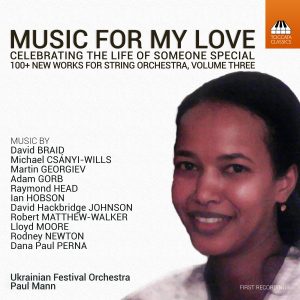
MUSIC FOR MY LOVE: Volume Three
Celebrating the Life of Someone Special
100+ New Works for String Orchestra, Volume Three
When Yodit Tekle was diagnosed with stomach cancer in late 2014, her partner, Martin Anderson, who runs Toccata Classics, asked a few composer friends to write some music for strings to bring her comfort in her illness. As her life slipped away, he had the idea that she might be remembered in music and so he began to commission other pieces for string orchestra in her memory. To his surprise, almost everyone he asked generously agreed, and so the project snowballed: there are now over 100 composers who have written or agreed to write for it – in an undertaking that is probably unique in the history of music. This third volume presents eleven more pieces in an initiative which, in effect, transforms love into something you can hear.
(Learn more at musicformylove.org)
Ukrainian Festival Orchestra
Paul Mann
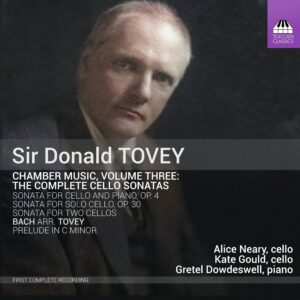
Sir Donald Tovey: Chamber Music, Volume Three: The Complete Cello Sonatas
Sir Donald Tovey (1875–1940), long hailed as one of the finest writers on music in English, saw himself primarily as a composer. His occasionally turbulent friendship with Pau Casals was the spur for a monumental concerto and one of his three cello sonatas: for solo cello, two cellos and cello with piano. The cello was the ideal instrument for Tovey’s Brahmsian musical language, with its long, singing lines unfolding in effortless counterpoint – though the huge passacaglia that ends the solo sonata also demands a virtuoso technique. The brief Bach arrangement recorded here for the first time arose when the twelve-year-old Tovey added a cello line to one of Bach’s best-known preludes, originally for lute.
Alice Neary, cello
Kate Gould, cello (Tracks 1–3)
Gretel Dowdeswell, piano (Tracks 4, 8–10)
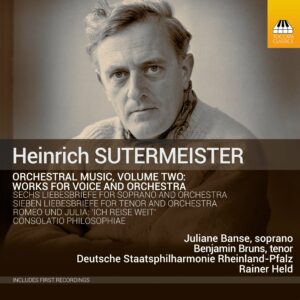
Heinrich Sutermeister: Orchestral Works, Volume Two
Heinrich Sutermeister (1910–95) belongs to the generation of Swiss composers after Bloch, Honegger, Martin and Schoeck. His operatic version of Romeo and Juliet soon spread his reputation far afield, and conductors as prominent as Böhm, Karajan and Sawallisch championed his works, although since his death his music has not had the attention it deserves. These four big-boned works – a powerful setting of Boethius, an extract from Romeo und Julia and two sets of moving love-letters from genuine historical figures in Renaissance, Baroque and Enlightenment Germany and Switzerland – attest to the acuity of his ear in balancing voice and large orchestra and confirm his instinct for drama.
Juliane Banse, soprano (1–9, 17–22)
Benjamin Bruns, tenor (10–16)
Deutsche Staatsphilharmonie Rheinland-Pfalz
Rainer Held, conductor
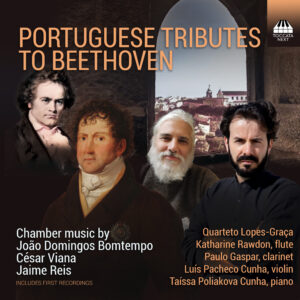
Portuguese Tributes to Beethoven
These three compositions by three Portuguese composers pay direct and indirect tribute to the music of Beethoven. The Piano Quintet by João Domingos Bomtempo was written in the style of the Viennese Classical mainstream even as Beethoven was changing its direction. The two works by César Viana and Jaime Reis both have distant roots in Beethoven but pay their homage in very different styles, one using relatively traditional language and the other more radical – as was Beethoven himself, of course.
Quarteto Lopes-Graça (Tracks 1–8)
Eliot Lawson and Luís Pacheco Cunha, violins
Isabel Pimentel, viola
Catherine Strynckx, cello
Katharine Rawdon, flute (Track 9)
Paulo Gaspar, clarinet (Track 9)
Luís Pacheco Cunha, violin (Track 9)
Taíssa Poliakova Cunha, piano
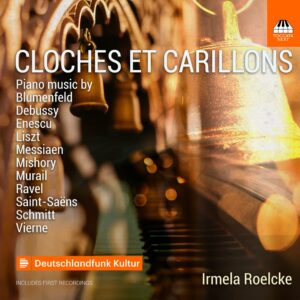
Cloches et Carillons
The piano is perhaps better suited than any other instrument to evoke the sound of bells – evening bells, bells of farewell and of joy, funereal bells, bells with spiritual overtones – and late-Romantic and twentieth-century French and Russian composers in particular have responded to the challenge of capturing those sonorities at the keyboard. This recital explores three centuries of pianistic tintinnabulation, and its ability to capture atmosphere and emotion.
Irmela Roelcke, piano
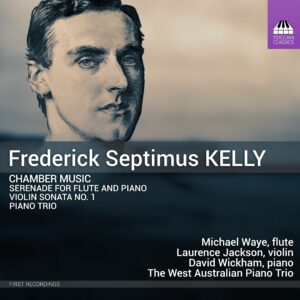
Frederick Septimus Kelly: Chamber Music
Frederick Septimus Kelly, born in Sydney in 1881, was on the way to becoming one of Australia’s most important early composers when he was killed during the Battle of the Somme in 1916. The three works recorded here – for the first time – underline just how grievous was that loss, not only for Australia but for the musical world more generally. Kelly’s D minor Violin Sonata is an astonishingly assured work for a twenty-year-old student composer; his Serenade for flute and piano exudes good-natured charm; and the two surviving movements of his Piano Trio – which have a Brahmsian intensity – suggest that he would have been one of the major composers of the twentieth century.
Laurence Jackson, piano
Michael Waye, flute
David Wickham, piano
The West Australian Piano Trio
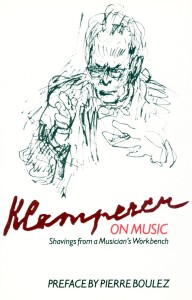
Klemperer on Music: Shavings from a Musician’s Workbench
Preface by Pierre Boulez
Edited by Martin Anderson
Illustrations by Cosman, Topolski, Kirchner and 16 others
Extant: 246
Composition: Demy octavo ~ Illustrated ~ List of Klemperer's Compositions
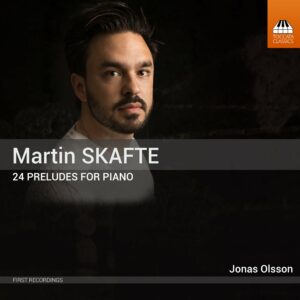
Martin Skafte: 24 Preludes for Piano
The fascination of the Swedish composer Martin Skafte (b. 1980) with the 24 Préludes of Claude Debussy inspired 24 preludes from Skafte himself, with occasional oblique references to Debussy’s originals but using Skafte’s own musical language. Like Debussy, Skafte exploits the colours and sonorities of the piano but also he requires Lisztian virtuosity and pulls in a range of further influences, among them ragtime and Ligeti – and a sly sense of humour can often be detected in the background.
Jonas Olsson, piano
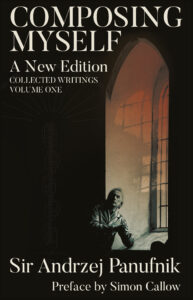
Andrzej Panufnik: Composing Myself
Preface by Simon Callow
Extent: 478 pages
20 colour & 80 b/w illustrations
Hardback
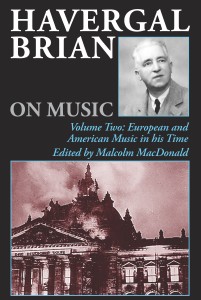
Havergal Brian on Music: Volume Two: European and American Music in his Time
Edited by Malcolm MacDonald
Extent: 458 pages
Composition: Demy octavo ~ Index
Reflections on the Life and Work of Friedrich Gernsheim – With Some Help from the Young People of Worms
Ever since, some years ago, I heard the State Philharmonic Orchestra of Rhineland-Palatinate performing a symphony by Friedrich Gernsheim (1839–1916), I have been seeking to…
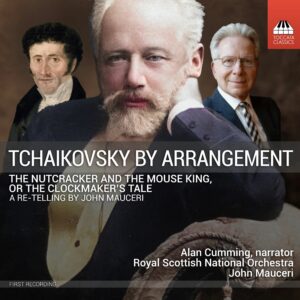
Tchaikovsky by Arrangement: The Nutcracker and the Mouse King or The Clockmaker’s Tale: A Re-telling by John Mauceri
Tchaikovsky’s ballet The Nutcracker, which has its origins in a novella by E. T. A. Hoffmann, contains some of the best-loved music ever written. But its composer wasn’t very happy with it, perhaps because the plot he was given to work with allowed him to present only a series of dances, losing the moral basis of Hoffman’s surprisingly modern tale, with its messages of inclusivity and what is now called ‘women’s agency’ – here it is the little girl who saves the prince. Hoffmann’s aspirational story continues well after the ballet ends, with the little girl, now grown up, marrying the prince, who is now king. John Mauceri has brought the ballet back to its inspiration, calling on music from elsewhere in Tchaikovsky’s orchestral output to fashion this ‘re-telling’, marrying Hoffmann’s text and Tchaikovsky’s music for the first time.
This is very much a Scottish product, by the way, even leaving aside Toccata’s Scottish origins: the orchestra is the Royal Scottish National Orchestra, John Mauceri spent seven years as music director of Scottish Opera in Glasgow, and the narrator is Alan Cumming, now a NY-based gay icon but born in Aberfeldy and brought up in Carnoustie.
Alan Cumming, narrator
Royal Scottish National Orchestra
John Mauceri, conductor
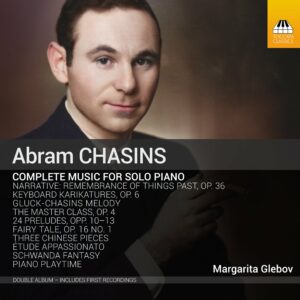
Abram Chasins: Complete Music for Piano Solo
Abram Chasins (1903–87) began his career as a pianist and composer but as broadcaster and writer soon became one of the best-known cultural commentators in the USA. His output of music for solo piano – recorded here complete for the first time – dates from his first years in the public eye, and although he made little attempt to promote it himself, one sees instantly why it was so well received at the time: sweeping keyboard textures and grand Romantic gestures expressed in a style somewhere between Rachmaninov and Prokofiev, sometimes with echoes of Chopin and Gershwin. The works here range from witty character pieces, some intended for children, and affectionate tributes to other pianists to more serious abstract essays – and Chasins, too, was a member of the club of composers who wrote 24 preludes in all the major and minor keys.
Margarita Glebov, piano
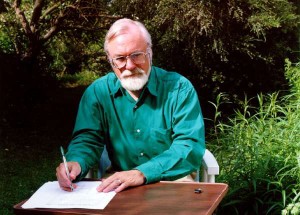
John McCabe in his Own Words
John’s death on 13 February was not unexpected – indeed, he had given his brain tumour a good fight and long outlived his doctors’ prognoses.…

Hans Gál In Conversation
This conversation, first published in the Journal of the British Music Society (Vol. 9, 1987, pp. 33–44), was recorded at Dr Gál’s Edinburgh home in…