Vytautas Bacevičius: Piano Music, Volume Two

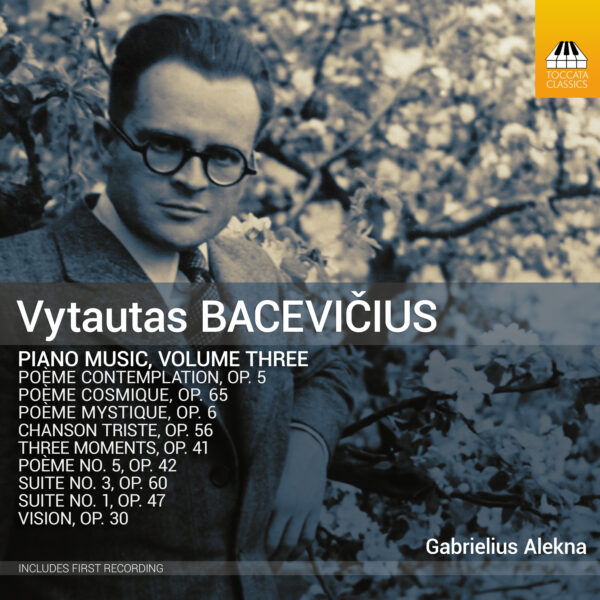
The Lithuanian pianist and composer Vytautas Bacevičius (1905–70) is one of the undiscovered pioneers of the twentieth century. This second volume of his piano music presents works written between 1927 and 1966 and shows the evolution of his musical language from the post-Skryabin style of the early works, via the influence of Debussy, Prokofiev and Stravinsky, to a highly individual modernism, akin to that of his fellow radicals Edgard Varèse and Stefan Wolpe – all three of them Europeans in exile in New York.
Gabrielius Alekna, piano
Listen To This Recording:
- Poeme Astral, Op. 7 (1927)
- Poeme No. 4, Op. 10 (1929)
- Etude No. 2, Op. 19 (1933)
- Fantasia, Op. 39 (1944)*
- Etude No. 4, Op. 43 (1946)*
- I Larghetto – poco più mosso – Allegro vivace
- II Lento – un poco piu mosso (Andante) – Tempo I – Moderato sostenuto – Lento
- III Presto – Prestissimo – Tempo I
- Dance Fantastic
- I Vision
- II Humoresque
- III Meditation
- Etude No. 5, Op. 61
- I Allegro moderato
- II Adagio
- III Vivace
Sonata No. 4, Op. 53 (1952-53)*
Dance Fantastic, Op. 55 (1954)*
Evocations, Op. 57 (1955)*
Etude No. 5, Op. 61 (1956)*
Trois pensées musicales, Op. 75 (1966)
*First Recordings


American Record Guide :
‘[…] Bacevicius has won me over by taking various elements and making them his own. […]
[In Sonata 4] There are plenty of contrasts, and one’s interest never flags. […] This music is emotional, strong, rhythmic, and always interesting. It is also contained, resistant to rambling, and never falls into the pit of self-indulgence. […]
The notes will tell you everything you need to know about this fascinating composer, and each work is fully discussed. The recording is excellent, and pianist Alekna performs this difficult music with awesome agility.
Unless you have a total aversion to modernist music, you will want to acquire this outstanding recording. Sorabji came to mind several times while listening, but it was a Sorabji far more disciplined and without the bloat. Miss this at your own peril.’
—Becker, American Record Guide, Jan/Feb 2017