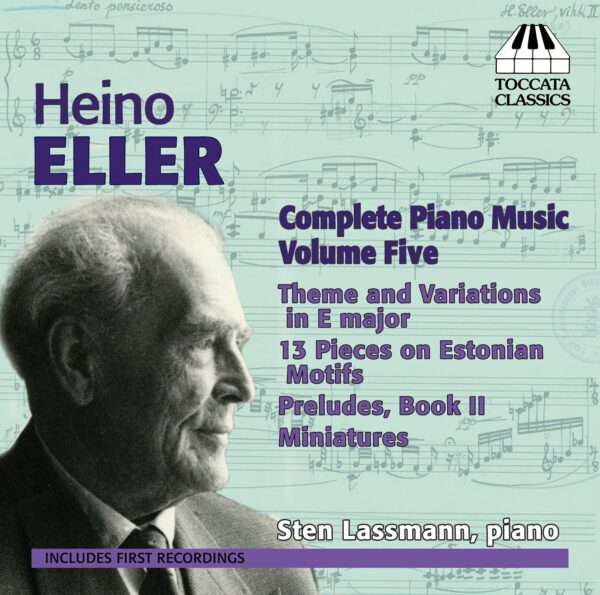
Heino Eller: Complete Piano Music, Volume Three
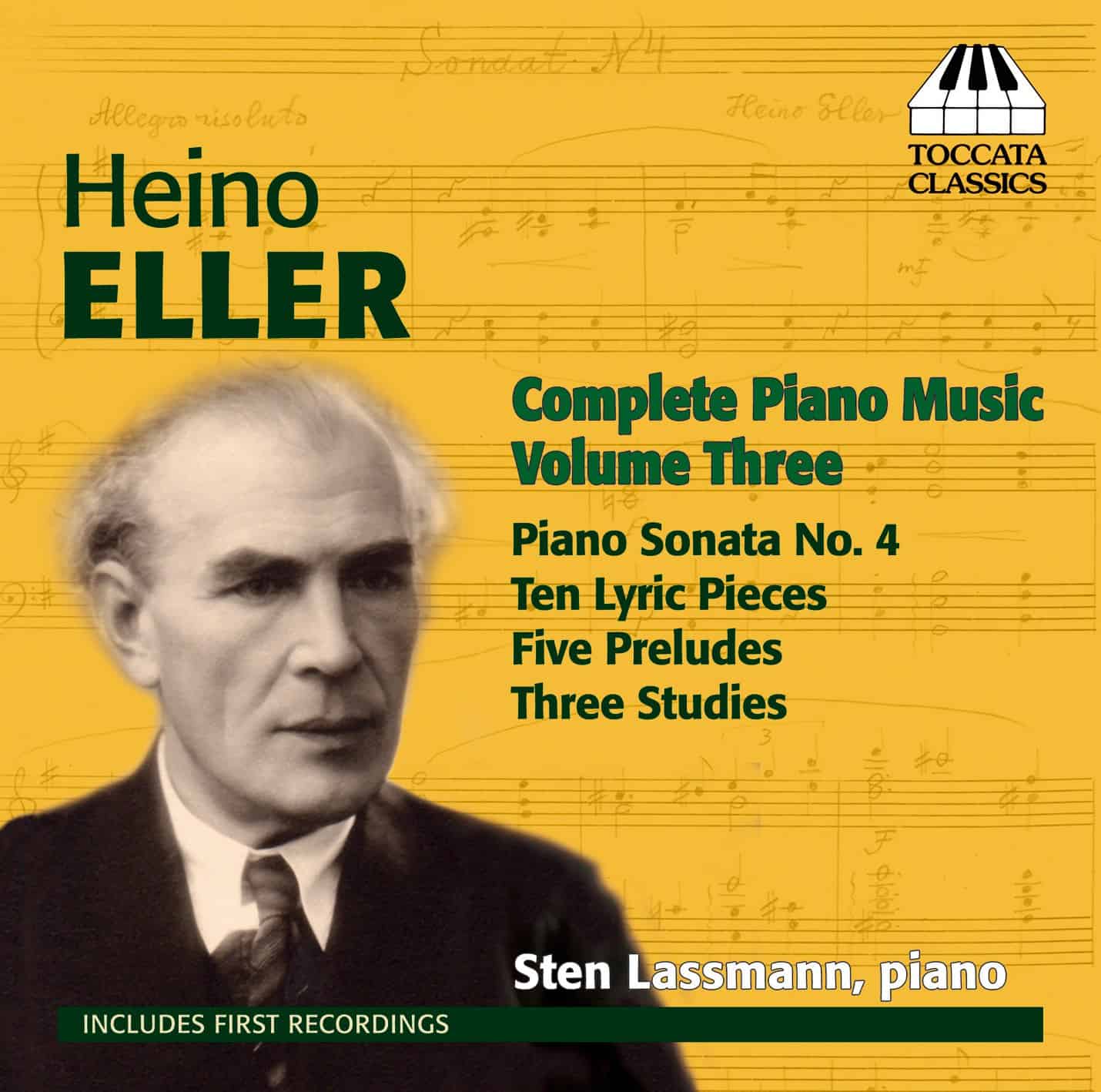
As both composer and teacher Heino Eller (1887-1970) was one of the founders of the classical tradition in his native Estonia. Yet his copious output for piano — some 200 works — is largely unknown, an omission this series of seven CDs seeks to redress. The central works of Volume Three are the Ten Lyric Pieces, mirroring the tragic loss of Eller's Jewish wife, murdered during the Nazi occupation, and Fourth Sonata, a late masterpiece that sums up a life's work. The three Studies here offer a glimpse of Eller's early virtuosic pursuits, and the five Preludes showcase his endeavours in an expressionist idiom.
Sten Lassmann, piano
Listen To This Recording:
-
Ten Lyric Pieces (1942–43)
- No. 1 Andante con moto
- No. 2 Allegro con passione
- No. 3 Andante meditativo
- No. 4 Allegro molto
- No. 5 Mesto, moderato assai
- No. 6 Sostenuto espressivo
- No. 7 Allegro agitato
- No. 8 Allegretto grazioso
- No. 9 Adagio elegiaco
- No. 10 Theme and 8 variations; Theme: Moderato, un poco maestoso
- No. 10 Var. I: Un poco più mosso
- No. 10 Var. II: Allegro
- No. 10 Var. III: Andante piacevole
- No. 10 Var. IV: Presto scherzando
- No. 10 Var. V: Allegro animato
- No. 10 Var. VI: Allegretto grazioso
- No. 10 Var. VII: Vivo
- No. 10 Var. VIII: Sostenuto espressivo
- Study in A flat major (1918)
- Study in G flat major (1919)
- Study in G flat major (1917)
- Lento
- Moderato assai
- Sostenuto
- Lento
- Moderato
- I Allegro risoluto
- II Andante sostenuto
- III Vivo
Preludes (1929–30)
Piano Sonata No. 4 (1957–58)
Sirp :
‘Kuid Elleri klaveriteoste tihe polüfooniline kude Sten Lassmanni eripäraselt intellektuaalses esituses kinnitab selle rahvuslik-modernistliku muusika täielikku suveräänsust, Elleri- ja eestipärasust. Selles on pigem assotsiatsioone põhjamaise juugendliku rahvusromantilise arhitektuuri ja maalikunstiga. Eeskätt on huvitav Elleri eripärane tehnitsism: on palju virtuooslikku faktuuri modernistlikule muusikale omase meloodika ja harmooniaga. Sten Lassmanni tähelepanelikult faktuuri tõlgendav kunstikeel on Elleri klaverimuusikaga tihedalt kokku kasvanud: detailide pideva minimaalse muutumise varjundid interpretatsioonis on talle tähtsad ja kohati intonatsioonilt täiuslikud. […]
Sten Lassmann on pisut enam kui 40 aastat pärast Heino Elleri surma elustanud tema klaverimuusika sedavõrd esileküündivas mahus ja tõlgenduses, et see lubab liialdust kartmata märgata huvitavat Felix Mendelssohn-Bartholdyga seotud paralleeli J. S. Bachi (1685–1750) loomingu elustamisel saksa kultuuris ligi 80 aastat pärast Bachi surma, nimelt „Matteuse passiooni” BWV 244 esitusega Berliinis 1829. […] See on ideaalne sissejuhatus Elleri muusikasse, milles ei ole olnud midagi doktrinaarset.’
English translation:
‘However, the dense polyphonic weave of Eller’s piano works in Sten Lassmann’s distinctively intellectual performance confirms the complete sovereignty of this national-modernist music, its Ellerian and Estonian identity. It rather has associations with Nordic Art Nouveau national-romantic architecture and painting. Eller’s distinctive technicality is especially interesting: there is a lot of virtuoso texture with the melody and harmony typical of modernist music. Sten Lassmann’s artistic language, which carefully interprets texture, has grown closely with Eller’s piano music: the shades of the constant minimal change of details in the interpretation are important to him and at times perfect in intonation. […]
A little more than 40 years after Heino Eller’s death, Sten Lassmann has revived his piano music in such a groundbreaking volume and interpretation that it allows us, without fear of exaggeration, to notice an interesting parallel with Felix Mendelssohn-Bartholdy in the revival of the work of J. S. Bach (1685–1750) in German culture nearly 80 years after Bach’s death, namely with the performance of the St. Matthew Passion BWV 244 in Berlin in 1829. […] This is an ideal introduction to Eller’s music, which has nothing doctrinaire about it.’
—Maris Valk-Falk, Sirp