Charles Harford Lloyd: Chamber Music for Clarinet
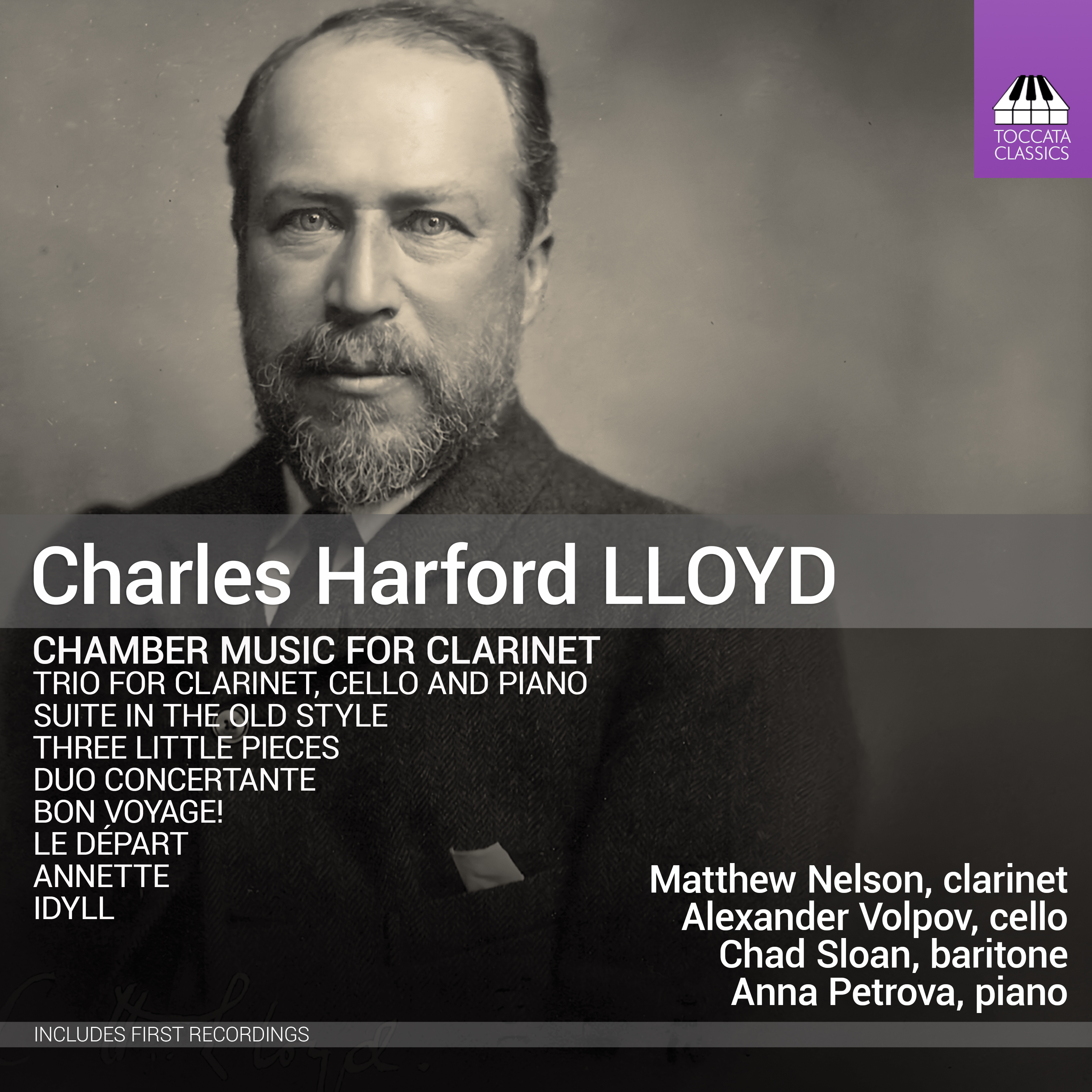
Charles Harford Lloyd (1849–1919) – organist of Gloucester Cathedral and the Chapel Royal, Oxford theologian and concert-organiser, music master at Eton and much more – was one of the most distinguished musicians of Victorian England. The largest part of his output is vocal music, mostly for the church; he composed only a handful of chamber works, often involving the clarinet. He wrote in a light Romantic idiom, where the influence of Brahms is often audible, as with his close friend, Hubert Parry. Lloyd knew how to make the clarinet sing, with one lovely, long-limbed melody after another. This first-ever album of his chamber music rescues a long-forgotten figure from the shadows.
Matthew Nelson, clarinet
Alexander Volpov, cello
Chad Sloan, baritone
Anna Petrova, piano
Listen To This Recording:
Trio for Clarinet, Cello and Piano in B-Flat Major (c. 1900)** (20:41)
- I. Allegro con brio (8:03)
- II. Andante espressivo (8:04)
- III. Allegro moderato (4:34)
- Duo Concertante (1886) (6:24)
- Annette (1886) (3:47)
Suite in the Old Style (1914)* (11:47)
- I. Prelude (1:46)
- II. Allemande (1:25)
- III. Minuet (3:11)
- IV. Sarabande (3:34)
- V. Gigue (1:51)
- Le Départ (publ. 1920) (2:20)
Three Little Pieces (1919)* (5:34)
- I. Romance (2:07)
- II. A Simple Melody (1:41)
- III. Valse Mignonne (1:46)
- Idyll (1912)* (4:08)
- ‘Bon Voyage!’ (1887) (2:34)
*First Recording
**First Recording in this Version
BBC Music Magazine :
‘Opening the album is a new version of the B flat major Trio for clarinet, bassoon and the piano, with the bassoon part adopted for cello. Nelson, Petrova and Volpov established this new instrumentation as a worthy companion piece to Brahms’s more well-known offering. […]
Detailed and well-researched booklet notes by Nelson generously contextualized Llyod’s clarinet music, making this a welcome release for players and listeners alike.’
—Ingrid Pearson, BBC Music Magazine
MusicWeb International :
‘Given his proficiency in choral music, I wasn’t necessarily expecting a similar level of expertise in this Trio but that’s what we get. It’s a 21-minute, three movement work rooted to a degree in the precedent of Brahms but showing a deft songfulness and attractive density of sound. […] This is welcome discovery heard in its premiere performance in this version. […]
The Duo Concertante is an earlier piece from 1886 and sports a fine array of tunes, deployed well – the performers here are attentive to dynamics – and the result is clever, clear and singable. […]
The performers, as noted, prove adept exponents of these late-Victorian and Edwardian pieces. […]
Toccata’s booklet notes are, as ever, admirably full both as to the details of Lloyd’s life and the nature of the chamber works performed.
—Jonathan Woolf, MusicWeb International
Fanfare :
‘At 2:20 minutes [Le départ] is a miniature, but it demonstrates Lloyd’s melodic gift, which is evident throughout the program.
[…] the Trio in B♭ is considered his major chamber work. It is a fine piece […].
Everything on the disc will provide pleasure for those interested in exploring lesser-known paths in Romanticism. […] Lloyd’s gift for melody, along with an unerring instinct for not stretching his music beyond its ability to sustain interest, makes this a very enjoyable collection.
That pleasure is enhanced by Matthew Nelson’s superb clarinet playing. […] Nelson has a warm, evenly produced tone, impeccable intonation, and vivid presentation. Pianist Anna Petrova is more than a competent accompanist. She plays with a keen awareness of her colleagues. In “Annette,” a wistful setting of a poem about a lost love by William Leonard Courtney, baritone Chad Sloan strikes the right regretful tone and blends well with Nelson’s clarinet.
As is always the case with Toccata, the text of “Annette” is included, and Nelson’s extensive program are exemplary.’
—Henry Fogel, Fanfare
American record Guide :
‘The performances honor this throwback with the spirit and sincerity these scores deserve, […]. Nelson handles his free–blowing tone well in all registers. […] the group makes a solid case for Lloyd; and chamber music fans should enjoy meeting this minor master.’
—Patrick Hanudel, American record Guide, Jan 2026