Walter Niemann: Piano Music, Volume Three
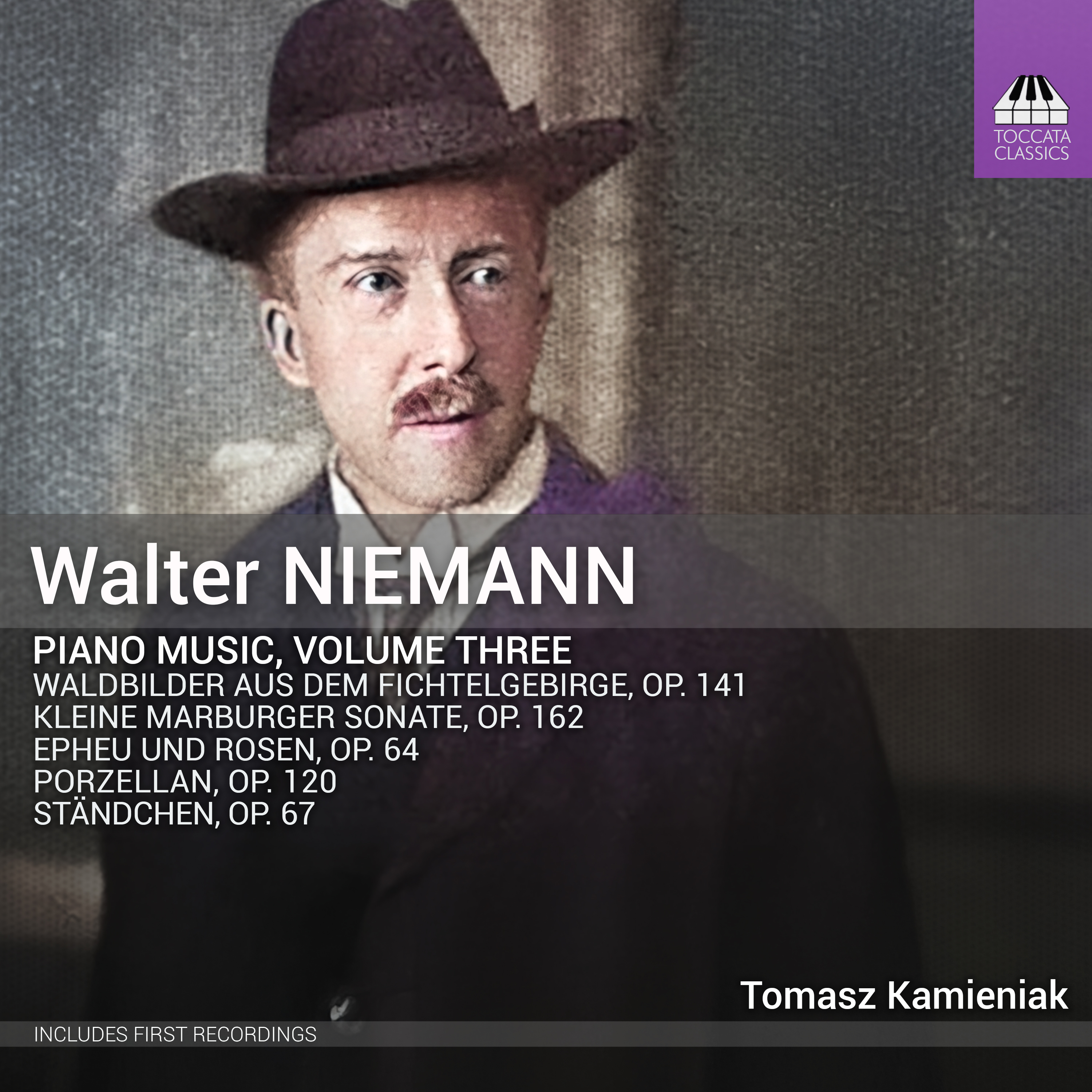
The largest part of the output of the Hamburg-born composer and writer Walter Niemann (1876–1953), a student of both Humperdinck and Reinecke, is piano music: an astonishing 1,000 or so pieces, divided into 189 opus numbers. Most of them are lyrical miniatures in a warm and approachable late-Romantic style, some evoking the music of the past – often with a touching degree of dignity and restraint, but also with an occasional flash of good humour. The range of moods here is surprisingly wide, from pieces recalling late Brahms and a barcarolle evoking Offenbach, via light-hearted character-sketches and evocative picture-postcards, to a warm-hearted and tender piano sonata.
Tomasz Kamieniak, piano
Listen To This Recording:
Epheu und Rosen (publ. 1919)* (12:25)
- I. Moderato ma un poco agitato ed inquieto (2:22)
- II. Andante tranquillo e malinconico (2:48)
- III. Quasi adagio cantabile ed espressivo (2:48)
- IV. Andante patetico e sempre pesante e poco rubato (2:35)
- V. Molto moderato ed egualmente (1:52)
Porzellan: Figuren und Bilder aus berühmten Manufakturen, Op. 120 (publ. 1931) (23:11)
- I. Die kleine Schäferin (Meissen): Tempo di Minuetto all’anticca (2:16)
- II. Tanzendes englisches Bauernpaar (Old Chelsea): Moderato, ma marcato (1:19)
- III. Athenischer Opferreigen (Wien): Andantino mosso (3:15)
- IV. Dänischer Frühling (Kopenhagen): Vivo e leggiero, quasi improvisando (1:56)
- V. Reisvögelchen (Japan): Amabile con moto (1:36)
- VI. Der kleine holländische Glockenturm (Delft): Moderato con anima (1:34)
- VII. Beppo, der Serenadensänger (Neapel): In tempo di una Serenetella (2:48)
- VIII. Jagdstück (Rosenthal): Molto moderato e un poco tenuto (1:42)
- IX. Madame la Marquise (Sèvres): Tempo di gavotto del’ XVII. secolo (1:48)
- X. Der gelbporzellane Obermandarin (China): Adagio assai (2:54)
- XI. Die Fontäne von Sanssouci (Alt-Berlin): Allegro (non troppo) amabile (2:23)
- Ständchen in E-Flat Major, Op. 67 (publ. 1919)* (4:16)
Waldbilder aus dem Fichtelgebirge, Op. 141 (1934) (15:00)
- I. Juni-Morgen: Allegro brioso (1:12)
- II. Einsame Weiher im Hochmoos: Poco Andante malinconico (1:55)
- III. Siebenstern: Amabile e teneramente con moto (1:04)
- IV. Felsenmeer: Largamente sostenuto e solenne (1:45)
- V. Waldbächlein: Allegretto liquido in modo pastorale (1:10)
- VI. Rosarote Abendwolken: Larghetto (1:55)
- VII. Farren im Wind: Leggierissimo con moto (1:15)
- VIII. Heroische Landschaft – Vogelruf in der Luisenburg: Moderato, ma patetico e eroico in modo (2:01)
- IX. Abschied: Un poco Allegretto tranquillo (2:43)
Kleine Marburger Sonate (Piano Sonata No. 12), Op. 162 (1942) (13:29)
- I. Allegro amabile (4:29)
- II. Poco adagio notturnale (4:21)
- III. Moderato con moto (4:29)
*First Recordings
Fanfare :
Porzellan Figuren und Bilder aus berühmten Manufakturen (Porcelain Figures and Pictures from Famous Manufacturers) is a remarkable suite of 11 movements that relate to specific pieces of porcelain from Europe and the Far East. The music is delicate, filled with grace, elegance, and occasionally humor. There are charming musical depictions such as “An English Farming Couple Dancing” and the beautiful “Japanese Weaver Bird.” This cycle, just under 25 minutes long, would make for a marvelous change in any piano recital. […]
Walter Niemann is no undiscovered giant, but neither does he merit the total obscurity his reputation has suffered. He wrote music of genuine charm and beauty that demonstrates a vivid imagination, a genuine melodic gift, and a characterful sense of color. The result is a lovely disc that should be a very pleasant discovery for pianophiles.
[…] [Tomasz Kamieniak] is sensitive to the nuances in the music and is clearly committed to Niemann’s aesthetic. William Melton’s detailed program notes are up to Toccata’s usual high standard, as is the fine recorded sound.’
—Henry Fogel, Fanfare, March 2026
Fanfare :
‘[Niemann’s] music was especially popular with amateur pianists; it is very well made and relatively easy to play. […]
Each movement [of the sonata] is concise, well controlled, and contains interesting detail. […]
Pianist Tomasz Kamieniak has the full measure of Niemann’s style and makes the best possible case for the music. Special commendation for William Melton’s outstanding booklet essay. Roughly 23 pages in length, it furnishes a cultural background, biography, and a detailed description of the music (as well as a nice photo of the “Sea of Rock” that inspired one of the Forest Pictures). Recommended for explorers of musical byways.’
—Michael Vaillancourt, Fanfare, April 2026