Robert Fürstenthal: Chamber Music, Volume One
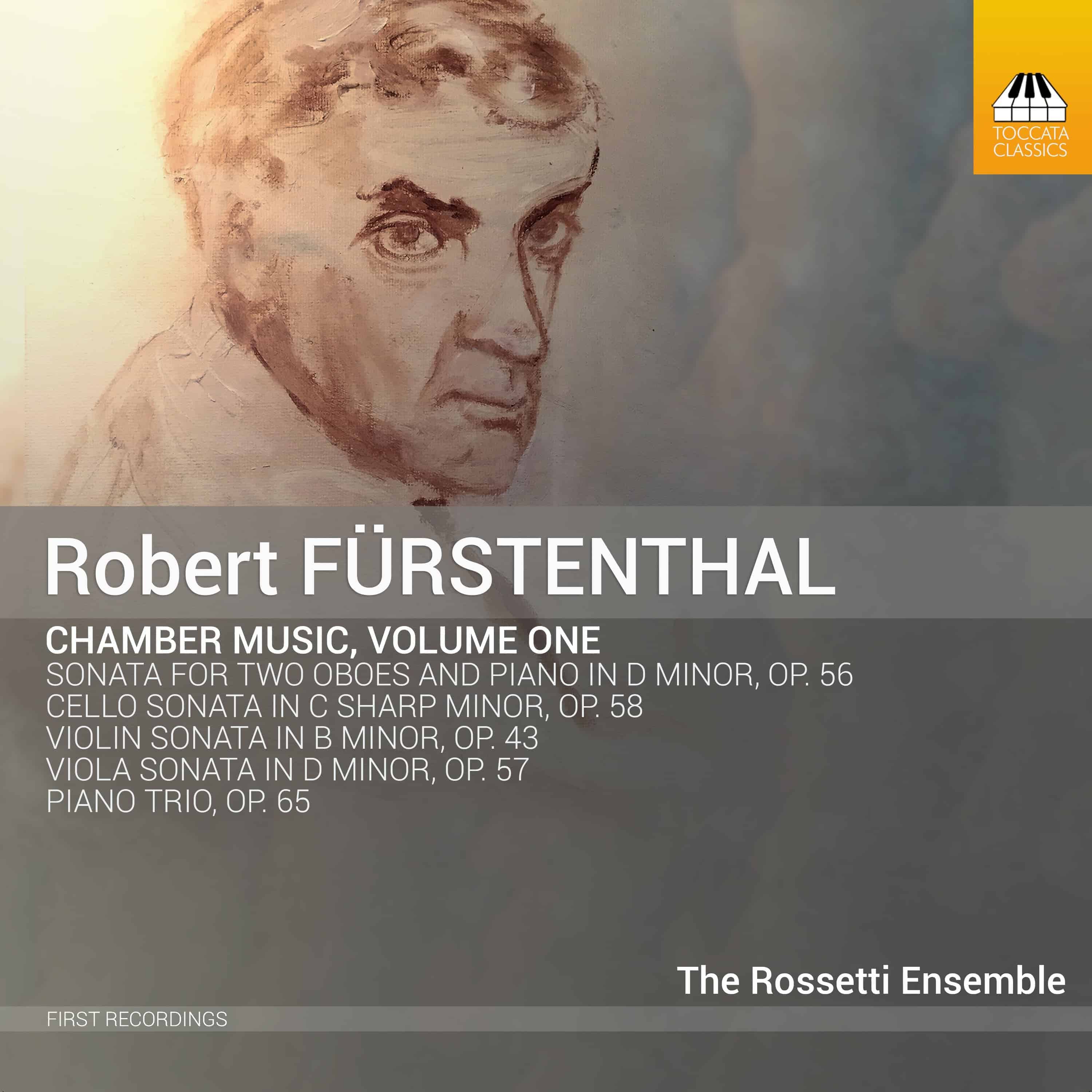
When Germany invaded Austria in 1938, Robert Fürstenthal, born in 1920, took the path of many Viennese Jews and fled to the United States, where he made his living as an accountant; the fact that he had written music in his youth was soon forgotten. Reconnection, after 35 years, with the woman who had been his first love rekindled both that flame and his urge to compose, and from then on songs and chamber music flowed from his pen, preserving the spirit of fin-de-siècle Vienna under the Californian sun – ‘When I compose, I am back in Vienna’, he explained. He died in November 2016, aged 96, knowing that his lyrical, eloquent music was at last attracting the attention of both musicians and microphones.
The Rossetti Ensemble
Malcolm Messiter (oboe)
Christopher O’Neal (oboe)
Sara Trickey (violin)
Sarah-Jane Bradley (viola)
Timothy Lowe (cello)
John Lenehan (piano)
Listen To This Recording:
-
Sonata for Two Oboes and Piano in D minor, Op. 56
- I Allegro moderato
- II Lento
- III Scherzando
- IV Intermezzo: Cantabile
- V Rondo: Allegretto
- I Allegro moderato
- II Andante
- III Scherzando
- IV Grave
- I Lento Allegretto
- II Scherzando
- III Lento
- IV Vivace
- I Allegro con fuoco
- II Lento
- III Scherzando
- IV Andante con variazioni
- I Moderato, ma con spirito
- II Cantabile
- III Andante Allegro ma non troppo
Cello Sonata in F minor, Op. 58
Viola Sonata in D minor, Op. 57
Violin Sonata in B minor, Op. 43
Piano Trio, Op. 65
FIRST RECORDINGS
MusicWeb International :
‘The members of the Rossetti Ensemble are all well-known and expert performers and never seek to inflate the music beyond its natural constraints. Fürstenthal’s biography and music, well related in the extensive booklet note – there are essays by his wife, Michael Haas, and William Melton – amplify the value of this well-produced disc.’
—Jonathan Woolf, MusicWeb International
MusicWeb International :
‘If anything, the new album of his chamber music is even more appealing than its predecessor. If I say that there’s nothing here to put off those like myself who don’t like ‘advanced’ music, that doesn’t mean that the music is superficial or unimaginative; there’s plenty of variety on offer and the performances by the Rossetti Ensemble, here making their recording debut (?) do it all justice, as does the recording, especially as heard in 24-bit format.’
—MusicWeb International
WTJU :
‘Personally, I think [his music is] well-crafted and — within their style — quite imaginative. Furstenthal has a gift for melody and uses his motivic materials effectively. [….]
The Rosetti Ensemble delivers some heartfelt performances. Cellist Timothy Lowe brings out the nostalgic nature of the Cello Sonata in F minor, giving it poignancy.
Sarah-Jane Bradley imbues the Viola Sonata in D minor with a flavor of Hungarian/Romani expressiveness that perfectly suits the music. Violinist Sarah Trickey treats the Violin Sonata in B minor as an offshoot of Brahms, digging into the music with relish.
For me, the most successful work on the album was the Sonata for Two Oboes and Piano in D minor. It had an unusual combination of instruments, and so sounded the most original to me.
The backstory helps explain why Furstenthal sounds closer to Robert Fuchs than Ernst Krenek. I don’t think it matters. Old-fashioned as they may be, these chamber works have a charm and an appeal that works on a purely musical level.’
—Ralph Graves, WTJU