Richard Stöhr: Orchestral Music, Volume Four
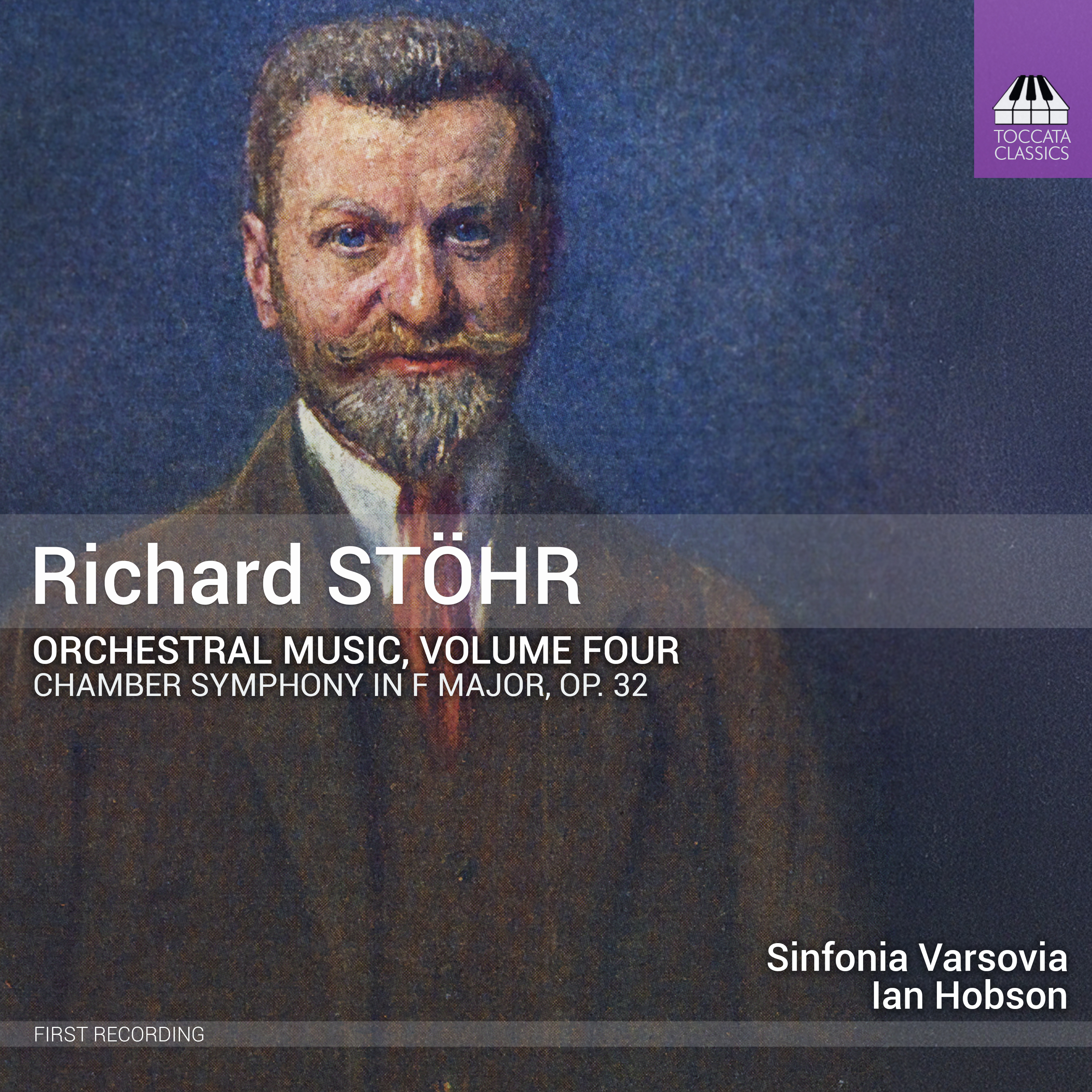
From the early days of the twentieth century until the Anschluss forced him into American exile, Richard Stöhr (1874–1967) was one of the more prominent personalities in Viennese musical life, as composer, teacher and author. Earlier releases in this series of recordings revealed him to have an individual voice, somewhere between Bruckner, Mahler, Korngold and Strauss. It can be heard in its full glory in his Chamber Symphony of 1912, a sunlit score modest in its orchestral demands but expansive in its ambit and generous in its ceaseless flow of gorgeous melody.
Sinfonia Varsovia
Ian Hobson, conductor
Listen To This Recording:
Chamber Symphony in F Major, Op. 32 (50:49)
- I. Adagio (16:19)
- II. Andante quasi marcia (9:14)
- III. Allegro (12:47)
- IV. Un poco grave – Allegro (12:28)
BBC Music Magazine :
‘Much of the first movement [of the Chamber Symphony] […] is a delight and, although substantial, does not outstay its welcome.
The performance […] is committed. Ian Hobson directs with a clear sense of direction and real care over phrasing and articulation. […] this estimable recording will certainly delight connoisseurs of the 19th century’s romantic twilight.’
—Jan Smaczny, BBC Music Magazine
Online Merker :
‘[Kammer-Sinfonie op. 78] ist ein Juwel der Spätromantik, das Naturstimmungen einfängt, ohne je in Sentimentalität abzugleiten. Unter der Leitung des britischen Dirigenten Ian Hobson, der für seine sensible Annäherung an vergessene Repertoire bekannt ist, bringt die Sinfonia Varsovia diese Sinfonie mit einer Frische zum Leben, als wäre sie gestern entstanden.
Die Sinfonia Varsovia, ein polnisches Ensemble mit Wurzeln in der barocken Tradition, aber einem Faible für abseitige Moderne, sitzt hier wie angegossen. Hobson, der schon unzählige Ur- und Erstaufführungen dirigierte – von Liszt bis zu obskuren Briten wie Havergal Brian –, lenkt das Ganze mit einer Hand, die zugreift, ohne zu würgen. Die Aufnahme atmet eine Natürlichkeit, die den Hörer direkt in den Klangraum versetzt. Kein Effekt, keine Überproduktion: Die Harfe schimmert durch wie Sonnenlicht auf einem Teich, das Horn ruft fern und nah zugleich. Es ist Musik, die nicht prahlt, sondern einlädt, und sich anfühlt wie ein warmer Handschlag.
Der Eröffnungssatz, ein gemäßigtes Allegro, webt sich aus wellenden Streicherbewegungen auf, die sich anfühlen wie der Atem eines Waldes im Herbstwind. Ein feines Hornsolo tritt ein, klar und verletzlich, als flüstere es Geheimnisse der Erde. Die anderen Bläser – Oboe mit ihrer weichen Traurigkeit, Klarinette mit spielerischem Charme, Fagott als erdiger Anker – gesellen sich hinzu, und die Harfe streut silberne Akzente wie fallende Blätter. Stöhr malt hier eine feine Welt der Naturstimmungen: Nicht laut und stürmisch, sondern intim, wie ein Spaziergang durch Nebel, wo jeder Schritt neue Klänge weckt. Die Streicher wogen in dichten, transparenten Schichten, und die Melodien haften sofort, weil sie so ungekünstelt wirken. Hobson hält das Tempo flüssig, lässt Pausen atmen, und die Musiker reagieren mit einer Intensität, die den Satz zu einem lebendigen Organismus macht. Man merkt: Das ist keine bloße Notenfolge, sondern ein Gespräch unter Freunden, das den Zuhörer mitnimmt in eine Sphäre, wo Zeit stillsteht.
Dann der zweite Satz, ein Andante, das mit einem verstörenden Klang beginnt: Dem gedämpften Horn, das wie ein ferner Schrei durch die Stille hallt. Es ist ein Moment, der unter die Haut geht, als ob Stöhr die Schmerzen seiner Zeit einfängt – die Unsicherheit der 1930er, die Emigration, die er ahnte. Die Streicher greifen das auf und intonieren ein aufsteigendes Lamento, ein Klagegesang, der sich in traurigen Bögen windet. Doch es bleibt nicht bei der Trauer; Bläser weben Kontraste hinein, die Harfe ein zartes Trösten. Bewegend und faszinierend zugleich, weil Stöhr meisterhaft dosiert: Die Dissonanzen beißen, ohne zu verletzen, und die Auflösungen erlösen wie ein Seufzer. Die Sinfonia Varsovia musiziert hier mit einer Engstirnigkeit, die berührt – kein technisches Feuerwerk, sondern pure Emotion. Hobson dirigiert es so, dass jede Phrase atmet, und der Klang bleibt natürlich, als säße man in einem kleinen Saal, umgeben von den Instrumenten. Es ist ein Satz, der nachhallt, der einen zwingt, innezuhalten und zu fühlen.
Der dritte Satz, ein Scherzo, dreht den Spieß um und bringt Leichtigkeit. Die Oboe startet einen kecken Tanz, flink und schelmisch, wie ein Elf im Unterholz. Nach und nach schließen sich die anderen an: Die Klarinette neckt mit sprunghaften Läufen, das Fagott stampft erdverbunden mit, und die Streicher wirbeln in einem Wirbel aus melodischen Einfällen. Die Harmonien umarmen einander, einnehmend und warm, ohne je in Süßlichkeit zu kippen. Stöhr zeigt hier seinen Reichtum: Jede Phrase birgt eine Überraschung, das den Tanz frisch hält. Es schmückt sich mit Klangjuwelen – ein Glissando der Harfe, ein plötzliches Hornintermezzo –, und das Ganze wirkt wie ein Fest, das aus dem Nichts entsteht. Die Musiker greifen das mit Freude auf; man hört ihr Engagement in jedem Akzent, in der präzisen, doch lockeren Interaktion. Hobson treibt es voran, ohne zu hetzen, und die Aufnahme fängt die Vitalität ein, als ob die Noten vor Freude tanzen würden. Ein Schmuckstück, das den Hörer lächeln lässt und den Verdacht weckt: Warum kennen wir das nicht alle?
Das Finale schließlich, ein energisches Allegro con brio, startet mit einer klaren Spannungsansage – ein markantes Motiv, das wie ein Weckruf ertönt. Es baut sich auf zu einem vitalen Wirbel, wo Stöhrs Kreativität explodiert: Melodische Vielfalt in Hülle und Fülle, Themen, die sich jagen und verschmelzen, Bläser, die triumphieren, Streicher, die jubilieren. Die Harfe hält den Faden, das Horn ruft zum Höhepunkt. Es ist ein Satz, der die Sinfonie abrundet, ohne abzuschließen – er endet in Ekstase, als ob die Musik weiterfliegen wollte. Die Sinfonia Varsovia und Hobson harmonieren hier prächtig; ihr Spiel klingt wichtig und spontan, als improvisierten sie gemeinsam. Die Klangqualität ist fabelhaft: Warm, detailliert, mit einem Raumklang, der die Instrumente atmen lässt.
Insgesamt ist diese Einspielung ein Meilenstein. Stöhr, der vergessene Wiener, verdient diesen Schub ans Licht. Seine Kammer-Sinfonie op. 78, mit ihrer Balance aus Intimität und Schwung, erinnert an Mahler in Kleinformat oder an die zarte Seite von Strauss. Sie spricht vom Schönen in der Natur, vom Schmerz des Lebens, vom Tanz der Seelen – und tut es mit einer Humanität, die berührt. Toccata Classics leistet Pionierarbeit, und Ian Hobson mit seinem Orchester macht es besonders eindrücklich. Denn in einer Welt voller Hits ist das ein echter Schatz, der glänzt.’
English translation:
‘[Chamber Symphony Op. 78] is a jewel of late Romanticism, capturing the moods of nature without ever lapsing into sentimentality. Under the direction of British conductor Ian Hobson, known for his sensitive approach to forgotten repertoire, the Sinfonia Varsovia brings this symphony to life with a freshness as if it were composed yesterday.
The Sinfonia Varsovia, a Polish ensemble with roots in the Baroque tradition but a penchant for unconventional modernism, is a perfect fit. Hobson, who has conducted countless world and German premieres—from Liszt to obscure British composers like Havergal Brian—guides the performance with a firm hand that engages without being overly forceful. The recording exudes a naturalness that places the listener directly within the soundscape. No effects, no overproduction: the harp shimmers like sunlight on a pond, the horn calls both far and near. It is music that doesn’t boast, but invites, and feels like a warm handshake.
The opening movement, a gentle Allegro, unfolds from undulating string gestures that feel like the breath of a forest in an autumn breeze. A delicate horn solo enters, clear and vulnerable, as if whispering secrets of the earth. The other wind instruments—oboe with its gentle melancholy, clarinet with playful charm, bassoon as an earthy anchor—join in, and the harp scatters silver accents like falling leaves. Stöhr paints a subtle world of natural moods here: not loud and stormy, but intimate, like a walk through mist, where every step awakens new sounds. The strings surge in dense, transparent layers, and the melodies immediately captivate because they seem so unpretentious. Hobson maintains a fluid tempo, allowing pauses to breathe, and the musicians respond with an intensity that transforms the movement into a living organism. One senses: this is not merely a sequence of notes, but a conversation among friends, one that draws the listener into a realm where time stands still.
Then comes the second movement, an Andante that begins with a disturbing sound: the muted horn, echoing through the silence like a distant cry. It is a deeply affecting moment, as if Stöhr were capturing the anguish of his time—the uncertainty of the 1930s, the emigration he foresaw. The strings take up this, intoning a rising lament, a plaintive song that winds in mournful arcs. But the sorrow does not remain; wind instruments weave in contrasts, the harp a gentle consolation. Moving and fascinating at the same time, because Stöhr masterfully modulates the sound: the dissonances bite without hurting, and the resolutions are as liberating as a sigh. The Sinfonia Varsovia plays here with a directness that touches the heart—not technical fireworks, but pure emotion. Hobson conducts it so that every phrase breathes, and the sound remains natural, as if you were sitting in a small hall, surrounded by the instruments. It is a movement that resonates, that compels you to pause and feel.
The third movement, a Scherzo, turns the tables and brings lightness. The oboe starts a cheeky dance, nimble and mischievous, like an elf in the undergrowth. Gradually, the others join in: the clarinet teases with leaping runs, the bassoon stamps along with an earthy feel, and the strings whirl in a vortex of melodic ideas. The harmonies embrace each other, captivating and warm, without ever lapsing into saccharine sweetness. Stöhr displays his richness here: every phrase holds a surprise that keeps the dance fresh. It adorns itself with sonic gems—a harp glissando, a sudden horn interlude—and the whole thing feels like a celebration arising from nothing. The musicians embrace this with joy; their commitment is audible in every accent, in the precise yet relaxed interaction. Hobson propels the music forward without rushing, and the recording captures the vitality, as if the notes were dancing with joy. A gem that brings a smile to the listener’s face and awakens the suspicion: Why don’t we all know this?
Finally, the finale, an energetic Allegro con brio, begins with a clear announcement of tension—a striking motif that sounds like a wake-up call. It builds to a vibrant whirlwind where Stöhr’s creativity explodes: melodic variety abounds, themes chase and merge, winds triumph, strings jubilant. The harp holds the thread, the horn calls for the climax. It’s a movement that rounds off the symphony without concluding it—it ends in ecstasy, as if the music wanted to fly on. The Sinfonia Varsovia and Hobson harmonize magnificently here; their playing sounds important and spontaneous, as if they were improvising together. The sound quality is fabulous: warm, detailed, with a spaciousness that allows the instruments to breathe.
Overall, this recording is a milestone. Stöhr, the forgotten Viennese composer, deserves this push into the light. His Chamber Symphony Op. 78, with its balance of intimacy and verve, is reminiscent of Mahler in miniature or the tender side of Strauss. It speaks of the beauty in nature, the pain of life, the dance of souls – and does so with a humanity that touches the heart. Toccata Classics is doing pioneering work, and Ian Hobson and his orchestra make it particularly impressive. For in a world full of hits, this is a true treasure that shines brightly.’
—Dirk Schauß, Online Merker
American Record Guide :
Richard Stohr’s 1912 Chamber Symphony is the most inspired Stohr work I’ve heard—one good, memorable theme after another. Furthermore, the themes have attractive counter-melodies in a profusion worthy of Dvorak. It was originally scored for a string quartet, 4 winds, and a harp. Ian Hobson uses 28 strings (15-6-7, no basses) and in this case, Hobson’s Choice is exactly right. As with the orchestral edition of Schoenberg’s 1st Chamber Symphony, more strings add beauty to the music. […]
The performance is excellent. Hobson directs the music with breadth and flexibility. […]
The recorded sound is just right for the music, and William Melton’s notes are, as usual superb. The program-directing drones can insist that there are no undiscovered masterpieces, but they’re wrong. Again. (And again.)’
—Don O’Connor, American Record Guide, Jan 2026