Ottorino Respighi: Complete Piano Music, Volume Two
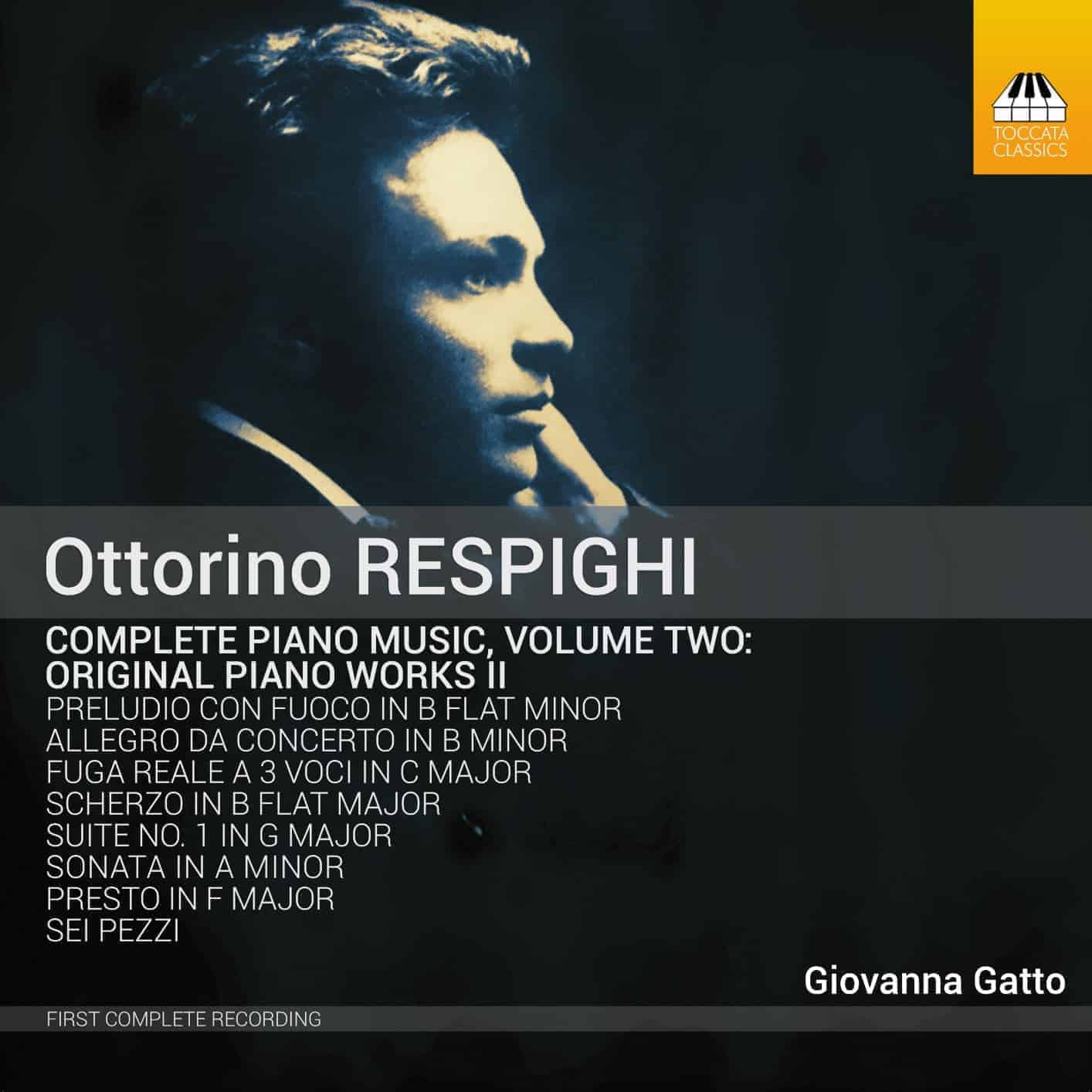
Respighi’s orchestral works are some of the most popular in the mainstream repertoire. His output of piano music, by contrast, is as good as unknown, and this Toccata Classics series will be the first-ever to present it all: original works and transcriptions alike, for solo piano, piano four hands and two pianos. The prentice works on this second volume of solo works reveal a Respighi with roots in the high-Romantic past of Schumann, Chopin and Brahms, but they also show the first signs of his later interest in the Italian pre-Baroque.
Giovanna Gatto piano
Listen To This Recording:
-
Sonata in A minor, P004b (1896)
- I Allegro moderato
- II Andantino
- III Allegro vivace
- Fuga reale a 3 voci in C major, P023a
- Presto in F major, P004d
- Allegro da concerto in B minor, P010
- I Vivace
- II Tema
- III Sarabanda
- IV Allegro con brio
- VI Presto
- Scherzo in B flat major, P004c
- Preludio con fuoco in B flat minor, P023
- No. 1 Valse caressante: Tempo lento di valzer
- No. 2 Canone: Andantino
- No. 3 Notturno: Lento
- No. 4 Minuetto
- No. 5 Studio: Presto
- No. 6 Intermezzo-Serenata: Andante calmo
Fuga reale a tre voci in C major, P023a (1898)*
Presto in F major, P004d (1896)*
Allegro da concerto in B minor, P010 (1896)
Suite No. 1 in G major, P022 (1898)
Scherzo in B flat major, P004c (1886)*
Preludio con fuoco in B flat minor, P023 (1898)
Sei pezzi per pianoforte, P044 (1903–5)
* FIRST RECORDINGS
MusicWeb International :
‘[…]the recorded sound is superb and the playing excellent throughout. This is a disc that I shall be returning to often, as it really is very interesting music. It’s amazing that Respighi was able to cram so much interest into some really short little works.’
—Jonathan Welsh, MusicWeb International
Opus Klassiek :
‘Het echt monumentaal aangelegde stuk op dit album is de eveneens uit 1896 daterende Pianosonate in a, met in het openingsdeel dramatiek die werkelijk alle kanten uitgaat, ingegeven door het uitermate energieke hoofdthema dat zich uitstekend leent voor de stormachtige ontwikkeling. In de doorwerking. Het is – zeker voor een 20-jarige – bovendien knap geconstrueerd, met transities die naar, in en uit de verschillende toonsoorten tonaal wrijvingsloos verlopen. […]
Wat Respighi wel heel goed kan is de piano echt te laten zingen: het cantabile-spel is hem als het ware op het muzikale lijf geschreven en gelukkig tevens een kolfje naar de handen van Giovanna Gatto. Dat blijkt niet alleen uit het exquise middendeel (Andantino) van deze sonate, maar ook elders. De briljant getoonzette finale mag er eveneens zijn, waarin – we hoorden het al eerder in deze sonate – Respighi zijn blijkbaar grote bewondering voor Brahms (o.a. door de parallelle sexten) niet onder stoelen of banken steekt. […]
Het zegt echter zeker wel iets over de grote pianistische gaven van Giovanna Gatto, want ik kan mij voor deze muziek werkelijk geen betere pleitbezorg(st)er voorstellen. Technisch tot in de puntjes verzorgd, uiterst verbeeldingsvol voor het voetlicht gebracxht, warm en zangrijk, en met een uitstekend gevoel voor het melodische lijnenspel en wat Respighi zoal aan harmonische vondsten (zonder daarbij menigmaal rekening te houden met de typische klankeigenschappen van en de speelwijze op de piano!) toen al wist te bedenken.’
English translation:
‘The truly monumental piece on this album is the Piano Sonata in A minor, also dating from 1896. Its opening movement boasts a truly dramatic sweep, inspired by the exceptionally energetic main theme that lends itself perfectly to the stormy development. It is also—especially for a 20-year-old—cleverly constructed, with transitions to, in, and out of the various keys that flow tonally seamlessly. […]
What Respighi excels at is making the piano truly sing: the cantabile playing is practically tailor-made for him, and thankfully, also a natural fit for Giovanna Gatto. This is evident not only in the exquisite middle movement (Andantino) of this sonata, but also elsewhere. The brilliantly set finale is also quite something, in which—as we heard earlier in this sonata—Respighi makes no secret of his apparent great admiration for Brahms (partly through the parallel sixths). […]
However, it certainly says something about Giovanna Gatto’s great pianistic gifts, because I truly can’t imagine a better advocate for this music. Technically meticulous, presented with exceptional imagination, warm and rich in song, and with an excellent sense of melodic lines and the harmonic inventions Respighi was already able to devise (often without considering the piano’s typical tonal qualities and playing style!).’
—Aart van der Wal, Opus Klassiek