Heino Eller: Complete Piano Music, Volume Four
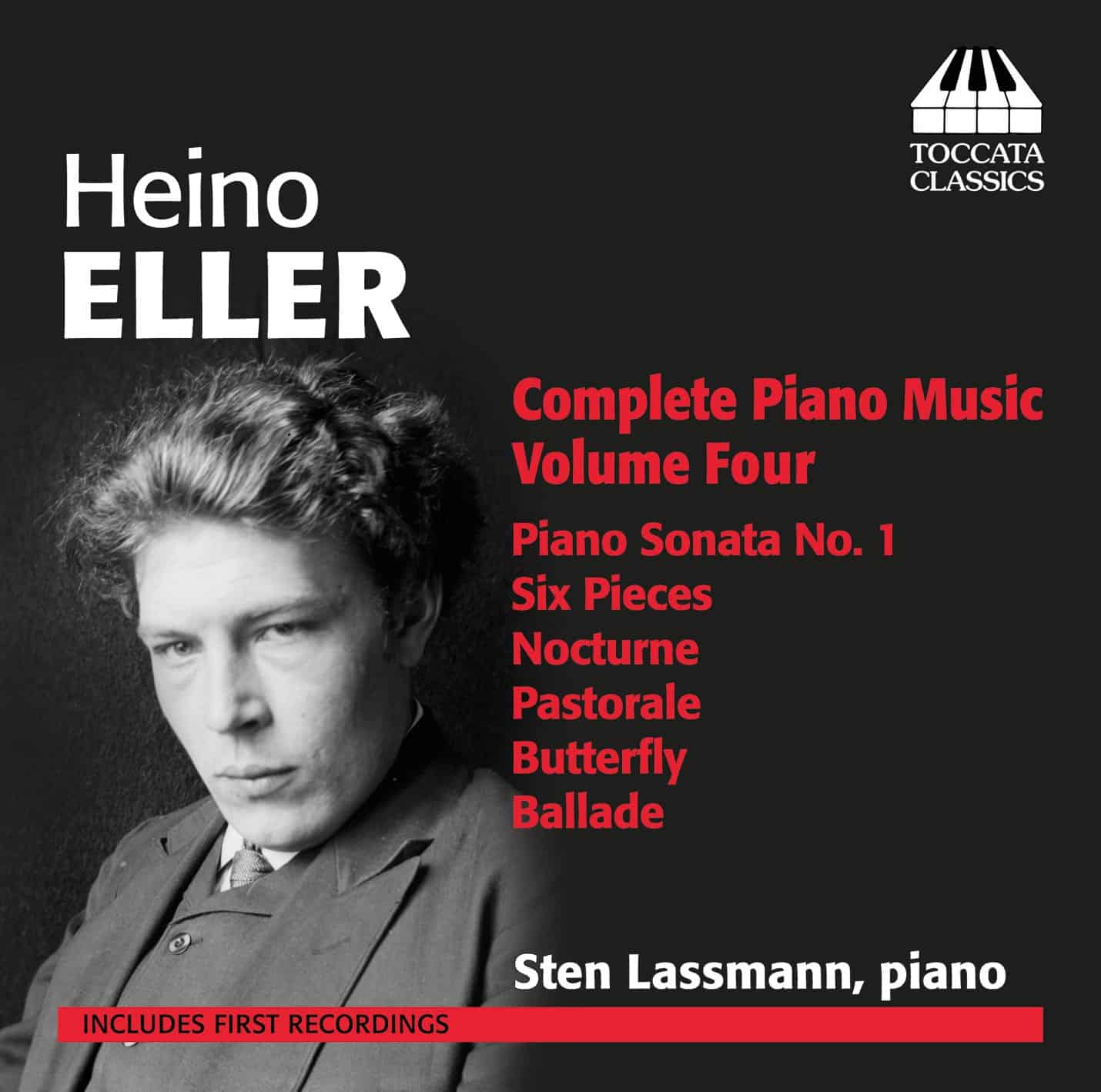
As both composer and teacher Heino Eller (1887-1970) was one of the founders of the classical tradition in his native Estonia. Yet his copious output for piano — some 200 works — is largely unknown, an omission this series of eight CDs seeks to redress. This fourth volume presents Eller's First Sonata, a Romantic work of gigantic proportions, composed for his final exam at the Petrograd Conservatory, as well as a number of miniatures, including one of his most popular pieces, Butterfly, and ends with the sage but passionate Ballade in C sharp minor from 1955.
Sten Lassmann, piano
Listen To This Recording:
-
Sonata No. 1 (1919–20)
- I Allegro assai
- II Larghetto
- III Scherzo. Presto
- IV Finale. Allegro moderate
- Intiimne hetk (‘Intimate moment’) (1938)
- Pastorale (1919)
- Nocturne in E flat minor (1934?)
- Vivace in A flat major (1930s)
- Liblikas (‘Butterfly’) (1935)
- No. 1 Linakatkuja (‘Flax-plucker’)
- No. 2 Rahvatoonis (‘In folk tone’)
- No. 3 Hällilaul (‘Lullaby’)
- No. 4 Scherzo
- No. 5 Romance
- No. 6 Dance
- Ballade in C sharp minor (1955)
Six Pieces (1953)
Seth Blacklock :
Eller’s piano music, although sometimes quite demanding, comes across as very well-meaning, a characteristic which is displayed throughout this disc, even at moments in the large-scale Sonata. The shorter works here are the more appealing in my opinion, Lassmann handling them with delicacy, liveliness where needed, and just the right amount of intimacy. Where the performance lacks, for me, is in the Sonata, which needs more Scriabinesque urgency and drama. Nevertheless, this is an enjoyable disc and the sound is up to Toccata’s usual excellent standards.
International Record review :
‘[The Sonata is] an impressive piece overall and it’s good to have Sten Lassmann’s strong and sympathetic account of it […] The recording […] presents the piano in immediate and clear sound. […]
All praise to Toccata Classics- when this enterprising label finds a worthwhile project, it goes for it wholeheartedly’
—International Record review
Sirp :
‘Kuid Elleri klaveriteoste tihe polüfooniline kude Sten Lassmanni eripäraselt intellektuaalses esituses kinnitab selle rahvuslik-modernistliku muusika täielikku suveräänsust, Elleri- ja eestipärasust. Selles on pigem assotsiatsioone põhjamaise juugendliku rahvusromantilise arhitektuuri ja maalikunstiga. Eeskätt on huvitav Elleri eripärane tehnitsism: on palju virtuooslikku faktuuri modernistlikule muusikale omase meloodika ja harmooniaga. Sten Lassmanni tähelepanelikult faktuuri tõlgendav kunstikeel on Elleri klaverimuusikaga tihedalt kokku kasvanud: detailide pideva minimaalse muutumise varjundid interpretatsioonis on talle tähtsad ja kohati intonatsioonilt täiuslikud. […]
Sten Lassmann on pisut enam kui 40 aastat pärast Heino Elleri surma elustanud tema klaverimuusika sedavõrd esileküündivas mahus ja tõlgenduses, et see lubab liialdust kartmata märgata huvitavat Felix Mendelssohn-Bartholdyga seotud paralleeli J. S. Bachi (1685–1750) loomingu elustamisel saksa kultuuris ligi 80 aastat pärast Bachi surma, nimelt „Matteuse passiooni” BWV 244 esitusega Berliinis 1829. […] See on ideaalne sissejuhatus Elleri muusikasse, milles ei ole olnud midagi doktrinaarset.’
English translation:
‘However, the dense polyphonic weave of Eller’s piano works in Sten Lassmann’s distinctively intellectual performance confirms the complete sovereignty of this national-modernist music, its Ellerian and Estonian identity. It rather has associations with Nordic Art Nouveau national-romantic architecture and painting. Eller’s distinctive technicality is especially interesting: there is a lot of virtuoso texture with the melody and harmony typical of modernist music. Sten Lassmann’s artistic language, which carefully interprets texture, has grown closely with Eller’s piano music: the shades of the constant minimal change of details in the interpretation are important to him and at times perfect in intonation. […]
A little more than 40 years after Heino Eller’s death, Sten Lassmann has revived his piano music in such a groundbreaking volume and interpretation that it allows us, without fear of exaggeration, to notice an interesting parallel with Felix Mendelssohn-Bartholdy in the revival of the work of J. S. Bach (1685–1750) in German culture nearly 80 years after Bach’s death, namely with the performance of the St. Matthew Passion BWV 244 in Berlin in 1829. […] This is an ideal introduction to Eller’s music, which has nothing doctrinaire about it.’
—Maris Valk-Falk, Sirp