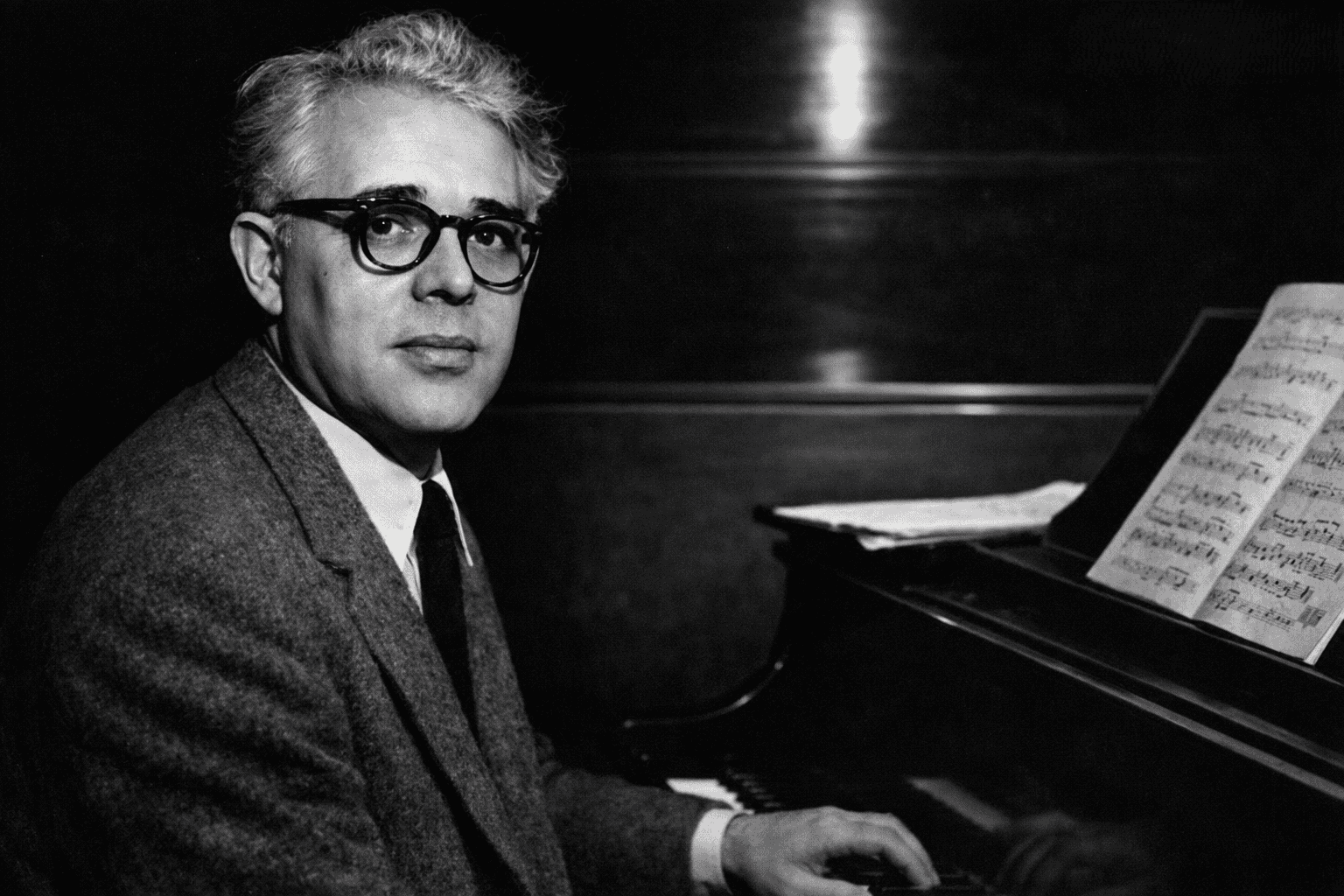
Again in conjunction with the release of the first volume of Cedric Thorpe Davie’s orchestral music on Toccata Classics (TOCC 0593), we present a transcription – and recording – of Professor Davie talking. This conversation with Maurice Lindsay was broadcast in the series A Time to Talk on BBC Radio Scotland on 22 May 1978 and can be heard by clicking here. We are grateful to Peter Adamson of St Andrews for transcription and recording alike.
As broadcaster, writer, poet, and cultural historian, Maurice Lindsay (1918–2009) was a major figure on the Scottish cultural landscape. His Modern Scottish Poetry: An Anthology of the Scottish Renaissance, 1920-1945 (Faber and Faber, London, 1946) was a milestone in opening the poetry of such figures as Hugh MacDiarmid, Sorley Maclean, W. S. Graham, Norman MacCaig and others to a wider audience, and he served Scottish music in the same manner with Francis George Scott and the Scottish Renaissance(Paul Harris, Edinburgh, 1980).
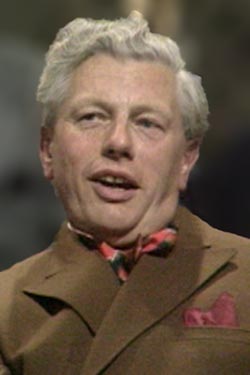
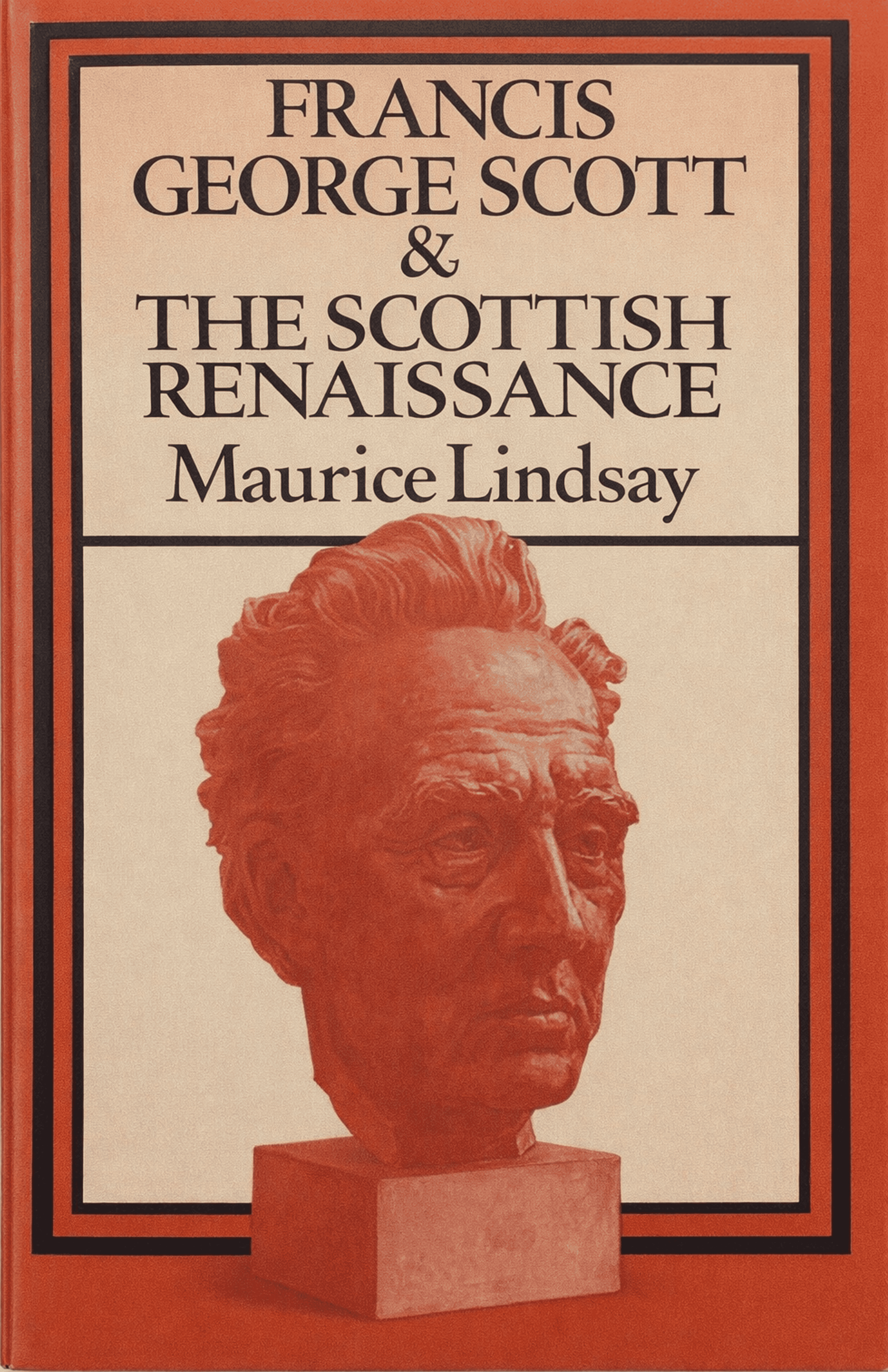
Maurice Lindsay and his pathbreaking book on Scottish music
Announcer: This is Radio Scotland. And now A Time to Talk. In this week’s programme, Maurice Lindsay talks to the composer Cedric Thorpe Davie, who retires this year as Professor of Music at St Andrews University.
Maurice Lindsay: Cedric Thorpe Davie, you come from a musical background. Your father was a well-known musician, conductor of a choir, and were you conscious of a deliberately musical upbringing?
Cedric Thorpe Davie: Yes, I was. My father was, I don’t know if he was determined to make me a musician, but he was a strict regimenter as far as learning to play the piano and supervising practice and all that sort of thing, yes.
And then you went to study at any rate in Finland, did you not? Why Finland at that time?
Ah, well, I, as a late teenager and in my early twenties, I worshipped the great Finnish composer Sibelius. I mean, I really did worship him. And when I got the chance to go abroad, theoretically for study, it was sufficient really in my altruistic, romantic, young way to set foot on the same soil and to be, you know, there’s no more to it than that. I now can look back and see that was really what took me there.
But it wasn’t with him you studied?
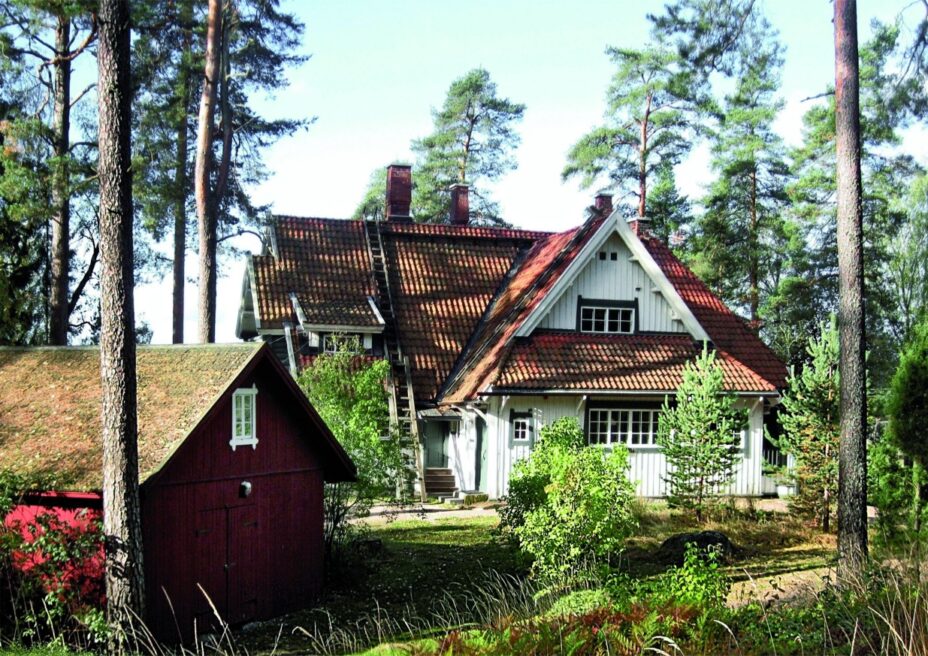
No, no, he was by then very old and lived in retirement many miles away from the centre of affairs. I had the, for me, unforgettable experience of being taken out by one of Sibelius’ daughters to this forest fastness and spending several hours with the old man speaking in German. My German wasn’t very good, his was. It was really, it was like being, at that age, it was really like being given a kind of pre-taste of heaven.
Do you still feel the same way about him as you did at that time about his music?
Well, I don’t have that youthful calf-love as it was, but I still regard him as the major figure of this century. It’s a pretty unfashionable opinion, but that is how I feel about him.
When did you start composing yourself?
My first attempt at serious composition was in my later teens, I think. I wrote a piano trio of which I was extraordinarily proud and I came across it while clearing my shelves preparatory to removal just the other day and, well, it is a curiosity and it has a certain romantic feeling as being the first thing I was so proud of, which isn’t a terrible piece of music, terrible.
You went on quite soon in your career, after you came back from Finland, you wrote a symphony. That was your first large effort, wasn’t it?
That was just after the war, actually, no, I had written quite a lot of music that I thought well of and some of which I still think well of between the Finland episode, which was ’36, and, well, in the next ten years, in fact, which included the war years. This symphony that you have mentioned was written in ’45, ’45 and ’6, and in fact was an entry for a competition, which was run by, believe it or not, The Daily Express, but it got the second prize.
What had you been doing during the war years, apart from composing?
Well, my war service, if you can call it that, was in the fire brigade, most of it spent in Glasgow docks, preventing cargos of pig iron from catching fire.
Did you get much time to write, to devote to it?
No, to be honest, no, the, we began, the fire service began, like, you know, all national service, it was a 24-hour business, you didn’t get off any leave, and then when things were sorted out a bit, it was 12-hour shifts, and, honestly, after a 12-hour shift standing out on the deck of a ship, one didn’t really feel terribly like doing much more than go home to bed.
What did you do when the war was over and you were back in normal life?
Well, I resumed my post as a teacher at the Royal Scottish Academy of Music for a short time, and then I was approached to see if I would be interested in applying for a vacancy at St Andrews University, which was due to fall very shortly afterwards.
There hadn’t really been a serious department of music at St Andrews University, though, until you went there, is that right?
And for some considerable time afterwards, when I went there, it was, the duties consisted of looking after the music in the college chapel, as an organist, choir, and so on, and giving, if not exactly extramural lectures, non-graduating lectures open to student bodies. That was all that was involved to begin with.
That was all that my predecessor had been involved in, but I think that there was an intention in the university from the start, from that point, to start a department of music. It wasn’t made absolutely clear to me at the time whether I was expected to initiate a department of music. I think, indeed, it was regarded as a very nice place for a composer to have a pittance enough to keep the wolf from the door and let him get on with his writing, and that’s what it consisted of for two, three years.
But then you have, in fact, now built it up into a considerable department.
Yes, oh yes. From about 48 onwards, one’s energies were devoted to the slow building-up, from nothing really, into a full music department, and there it is now. It has its honours students and it has its professor of music.
Well, with all this academic effort going on, very considerable academic effort in building up the department, you rather changed your directions as a composer, didn’t you?
Well, yes, I did. It’s quite true. For a considerable period, I went into the world of composing for films, film scores, and music for the theatre, almost for a long time to the exclusion of everything else. The film score was a result of the symphony that you mentioned, you see. The first- and the second-prize winners in the symphony competition were both given the chance to write a film score by talent scouts, no doubt. So I found myself in that new and interesting world, and I liked it very much, and I liked the fees that came at the end even better. So for about twelve or fifteen years, I wrote a lot of film scores, some for Walt Disney and various other American and English producers.
What were some of the films that you wrote?
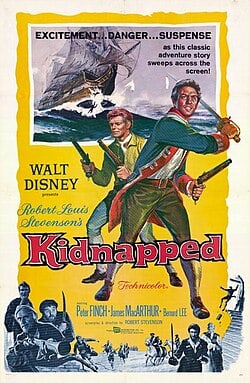
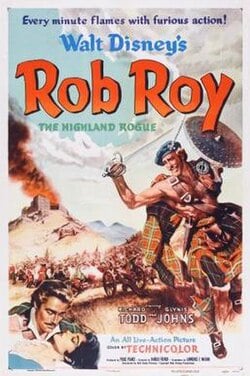
Well, the two Disney feature films were Kidnapped and Rob Roy, and then there were some documentaries for Disney also. I don’t know that I ever was associated with any real world-killer, so far as film. I was associated with some terrible films, whose titles I’d better not mention because I’m not certain about the libel laws.
But also some good ones, and some very good films on Scottish subjects like Compton Mackenzie’s Rockets Galore, and The Bridal Path, and one or two other things. They’re all old hat now, though I may tell you they still go on occasionally on afternoon television, something which most people curse, but actually I’m all in favour of it because I may say the composer always gets a cut. Even after all these years.
Well, once you got into the way of composing for the world of film, did you feel less inclined to go on with non-film music, or did you just not have time?
No, there seemed to be plenty of time in those days. Remember, in the university, one was still starting things up. Well, it takes many years to get a university department into full swing, because you’ve got to have, obviously, a year when there’s only first-year students. Then you’ve got to have a year when there’s first and second, and so on.
And to begin with, there was plenty of time. And one way or another, I was still writing a lot, and a great deal for children and for
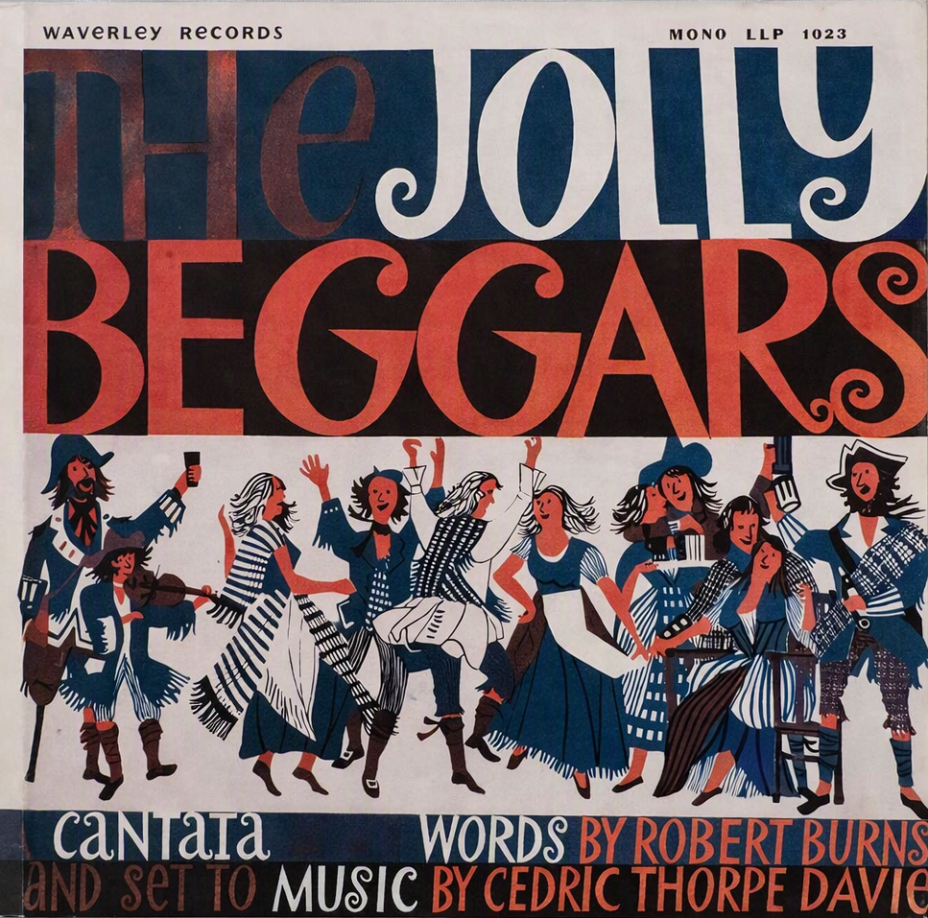
Probably your best-known piece, your widest-known piece, was your realisation of Burns’ The Jolly Beggars. That must have been performed all over the place.
Yes, that certainly is the piece of mine that’s been most often played, and you should know perfectly well how it came into being, because, as a matter of fact, it was you who first approached me as to the possibility of setting the piece as a whole. It had been set by a number of different composers from Sir Henry Bishop onwards, but nobody had ever tried to put the recitatives to music, just the songs, and then they would speak the dialogue in between. And it was your suggestion that we might set the entire thing to music and put it on as a dramatic piece.
There have been tremendous changes in musical fashion, in the sound of music, in the relationship between notes, so to say, in the last 30 years. Some composers have remained more or less unmoved by these, notably Shostakovich, and to some extent, though not entirely, Britten. What has your attitude been to this complete change?
Well, I think I have to admit that I am on the conservative side. Some of my colleagues regard me as, and they may be right, as ultra-conservative and indeed as a back number. I don’t find much pleasure in what’s, to use another horrible word, usually called avant-garde music, or very little of it, and I have really quite strong feelings about the fact that the Almighty gave us a marvellous instrument, i.e., the ear, with a most astonishing capacity for analysing sound. And the human ear is all gauged to that natural phenomenon called the harmonic sequence. The ear is made to deal with the harmonic sequence, and as soon as you write music which ignores the harmonic sequence, as most avant-garde music does, it seems to me then that the ear is no longer a proper instrument for dealing with it. Therefore, to me, so much of this music is not directed to the ear at all, but perhaps to the brain or straight to the emotions or something, and I just don’t find myself able to go along with that. I think music is something for the ear.
Well, that brings me to the point, what, in fact, do you think the future of music is if this new substance passing as music, by the definition you’ve given…
Maurice, I’ve spent sleepless nights wondering what the answer to that question is. I simply do not know.
I mean, do you see any future in electronic music, for instance?
Well, I think there probably is a future in electronic, for want of a better word, music. It’s called electronic music. I think there’s probably a great deal of development in front of this manipulation of electronics in sound. And I dare say, I dare say that’s where the future lies.
But I think it’s a great mistake to regard it as music in the sense that one regards Palestrina, or Bach or Wagner or Shostakovich as music. I think it’s something quite different.
You retire in the autumn from your position at the head of the department that you have built up. What do you look forward to doing in your retirement most?
Well, I haven’t had much time to write music for the last ten years or so. I really hope to go back and start writing music again. I also have one or two books in mind. But whether I shall have the time or energy remains to be seen.
Well, I hope you have both the time and the energy to do that and to write plenty more music.
Thank you, Cedric Thorpe Davie.
Announcer: In this week’s A Time to Talk, Professor Cedric Thorpe Davie was talking to Maurice Lindsay.