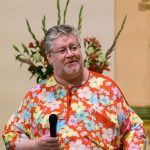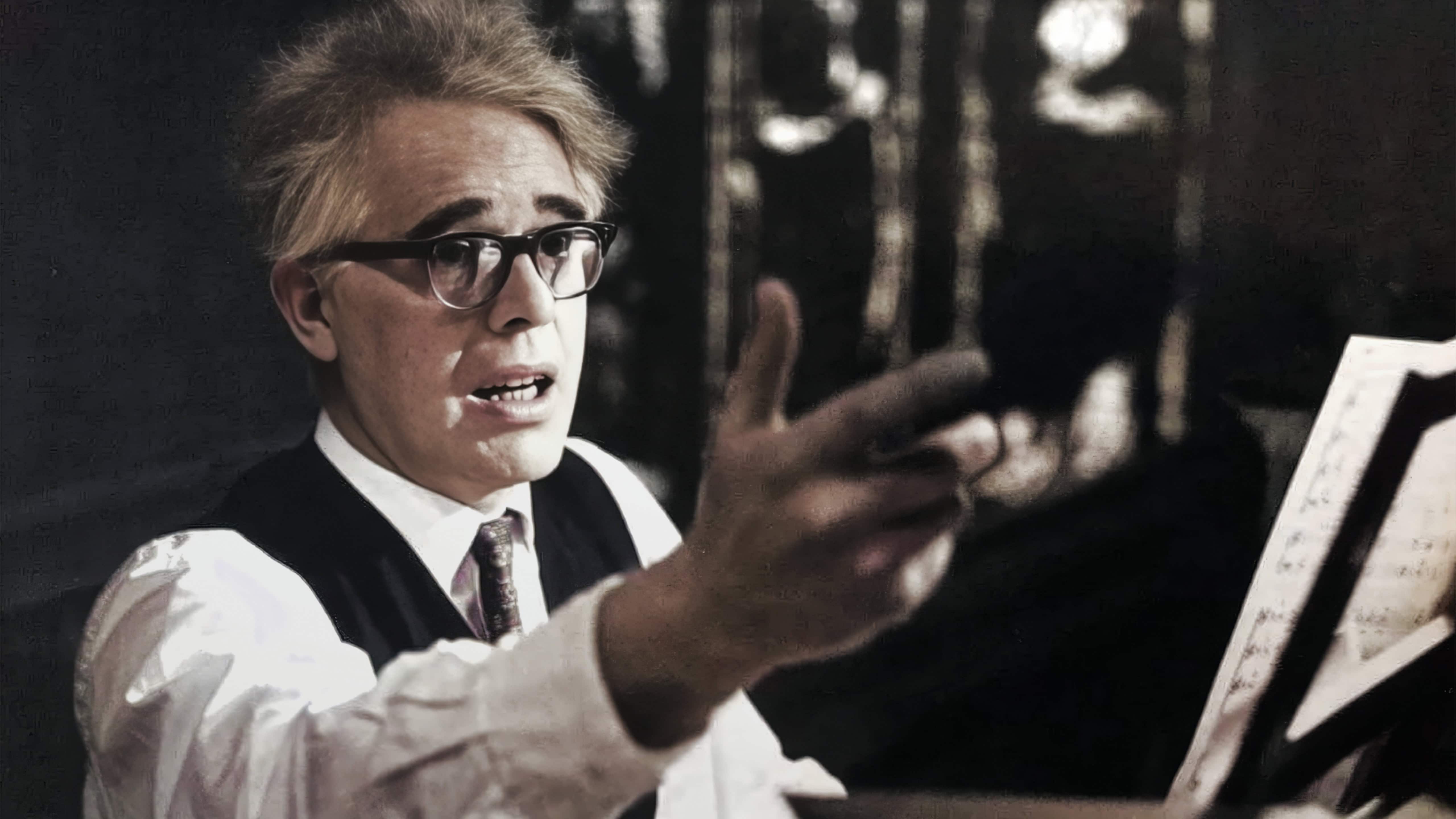
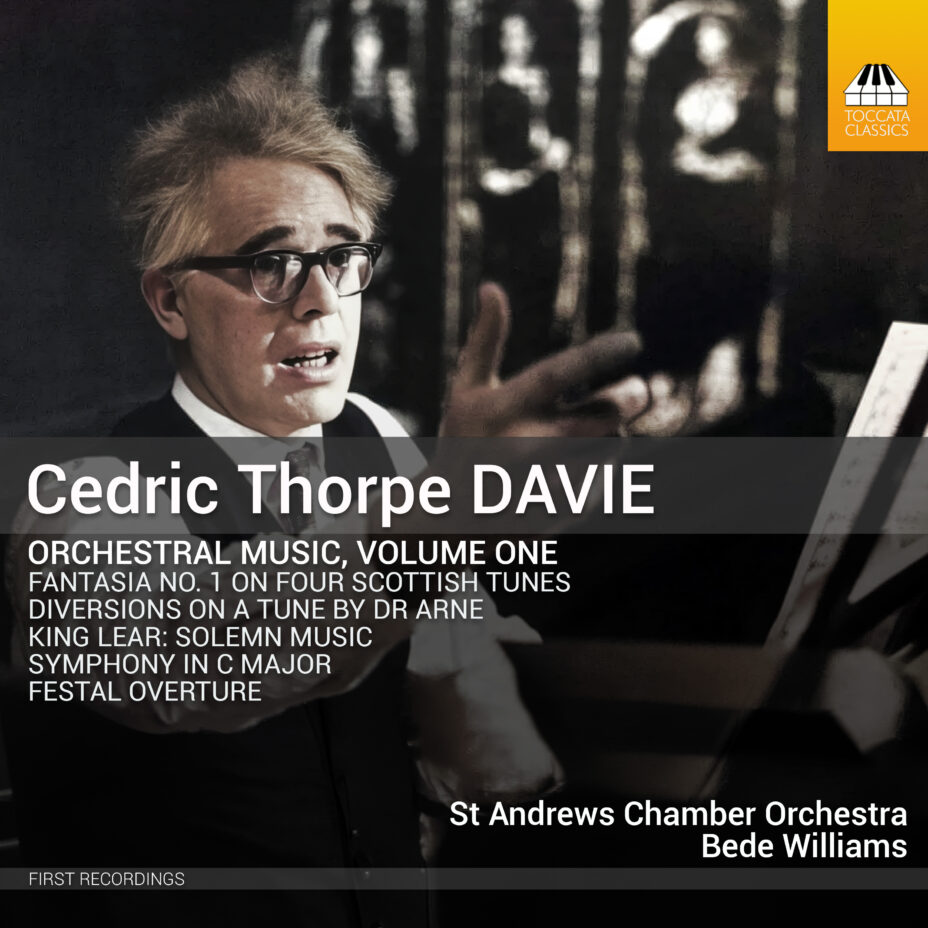
In conjunction with the release of the first volume of Cedric Thorpe Davie’s orchestral music on Toccata Classics (TOCC 0593), we are grateful to Peter Adamson of St Andrews for this transcription of Professor Davie talking – the first of two of BBC broadcasts featuring CTD, in this case in Intermezzo, broadcast on BBC Radio 4 Scotland on 20 November 1976. CTD reflects on his life as a composer and university teacher, introduces some of his concert and theatre music and gives, with Wight Henderson, the first broadcast of their Grand Galop Cosmopolitain, for piano duet. Thanks to Peter Adamson of St Andrews for the transcription, and for the restored audio, which can be heard here.
Announcer: That fanfare is one of many in the BBC’s Effects and Incidental Music Records Library. It was written by Cedric Thorpe Davie, now Professor of Music at St Andrews University, but also a practical composer who’s produced all kinds of music, from brief fanfares for radio productions to large-scale works such as a symphony and an hour-long setting for five speakers and orchestra of Sydney Goodsir Smith’s Orpheus and Eurydice.
Cedric Thorpe Davie has been at St Andrews University since 1945, first as Master of Music, then gradually building up a degree course until he became Professor of Music three years ago. Much of his composing has been not only for radio, theatre and film, but for amateurs and young people, often in the first place the students at St Andrews. In today’s programme he reflects and reminisces about his life as a composer and teacher, and plays extracts from his music from his own tapes. Much of it has a strong Scottish flavour.
Not so the following piece, recorded specially for this programme, and now receiving its first broadcast. The Grand Galop Cosmopolitain for piano duet.
Cedric Thorpe Davie: That remarkable example of the music of the Scottish Renaissance was a Grand Cosmopolitan Galop for piano duet, jointly composed by myself and my friend Wight Henderson, who by a remarkable coincidence happened to be in the studio, so we took the opportunity of recording it.
It’s often thought that when a man reaches the age of about 63 and retirement’s in sight, he spends too much time regretting lost opportunities in the past and not enough in preparing for the future. I personally don’t feel that way at all. I see my life as a professional musician divided into four compartments, the student, the composer, the academic and the inhabitant of the ivory tower.
Actually the last of these stages hasn’t started yet, because I’m just at the moment of completing the third one, so perhaps there’s no need to talk about ivory towers, however desirable they may be as residences.
I’ve always thought that on the whole musicians take themselves far too seriously. You’ve only to read the pretentious rubbish that some composers issue to the public by way of explaining their latest so-called masterpiece to see what I mean.
I often look back nostalgically to my days as a student when the serious business of learning one’s craft was leavened by my friendship with Wight Henderson. Jackie is a little younger than I am and he was still a music student in Glasgow when I moved off to London, whither he followed me a year later.
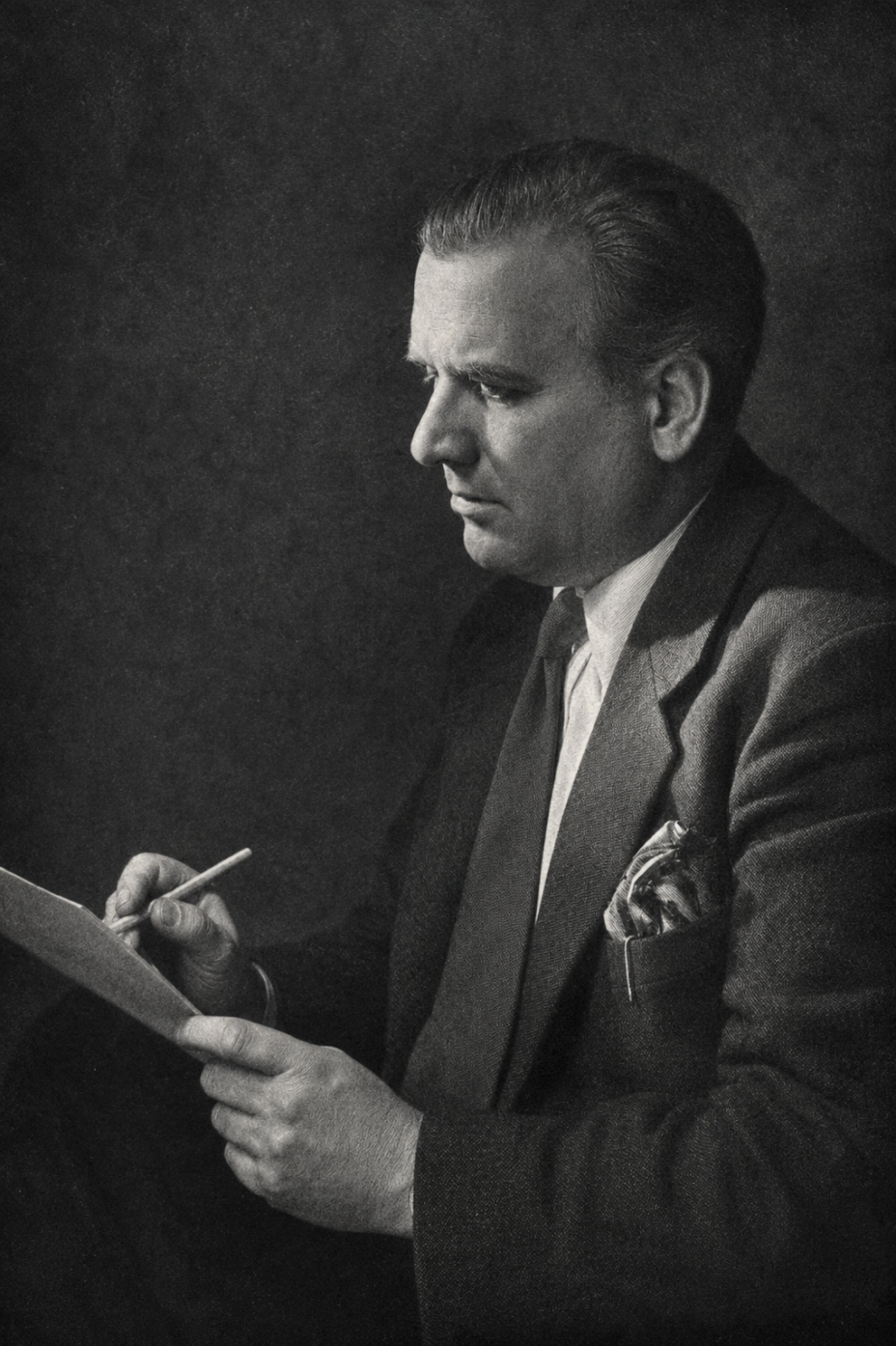
As boys we developed a habit of playing piano duets, making the music up as we went along, and there emerged from this a series of compositions known as The Hen’s Marches to the Midden.
During the year when we were separated, we developed this habit of joint composition by producing works of which we wrote a few bars turnabout and we sent them to each other, the latest contribution written on a postcard which in those days only cost one old penny. The two most memorable results of this immortal collaboration were a piano-duet version of the Rákóczi March which incorporated the then well-known song The Lambeth Walk in counterpoint, and that piece which you just heard at the beginning of the programme.
A couple of years later when we were sharing lodgings in London, we produced our joint masterpiece which was a spoof oratorio entitled Lot, to words taken from Genesis chapters 11 and 19 which was performed necessarily in private by a collection of fellow students. Those of you who are familiar with these two chapters will understand why it’s not feasible to let you hear any exhaustive selection but the general style was a parody of Bach and Handel, as is shown by the opening of the aria in which an angel advises Lot to arise and take his wife and his two daughters to safety whilst going is good. Nowadays of course young composers produce vast works which make Mahler’s Eighth Symphony look like primary-school stuff. I sometimes wish they would leave the Almighty to do his own job.
Just after the war I was fortunate enough to win the second prize in a competition for a symphony by a young composer which was run by The Daily Express. You may think that was an odd thing for The Daily Express to do, but the story is that Lord Beaverbrook was passing the Albert Hall in a taxi one day and he saw a huge crowd milling around the entrance. He asked his companion whether there was a big boxing match on, and he was told no it was Beethoven night at the proms. ‘There must be something in this music business’, said Lord Beaverbrook and the competition was launched forthwith. I’ll play a short extract from that symphony because it has a bearing on what follows.
Now it so happened that the British film industry was then enjoying a period of great prosperity and expansion under Sydney and Muriel Box, and they were looking for new young talent to write some of their scores. It was natural for the two prize-winners to be offered a trial contract, and I found myself, with only one short documentary to my credit, engaged to write a full-length score for a morbid film entitled The Brothers, in which Duncan MacRae was murdered by a stolen goose which cracked his skull open when it dived after a herring that was tied to the said skull.
The director of the film insisted on my using the well-known pipe tune The Green Hills of Tyrol for the funeral march and in my then ignorance of the ways of film directors I had the cheek to point out to him that this would give great offence to many a Scottish Islander. He replied: ‘All the better, it’ll be good publicity’.
That score must have given reasonable satisfaction for it led over the following fifteen years to my writing a long series of film scores, including several for Walt Disney. I’m going to play you a short extract from one of these Disney scores. It was a short film about the alleged way of life of the Scots, and this extract accompanied an open-air curling match in which a lot of ‘Colonel Blimps’ displayed what to my mind was shocking incompetence at the game.
The music was played by some of the finest violinists that London could produce, yet Muir Mathieson had a fearful job trying to get them to adopt the correct Scottish fiddling style, and I think we might have done better to have engaged the Caledonian Reel and Strathspey Society just as we had the Campbeltown Gaelic Choir for another bit of the score.
I haven’t written any films music now for about fifteen years. When you get over 40, it already becomes hard to keep up the pace of writing a score as long as Beethoven’s Ninth Symphony in less than three weeks. So when it came to my having to get my doctor to give me dope to keep me awake all night writing the music for an immortal epic starring Robert Mitchum, I realised it was time to give up either writing for films or ten years of my life.
Far more important to me than writing for the films were the connections with the theatre that began to develop just about that time. They began when James Bridie asked me to collaborate in a musical called The Forrigan Reel, which led to a long friendship with the late Alastair Sim who played the leading part in it.
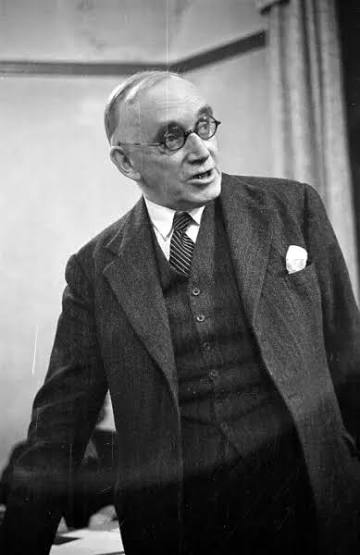
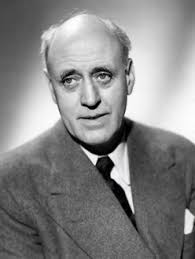
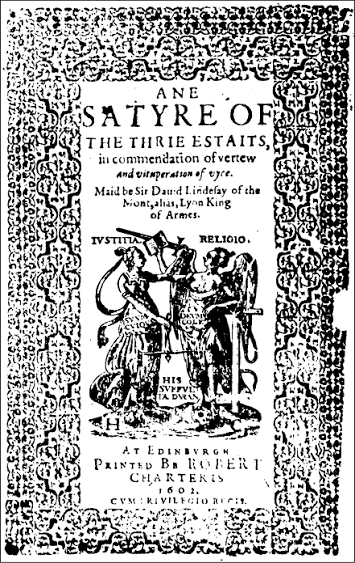
Then followed the most exciting event of my entire life, the epoch-making The Thrie Estaits at the Edinburgh Festival. Nobody who hasn’t worked with Tyrone Guthrie can have any idea of the magical effect his personality had on actors, musicians, everybody connected with his productions. From the stars of the show to the girls who looked after the actors’ clothes, the glow of his presence made itself felt. Even the humblest bit-player was made to feel that the show would collapse without him. Many of Guthrie’s outrageous remarks during rehearsals have become part of the folklore of the theatre.
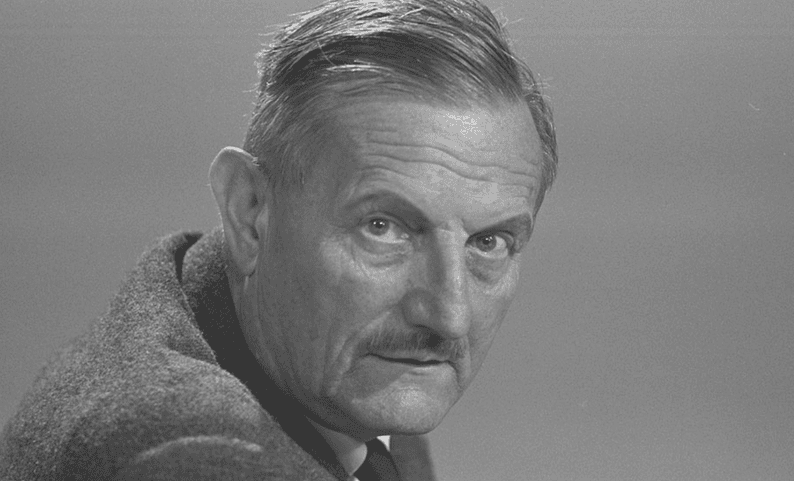
Later collaborations with Guthrie included three more Edinburgh Festival shows and also several in London and Stratford-on-Avon. The most notable was Shakespeare’s King Henry VIII which rivalled The Thrie Estaits for sheer excitement. I prize a set of old 78 records of my music for this show. They’re pretty worn but this short extract which accompanied the desolation of Queen Catherine on her being supplanted by Anne Boleyn may conjure up something of the delicacy of Guthrie’s treatment of such tragedy which was just as characteristic of him as the staggering virtuosity of his big spectacular scenes. Incidentally, Guthrie and his wife lived literally in a punt on the River Avon while he was in Stratford producing this show.
Another thing which preoccupied me during the ’50s and ’60s was the shortage of modern large-scale music for performances by children or by amateurs. I wrote a lot of this sort of music for the National Youth Orchestra, for Women’s Rural Institute choirs and so on. Listen to the National Youth Brass Band of Scotland playing a snatch of the Variations on a Theme of Lully which I wrote for them and conducted at their annual summer course.
Perhaps I might add here that it seems to me that composers, other than the very few most talented, are much better employed in justifying their existence by writing music which is actually going to give a lot of pleasure both to the performers and to the audience than in adding to the vast pile of esoteric music which interests only a few specialists. However, that’s another story.
It’s about time that I said a little about the academic side of my life, the wonderful 30 years that I’ve had as head of the Music Department in the University of St Andrews. Helping young people to recognise and develop their talents is just about the most rewarding task that can fall to anyone, and the richness and the variety of musical life in St Andrews are to me a proof of that fact. To me the most rewarding of all my work there is with the choir of the Chapel of St Salvator’s College which is a body of 72 picked students who have the advantage of being backed by one of the finest organs in Great Britain. They’ve sung an enormous amount of music from the sixteenth century up to the present day. Listen to them now and you won’t regret it, singing just the final few bars of Gerald Finzi’s wonderful piece, Lo, the Full Final Sacrifice.
I end by returning to my opening theme, the need for composers to show a bit more sense of humour. And I’m torn between playing you the ending of my setting of Burns’s The Jolly Beggars and a short passage from the piece I wrote to celebrate the opening of the Forth Road Bridge, consisting of a fugue on that exquisitely comical song The Wee Cooper of Fife. I think I’ll choose the latter, perhaps because there are very few opportunities for me or anybody else to hear it.
Announcer: And with the fugue on The Wee Cooper of Fife, we end today’s Intermezzo, in which Cedric Thorpe Davie talked about his life as a composer and teacher and played extracts from his own tapes of his music.
With thanks to Stuart Harris-Logan for digging up the photograph of Wight Henderson
1At https://jackie125.substack.com/p/robert-kemp-adapted-the-three-estates Alex Kemp discusses the role of his grandfather, Robert Kemp, in adapting Sir David Lindsay’s Ane Pleasant Satyre of the Thrie Estaits (1552) at the 1948 Edinburgh Festival and quotes Robert Kemp’s reminiscence that ‘The composer Cedric Thorpe Davie was engaged to write and conduct the plangent and thrilling music’.