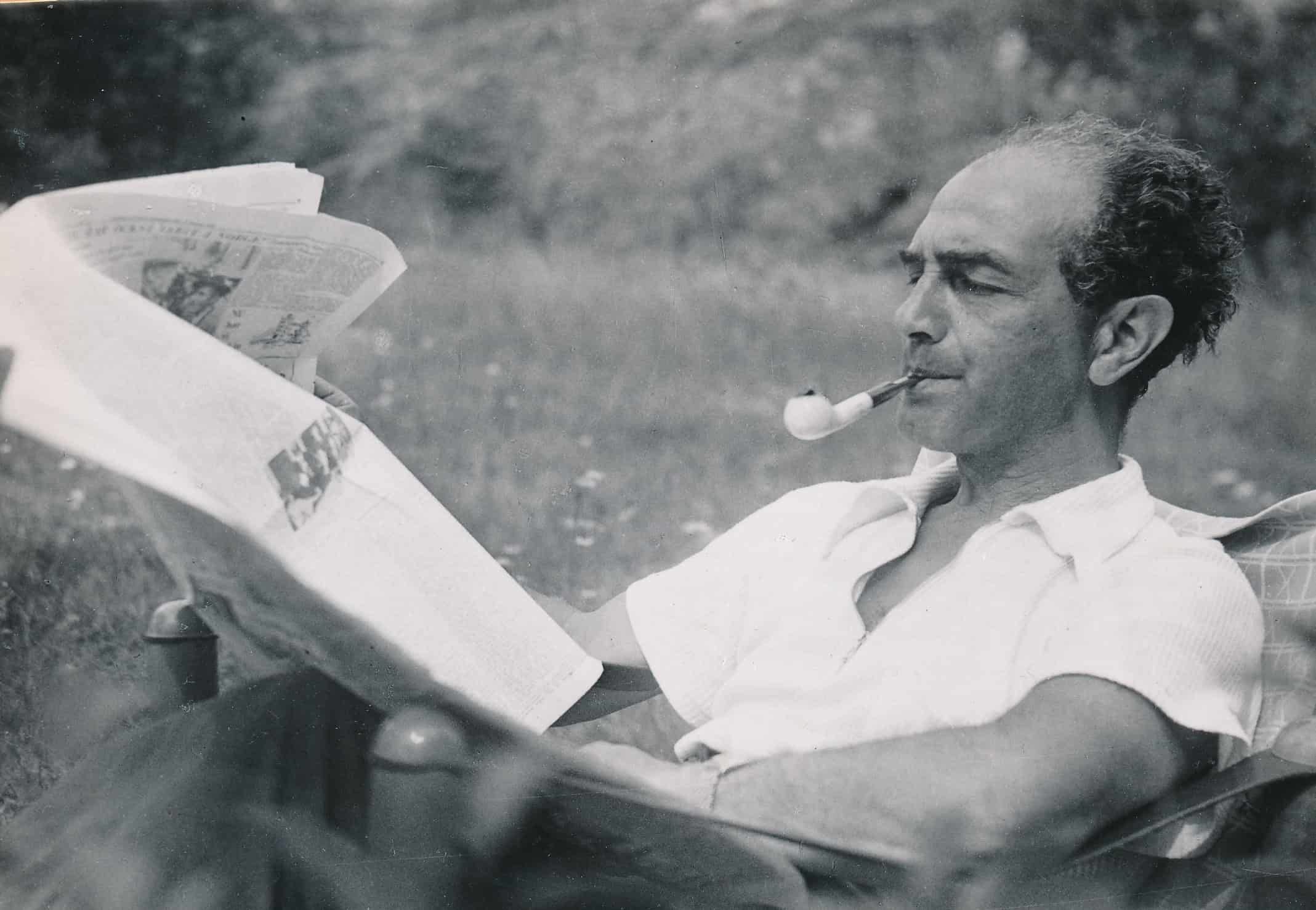
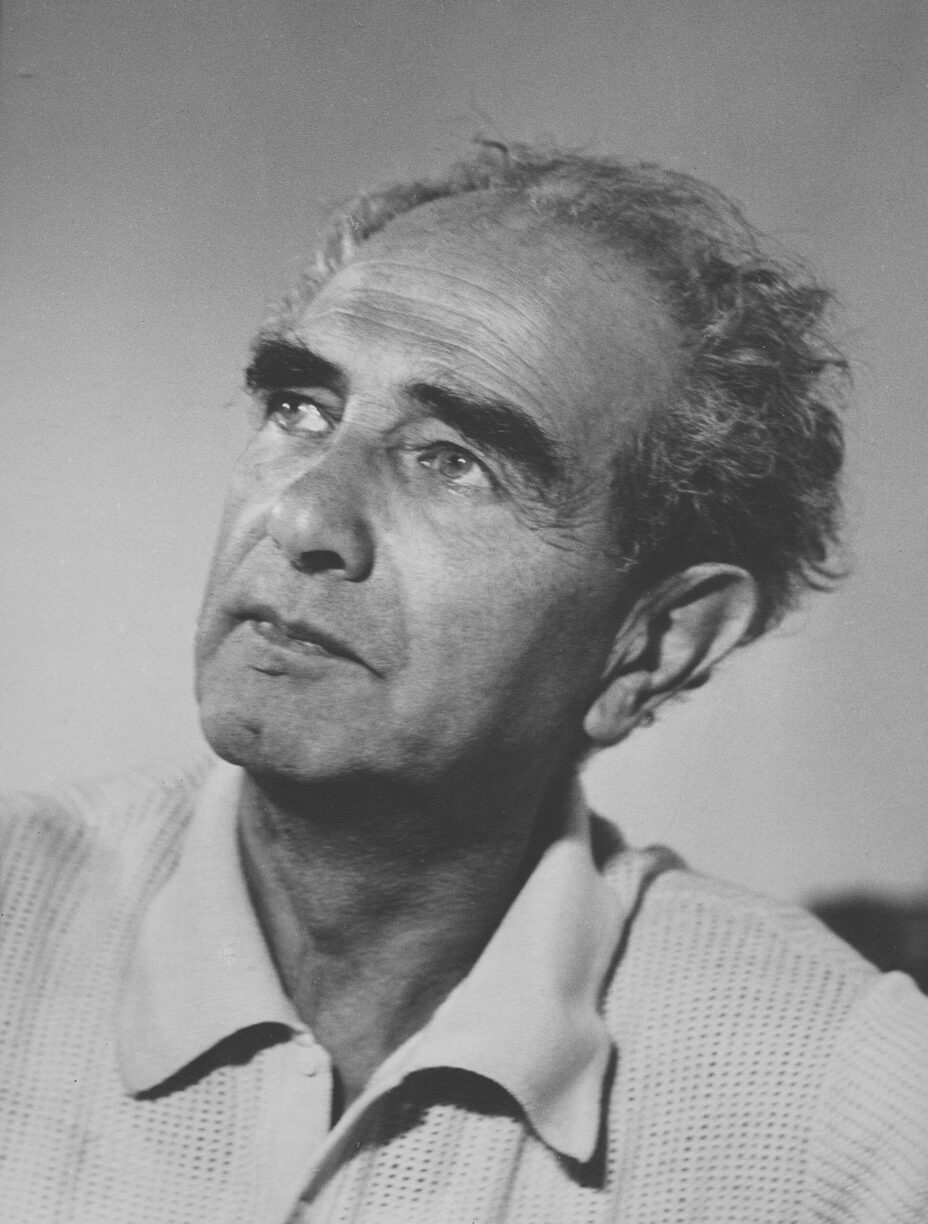
I remember my first encounter with the music of Moses Pergament distinctly. In my youth I was a frequent visitor to the City Library in my hometown, Gothenburg – especially its recordings section, where I used to search for unfamiliar music to expand my musical horizons. It was in the early 2000s: a CD containing Pergament’s Violin Sonata, performed by Nils-Erik Sparf and Bengt Forsberg (together with the First String Quartet),1 had been published only recently. Here was music that felt truly enchanting, and quite different from the rather ‘orderly’ classical masters that until then had formed much of my musical diet. Yet no other recordings of Pergament’s music could be found, and I soon forgot about that fascinating listening experience.
Years later, in 2014, a CD reissue of Pergament’s magnum opus, the oratorio Den judiska sången (‘The Jewish Song’),2 was released, which proved to be an emotional tour de force like no other. Who was this composer? A question formed in my mind: surely a composer capable of such deeply moving works must have written far more? And yet, why did none of it seem to be recorded?
Fast forward to spring 2020, when a certain global event left much of the cultural sector with unexpectedly empty calendars. During this pause, I began exploring interesting and obscure works I had previously not had time to study. It didn’t take long to realise that music of exceptional value seemed to be hiding behind the name of Moses Pergament.
Six years further down the road, the work on rediscovering Moses Pergament’s musical universe is still ongoing, with no end in sight. Archival materials have been examined, unknown sources uncovered, family members interviewed and many dots connected. In the process of collecting these materials, the idea of a website dedicated to Pergament’s legacy took shape. After much hard work, I am happy to say that The Pergament Permanent has finally been launched. The site is maintained by the Agora Music Collective, and the web design is by Evgeniia Kriuchkova. Photographs have been scanned by Dan Crona.
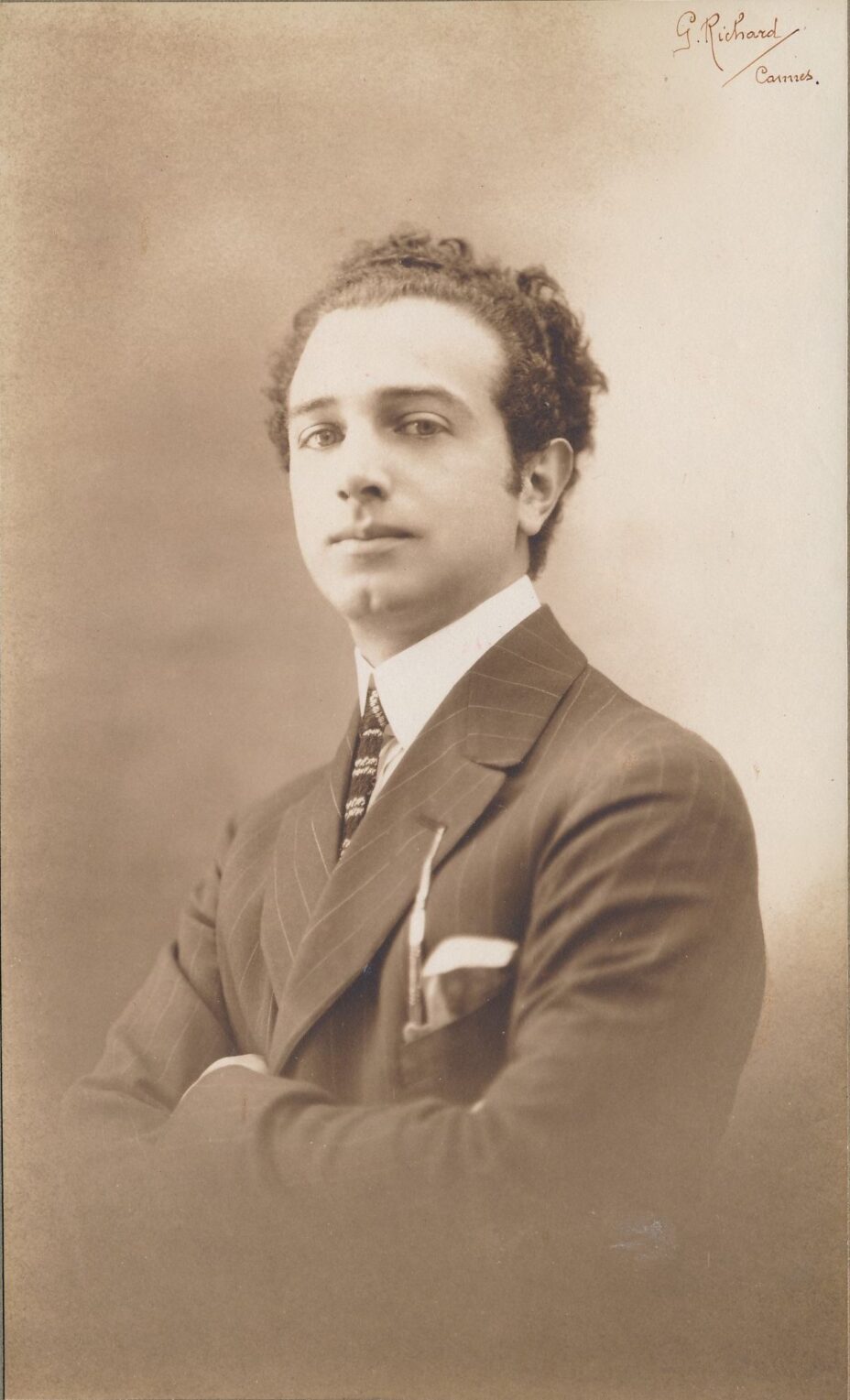
To reflect what a prolific writer Pergament also was, the site includes a selection of his texts in their original languages, alongside new English translations. Readers can now enjoy his ingenious musical novella, Music of the Future, with which he made his debut as a writer for the daily Svenska Dagbladet and which imagines the instruments of the orchestra gathering to debate modern music. His thoughts on ‘Objectivity and Subjectivity in Music Criticism’ are as logical as they are thoughtful, and his stance regarding Furtwängler’s performances in Stockholm in 1943 is illuminating, especially as we now know that his thoughts are echoed in Furtwängler’s own diaries of the 1930s. In both Furtwängler’s diaries and Pergament’s writings on the conductor’s 1943 Stockholm visit, the same conviction emerges: that Nazi racial ideology stood in stark contradiction to the humanistic German tradition associated with Schiller, Goethe and Beethoven – which Furtwängler, seen as a Nazi puppet by the outside world, felt he represented. All of these texts are published with the kind permission of Moses Pergament’s heirs. Many of the photographs on the site come from family collections and are now published for the first time.
Apart from presenting Pergament’s musical works and writings, the Pergament Permanent also aims to bring forward the results of recent research. In this regard, the ‘Lost and Found’ section is particularly important: it documents Pergament-related materials known to have existed but which cannot currently be located. In some instances, important materials have been rediscovered – this section documents such findings, too.
It has often been said of Moses Pergament that his career was hampered by antisemitism and Swedish national chauvinism, and there is certainly some truth in these claims. Yet another overlooked factor is that Pergament himself was notoriously bad at – and largely uninterested in – self-promotion. When his wife, Ilse, once asked why he wasn’t doing more to promote his own music, he replied that if the works truly had value, they would eventually find their way into the world — one way or another. When asked why he didn’t write an autobiography, he responded that it felt like an egocentric task that would take valuable time away from the thing that mattered most: composing.
With only a few exceptions, his Lieder for voice and piano were published as individual numbers rather than as collections. Quite understandably, few people would be inclined to explore an entire œuvre of c. 100 songs when each work has to be ordered and examined individually. For someone always thinking about the next composition, the practicalities of promoting earlier works clearly occupied his mind far less.
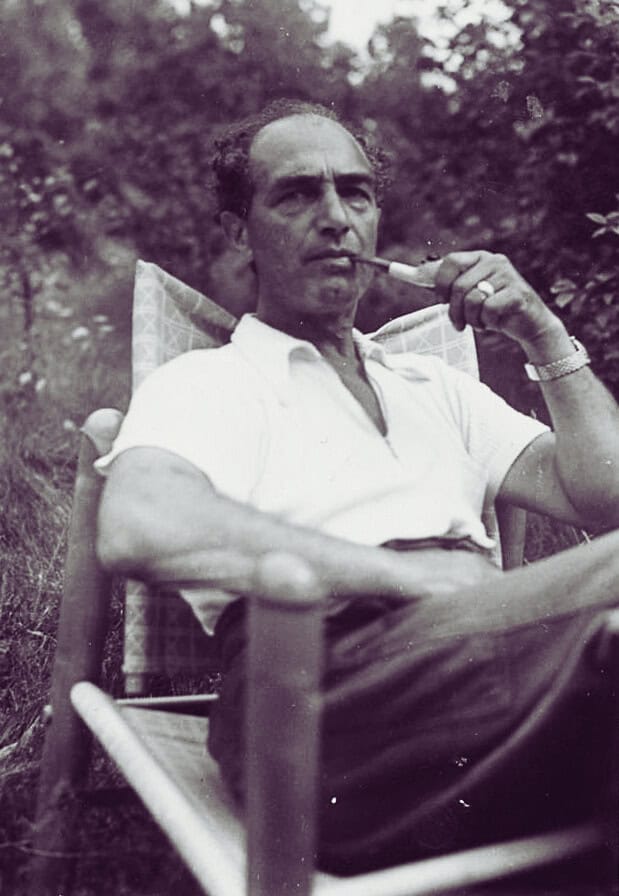
The Pergament Permanent will work in conjunction with the ongoing series of recordings of his music on Toccata Classics, which has already resulted in two volumes featuring songs, orchestral repertoire, piano works and chamber music. The next instalments will include a complete recording of Pergament’s works for violin and piano — together with the solo violin pieces and newly uncovered rarities — as well as a disc devoted to early compositions and a further, fifth volume. But given the vast amount of fascinating but still unrecorded repertoire, it would not be surprising if the project ultimately grows to at least twice its currently projected size.
The ongoing recording projects, concerts and research work have been supported by grants from the following foundations: the Swedish Cultural Foundation in Finland (Svenska kulturfonden), the Amos Anderson Foundation, the Finnish Cultural Foundation (Suomen kulttuurirahasto), Ella och Georg Ehrnrooths stiftelse, Eugène, Elisabeth och Birgit Nygréns stiftelse, Fredrik Pacius minnesfond vid Svenska litteratursällskapet i Finland, Stiftelsen Tre Smeder, William Thurings stiftelse, Emilie och Rudolf Gesellius Stiftelse, the Arts Promotion Centre Finland (Taike), the Sibelius Academy Foundation and the DocMus Doctoral School of Classical Music at the Sibelius Academy.
Though much neglected since his passing in 1977, interest in Moses Pergament’s life and music is finally growing again. The Pergament Permanent aims to be a friendly gathering place where curious listeners can discover – and rediscover – one of Scandinavia’s best-kept musical secrets.
Moses Pergament Recordings
Products by Tag
-
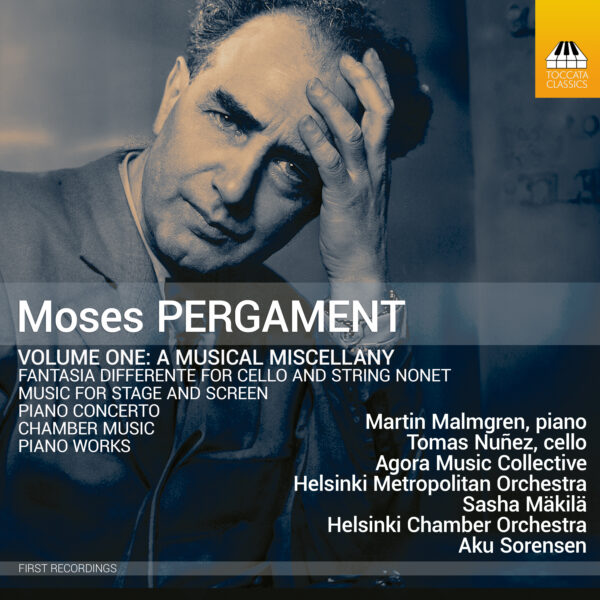
Moses Pergament Volume One: A Musical Miscellany
Price range: £8.00 through £14.00 -
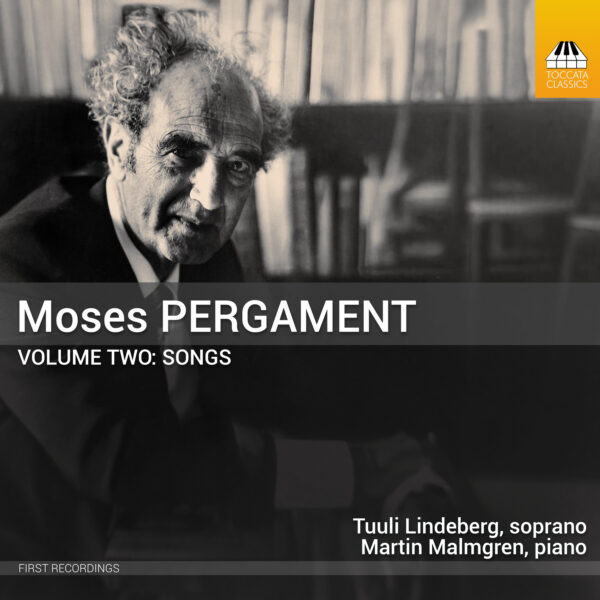
Moses Pergament, Volume Two: Songs
Price range: £8.00 through £14.00