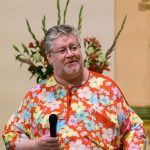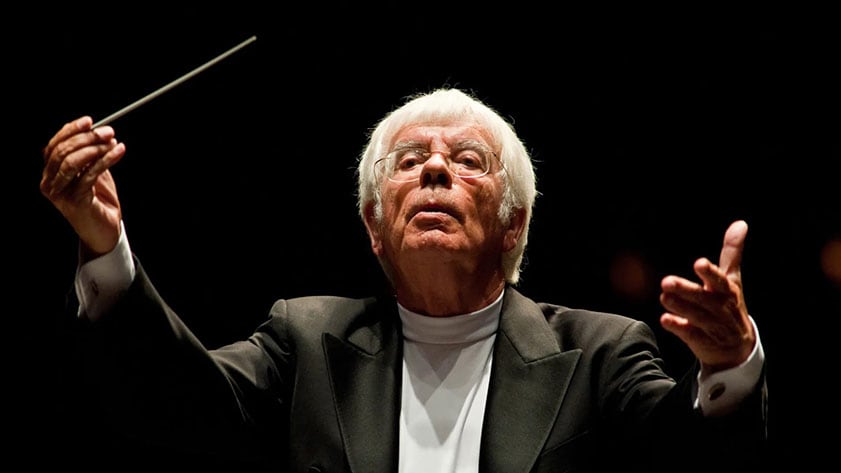
The death of Helmut Rilling, on 11 February 2026, reminded me that we had had a thoroughly enjoyable conversation 28 years earlier, as the basis for an article in Fanfare.
On July 11 this summer [1998], in the unlikely location of Eugene, Oregon, the German conductor Helmut Rilling will give the first performance of a new Mass for soloists, chorus, and orchestra by Krzysztof Penderecki, now the leading representative of the modern Polish school of composers. The Mass is a joint commission from the Oregon Bach Festival and the International Bach Academy, Stuttgart, of which Rilling has been director since its foundation in 1981. The Mass will then be recorded on Rilling’s regular label, Hänssler Classics, appearing on CD (on 98.311) more or less around the time of its first European performance, in Kraków, Poland, as part of a Penderecki week, on October 5 (he celebrates his 65th birthday this year); the first performance in western Europe occurs just under a week later, on October 11, in the Liederhalle, Stuttgart. For those who have been following Rilling’s recording profile on Hänssler, such an explicitly modern work might seem to signal a rather dramatic change of taste. Apart from the multi-composer Requiem of Reconciliation (recorded on a two-disc set: CD 98.931), Rilling’s huge discography consists mainly of vast amounts of Bach, Brahms, Mendelssohn, Mozart, Schubert, and other such middle-of-the-road German classical composers – and yet here he is about to record a work that at the time of our conversation hasn’t even been finished.
‘Well, the recording project with Hänssler has always has a very broad variety. Sparks Of course, we have done a lot of Bach, especially all the church cantatas and all the oratorios, and we are in the process of doing all the secular cantatas. But this is only one side of what we do in our recording projects. On the other side are the oratorios of the nineteenth and twentieth centuries. We have done many of the well-known pieces – Beethoven Missa Solemnis, for example [98.956], and Mendelssohn Elijah and St Paul [98.928 and 98.926] but we have also done many unknown pieces. Our newest recording, for instance, is of Liszt’s Christus [98.121] which is not so well known.’ Its enormous length may have something to do with that – not many audiences are prepared to sit motionless for over three hours. ‘I think it’s a great piece, though. And it’s very interesting to see how in this work Liszt goes in a completely different direction from the other composers of oratorio in the nineteenth century. And we have also done the Messa per Rossini [98.949], which was composed by the young Verdi together with thirteen other composers to commemorate the death of Rossini – the first version of the ‘Libera me’ from his own Requiem is to be found in this Messa per Rossini. Then we’ve done pieces like Les Béatitudes of César Franck [96.964], and many other things which are not in the mainstream of nineteenth-century oratorio.
‘Of course, something which is very important for me is that we are also doing quite a lot of contemporary things by commissioning composers whom I think are important to write new pieces. We do this from our International Bach Academy here in Stuttgart. And the new Mass from Penderecki we shall premiere in July of this year.’
Rilling’s professional engagement with Penderecki’s music goes back a long way: his biography lists a recording of the ‘Stabat Mater’ from the St Luke Passion and a broadcast of the Four Psalms of David as early as 1969. ‘That’s right: we have performed his music many times before. Penderecki is a close friend of mine. He was the one who gave us the first chance to do Bach Academies on the other side of the Iron Curtain. This was in 1985. We did a Bach Academy in Kraków, his home town.’ Hold on: what are the ‘Bach Academies’? ‘Well, you see, we do these Bach Academies all around the world. We go with people from our Bach Academy here in Stuttgart – the teachers and the ensembles – to other places, co-operate with local institutions (for example, in Kraków with the State Academy of Music, and in Moscow with the Tchaikovsky Conservatory, and in other places with the city’s institutions) and we teach the interpretation of Bach, and sometimes also of other works: Mozart or Handel or whatever. And in 1985 it was the first of these Bach Academies in a then-communist country.’ Were there political overtones to this visit? ‘At that time there always were, for sure. When you came from the West and did something in the East, then it always had to do with politics.’ But more so, surely, in a country where the Catholic Church was the mainstay of the opposition. ‘That’s right: this was quite a strong impression for us. And I think that, for all the political changes we saw in 1990 and ’91, the cultural activities that took place before that had a very important impact: they prepared the ground for the political changes to come – and we were certainly among them.’
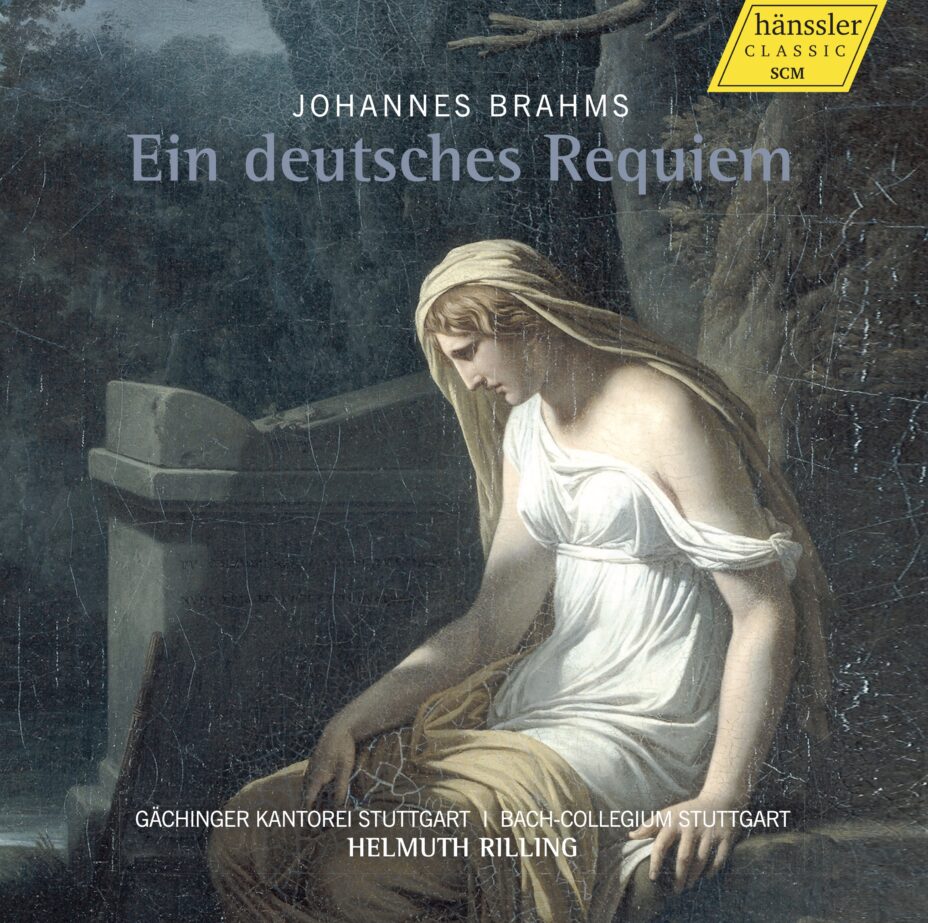
Rilling is entirely correct about the importance of culture, and music in particular, as a means of tacit resistance. The choral tradition of the three Baltic republics was a vital means of thumbing local noses at the occupying Russians. And I remember a performance of the Dvorák Requiem in Prague just after the Velvet Revolution, when the music had patently become a means of national self-assertion; indeed, in the communist period beforehand, a performance of that work was like a statement by the political underground. Rilling concurs: ‘I remember a Bach Academy in Prague where I taught Bach cantatas, and I started to speak in a class about the symbolism of the Trinity. The responsible person came to me and said ‘Stop it immediately; otherwise the police will shut down the whole thing’.’ I tell Helmut Rilling of a conversation I once had with the Czech composer Petr Eben (regular Fanfare readers may remember the interview he gave me; it was in 19:6), who told me that, as a Christian composer working in a militantly atheist state, he managed to communicate his message to his audience by sinking church melodies into his ostensibly secular music; his fellow-believers recognised them and instantly understood what went straight past the censors. ‘Yes,’ Rilling continues, ‘that was the situation then – but how wonderful that we have overcome it.’
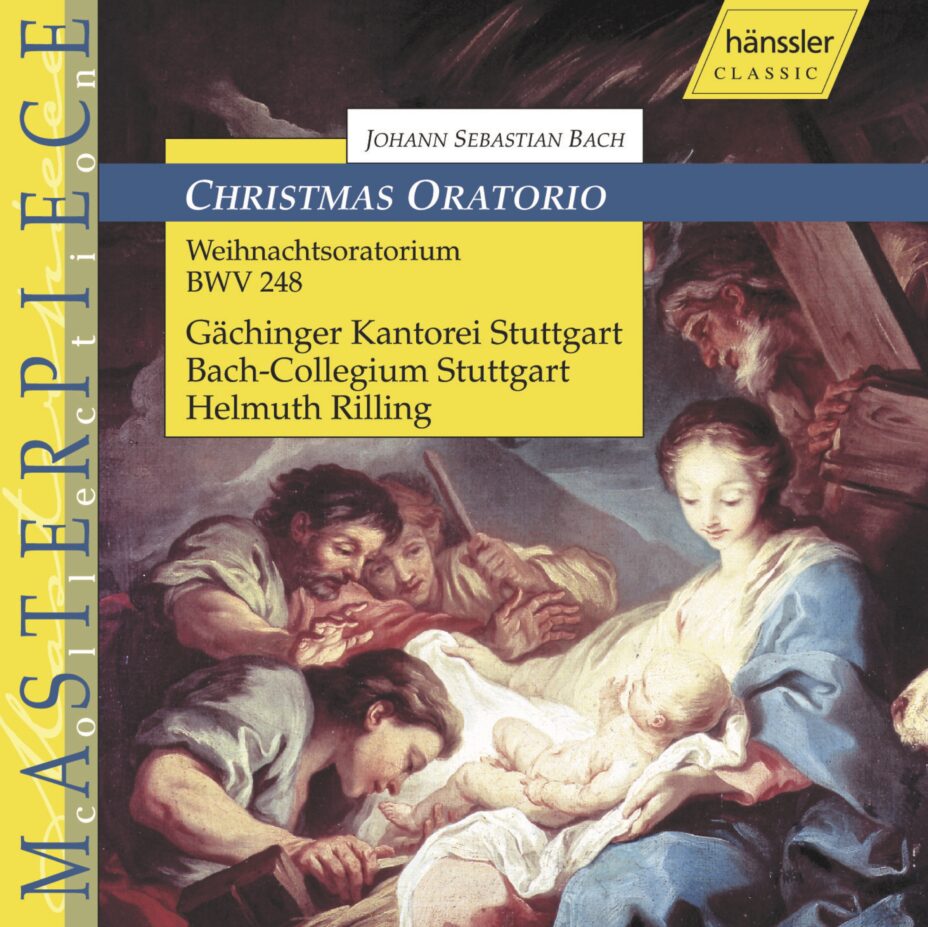
Rilling’s first-person plural may not be overstating the case: his Bach performances behind the Iron Curtain must have contributed a small something to the toppling of that monstrous empire. ‘Sure. In the Soviet Union at that time, for example, the only music of Bach that was known was chamber music, piano music, orchestral music, that kind of thing – all the sacred works were virtually unknown. They didn’t hear the B minor Mass, they didn’t hear the Matthew Passion, because they weren’t allowed to be performed. So that when in Moscow we did the Christmas Oratorio, we did St Matthew, we did St John, we did the B minor Mass – this was in the ’80s – these were always things which touched with the overall problems of that society at that time.’ So how did the audiences respond? ‘Oh, wonderful responses! I remember with the B minor Mass that the hall was full, and there were hundreds of young people who wanted to get into the Bolshoi Hall of the Conservatory, but there was a police cordon around the Hall – so they ran them over, pushed into the hall and mingled with the people who were already there. I started the performance so that the police couldn’t do anything, and the whole thing went along with an emotion which is, in my memory, something absolutely unique.’ It seems strange to think of Bach as a political radical! Rilling chuckles: ‘Certainly. But it could only happen in the situation we then had.’
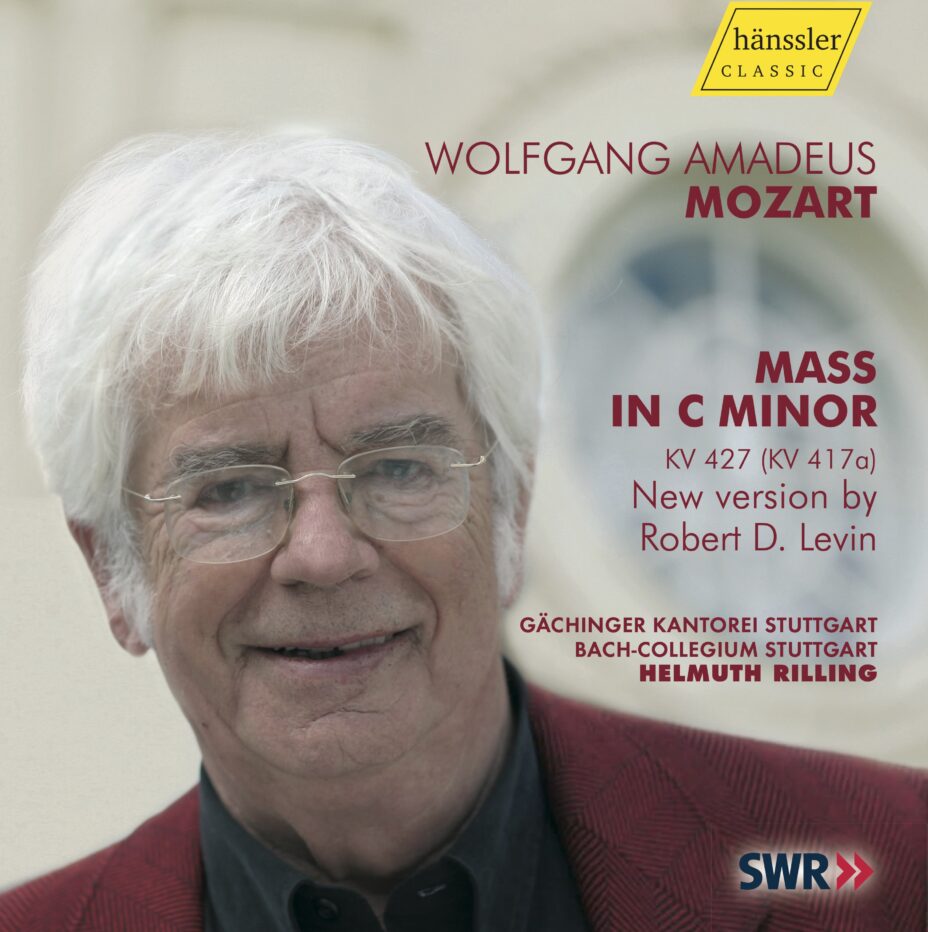
This explanation of the Bach Academies has taken us some way away from discussing his friendship with Penderecki. How did they get to know each other? ‘First, I knew him through his works, of course, and then we invited him here for our festivals in Stuttgart: he conducted his St Luke Passion. The first time we exchanged personal words – this must have been in the late ’70s – he told me that he had written his St Luke Passion very much under the influence of the Bach Passions. This surprised me completely because I didn’t find so much influence in that piece; nevertheless, for him it was important. And so we stayed in touch. We performed many of his works.’ (Here the journalist obtrudes: as I was typing up our conversation, I was about to intervene to change Rilling’s plural to a singular to avoid confusion, and then I noticed that he simply never refers to himself when he is discussing his performances – with genuine humility, he automatically includes his singers and players as part of the package.) ‘The first time he wrote a piece for us was the ‘Agnus Dei’ for the Requiem of Reconciliation, which we premiered here in Stuttgart three years ago [August 16, 1995].’
Time for an interpolation to ask something of the background to the Requiem of Reconciliation. Rilling readily volunteers the information. ‘In this year we had the fiftieth anniversary of the end of World War II, and I thought that in the field of culture and music something important and unusual should happen. And so it was my idea to bring together different composers from many countries, and especially from those countries which were enemies in World War II, to compose together a piece which would commemorate all the sufferings of the War. I was very glad that I could find some very good composers who could join me in that idea: Penderecki was among them, Berio, from England [Scotland, actually!] it was Judith Weir, and many others.’ For the record, those others were Friedrich Cerha (Austria), Paul-Heinz Dittrich (Germany), Marek Kopelent (Czech Republic), John Harbison (USA), Arne Nordheim (Norway), Bernard Rands (UK/USA), Marc-André Dalbavie (France), Wolfgang Rihm (Germany), Alfred Schnittke, assisted by Gennady Rozhdestvensky (Russia), Joji Yuasa (Japan), and György Kurtág (Hungary). ‘We gave the first performance here during one of our music festivals. It was very moving for me to have at that performance the Israel Philharmonic Orchestra – of course, it was also a gesture of reconciliation that they played together with our chorus and soloists this piece here in Germany. We have a long-standing relationship with the Israel Philharmonic, in fact, and in one week from now I will go again (it’s the seventh time) to work with the Israel Philharmonic together with my chorus, the Gächinger Kantorei. We have a close friendship with the people from the Orchestra; this is a wonderful thing for me.’ And is it an all-Bach diet when they go to Israel? ‘No, no – this time we will do Haydn The Seasons, a program we do five times, and the second program will be music by Bruckner; this will be in Jerusalem, in Haifa, and in Tel Aviv.’
A last word on the Requiem of Reconciliation – didn’t a commission of this sort run the risk of turning out as a soup of different styles? ‘Of course. This was clear from the very beginning, but I thought that the common idea of the piece – that is, to think back on the terrible things that stopped happening fifty years ago – would unite these people in a basic idea. Of course, it’s not an idea of styles: it’s clear that a person like, say, Luciano Berio writes differently from Penderecki or from Judith Weir, but I think the common cause is also something which can bind together such a piece very well – and it does, in my belief.’ So the composers weren’t given sort of stylistic instructions beforehand? ‘Yes, in some ways we did: that they such use the Gregorian chant as the basis of their composition, and most of them did, more or less. Some just offered short citations, and others, like the Frenchman, Marc-André Dalbavie, composed a piece which was based only on that Gregorian chant – a wonderful piece of music.’
We keep getting away from Penderecki. What happened after he had written this ‘Agnus Dei’? ‘Well, it had always been my idea that Krzysztof should compose a Mass. He is one of the very few important living composers who has, I think, a personal and direct access to religious texts.’ Indeed: Fanfare’s own Bernard Jacobson, in his book A Polish Renaissance (Phaidon, London, 1996), quotes from a 1967 interview, when Penderecki told him that the Passion was ‘still one of the most topical, and indeed, universal, stories’; sixteen years later Penderecki put it as plainly as he could in a letter to Die Zeit in Germany: ‘I express myself through my sacred music.’
Rilling continues: ‘He has written many important compositions based upon religious texts: take first the St Luke Passion, then the Psalms of David, then later his Polish Requiem, Utrenja, and many other pieces. So this was always in the centre of his work, and he’s a friend of the Pope, he comes from that tradition, he has that connection. So I had been trying to convince him for many years that he would have to write a Mass: this is the central text of Christian belief and faith, and he should say something to a text like the Credo. Now he’s working on it. I just called him a few days ago, and he tells me that the Crucifixus alone will be fourteen minutes, the Resurrexit will be six minutes – and the whole Credo alone will be fifty. He is struggling with it very much – but I think it is very right that he should: if you work with such a text, you need to say something important. I also expect something personal from him. And in our time, it’s proper that someone like him says what he thinks.’
Penderecki, of course, was once an arch-modernist, returning to tonality in a rather grandiose manner in the late 1970s and early ’80s. Is this a trend that Rilling sees working in tandem with his religious impulse? ‘No, I don’t think so. When he wrote the St Luke Passion, for instance, he was an avant-garde composer – and one of the foremost people in that category. But it is right that every composer should do what he wants, and if he feels that he should go back to more tonal music, that is his decision. The question is not which style he is writing in, but how good the music is. And I know some of his recent pieces – his Flute Concerto and his Clarinet Quartet and chamber music, which is wonderful. So I am hoping to get something very special and interesting.’ Well, if the Credo is as long as Rilling suggests, we could well be about to hear a work of massive proportions. ‘That’s his problem at the moment, I think: he told me that , as the Credo is going to be so long, he has to enlarge what he already composed! Let’s hope he is finished by July – or, better still, well before that.’ Has Rilling seen any of the music yet? ‘No, no: he always talks about it, but I haven’t seen anything yet.’
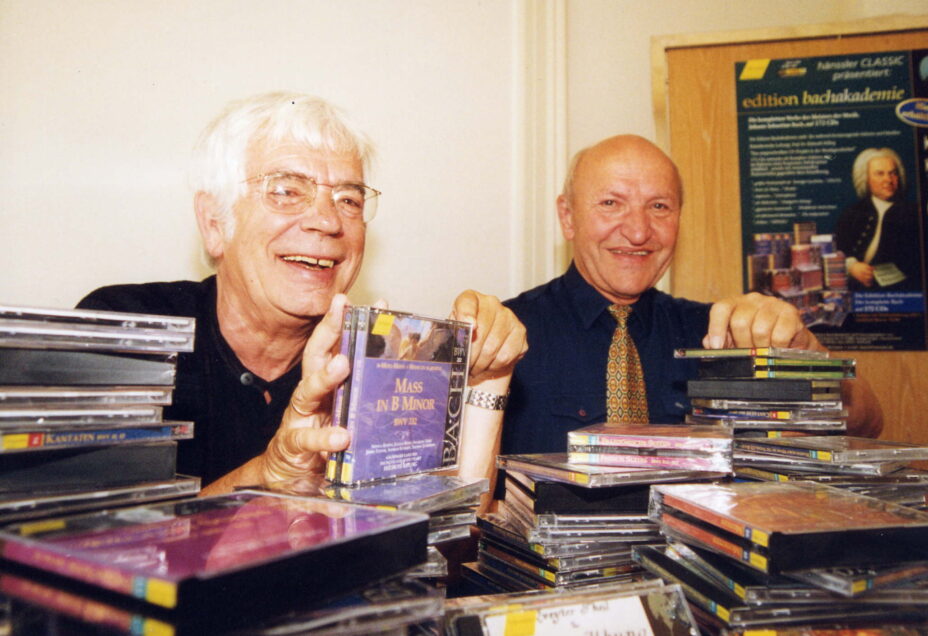
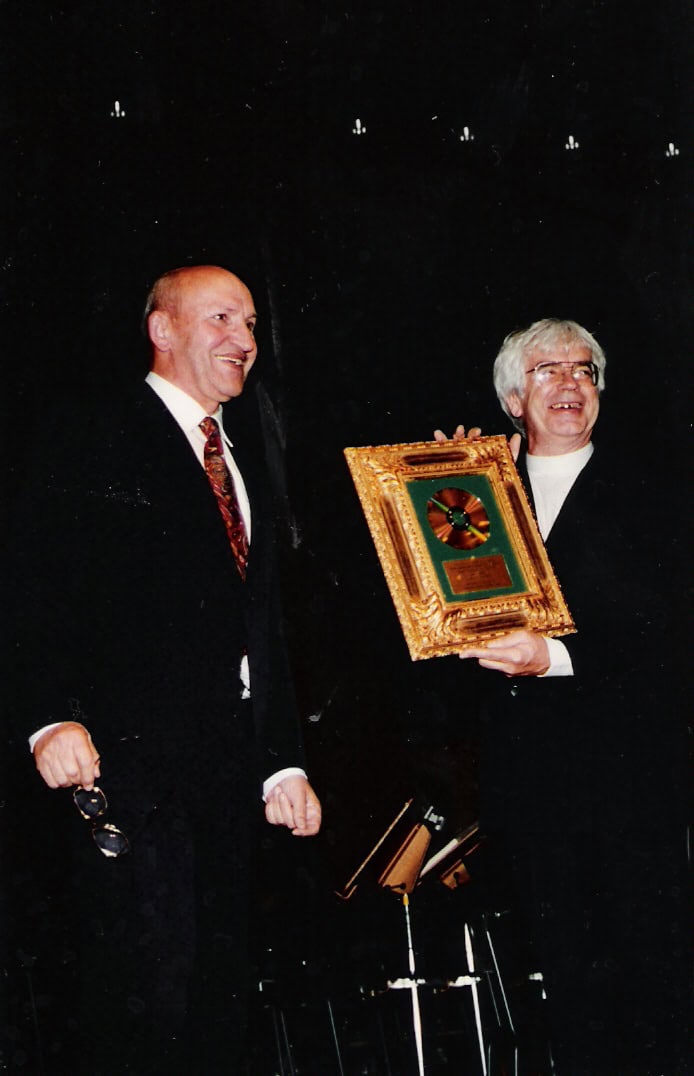
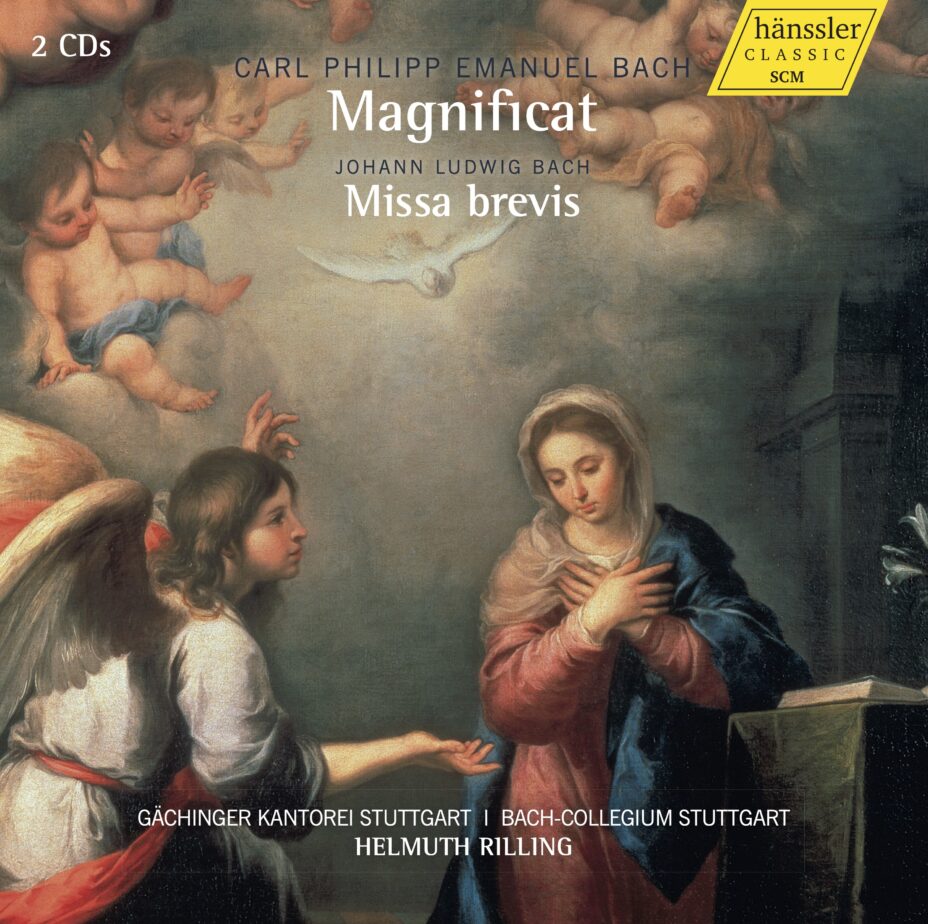
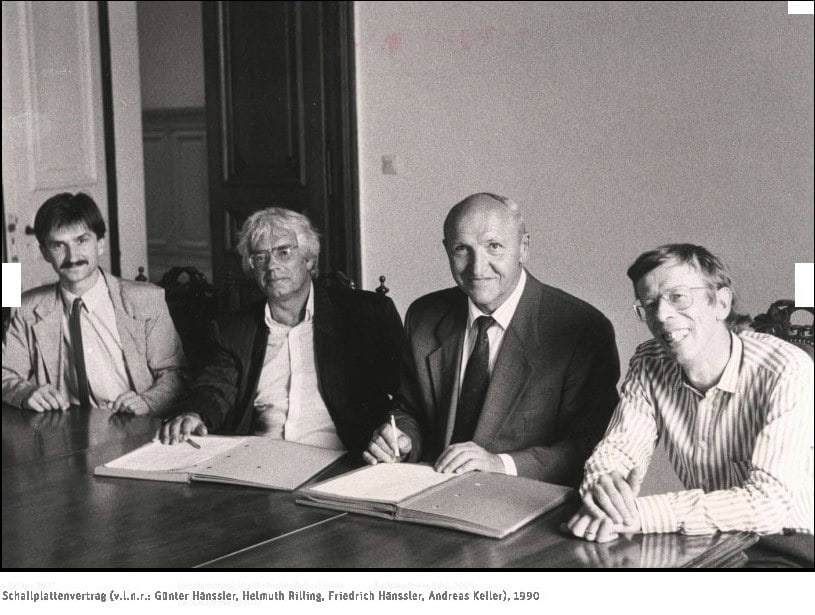
We should talk, while we’re here, about Rilling’s relationship with his recording company, Hänssler Classics, where he is very much the house artist: Rilling discs account for a predominant share of the Hänssler classical catalog. How did that come about? ‘Friedrich Hänssler is a long-time friend of mine. This goes back to the beginning of my own work, in the beginning of the ’60s, when we started out with the Gächinger Kantorei, when we were students and had no money to buy music. He was then the head of his own publishing company and he gave us the music free, so we had the music we needed without paying. This is a wonderful gesture, and from that we developed a friendship. When he took over the complete recording of the church cantatas, this was a great thing; you can imagine that this was an investment of much, much money – and you will not make money from that! But he is a Bach fan: he knows the entire Bach works very well and he likes them very much, and so this was very much a personal decision of his. It’s a small company, but it’s a very active company, and – I can put this in a very simple way – I can do there what I want! This is not so understood. If you take a piece like, say, Mendelssohn Second Symphony or an unknown piece such as the Dvorák Te Deum, he records it – and all this is not cheap. We have this chance, and this is more interesting for me than to be with a big company who will specialise you, put you in a corner, and tell you: ‘You can do this and this and you cannot do that.’ This comes together with that personal relation, which has been very good over the many years, and I am quite happy with it.’ It doesn’t require any special pleading to persuade Hänssler Classics to follow him into, say, these new realms of contemporary music? ‘No, we talk together about what makes sense and what is interesting. He takes up my ideas and if it’s feasible, then we do it!’

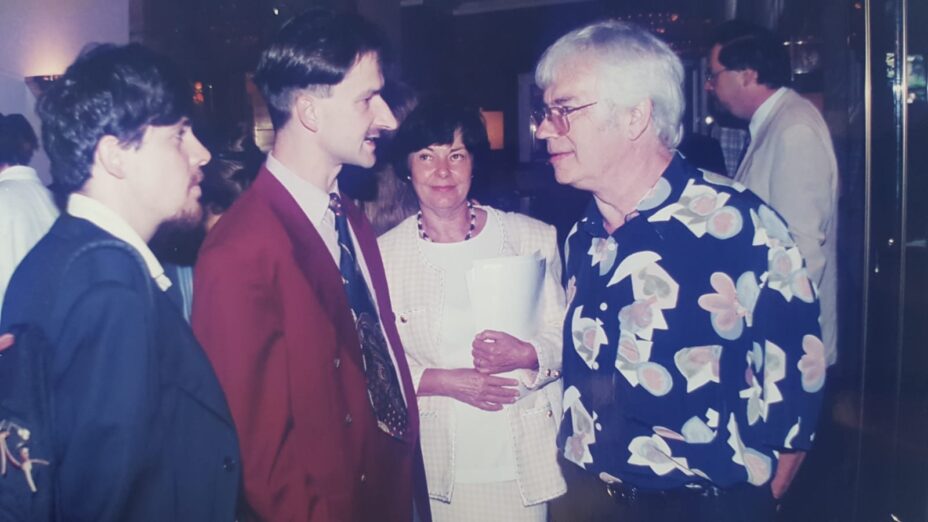


All photos and covers above are courtesy of Hänssler Classics.