Four Hands on Stage: Opera and Symphony Conceived for the Keyboard
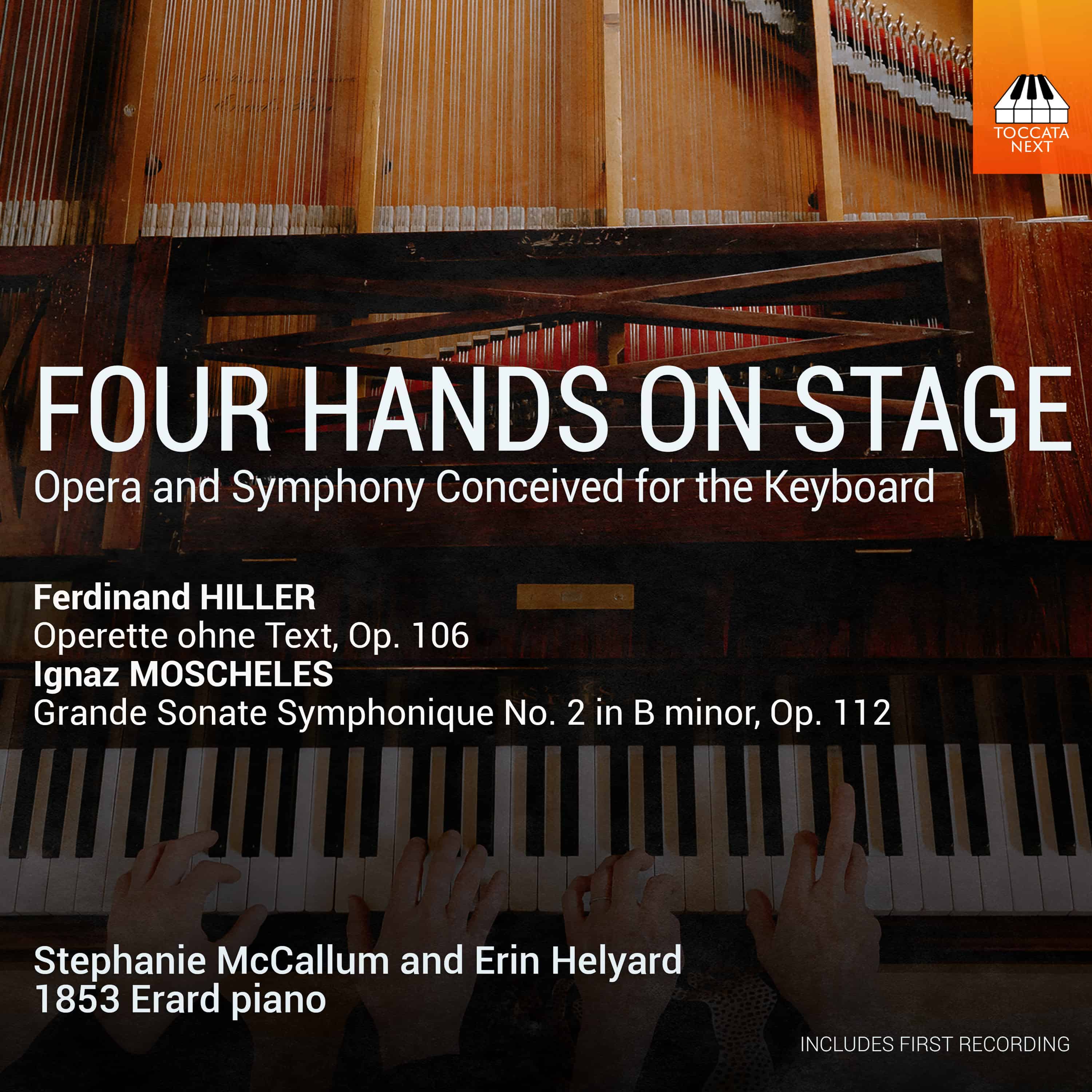
In the days before recorded sound, people usually learned their orchestral music at home, playing it in piano transcriptions for two or four hands. Two German-Jewish composers took that idea a stage further: Ignaz Moscheles, protégé of Beethoven, wrote a symphony for four hands at a single keyboard, and Ferdinand Hiller, friend of Berlioz, Chopin and Liszt, went a step further yet, following Moscheles’ symphony without an orchestra with an opera without singers – both works bold genre-busters well before the term had even been invented.
Stephanie McCallum, primo
Erin Helyard, secondo
1853 Érard Piano
Ferdinand Hiller (1811–85)
Operetto ohne Text, Op. 106 (publ. 1864)* (45:49)
- No. 1, Ouverture (7:39)
- No. 2, Romanze des Mädchens (3:43)
- No. 3, Polterarie (2:54)
- No. 4, Jägerchor und Ensemble (3:41)
- No. 5, Romanze des Jünglings (3:01)
- No. 6, Duettino (2:39)
- No. 7, Trinklied mit Chor (4:02)
- No. 8, Marsch (3:41)
- No. 9, Terzett (3:13)
- No. 10, Frauenchor (4:06)
- No. 11, Tanz (4:20)
- No. 12, Schlussgesang (2:50)
Ignaz Moscheles (1794–1870)
Grande Sonate Symphonique No. 2 in B Minor, Op. 112 (1845)** (33:15)
- I. Andante patetico – Allegro agitato (10:30)
- II. Andante espressivo (6:21)
- III. Scherzo alla tedesca antica (Allegretto) (5:00)
- IV. Andante patetico – Allegro con brio (11:24)
Reviews
There are no reviews yet.