Search Results for "Ferenc Farkas"
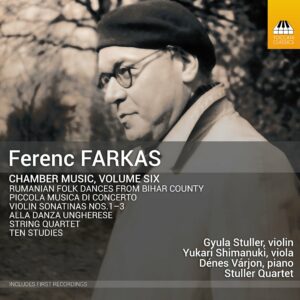
Ferenc Farkas: Chamber Music, Volume Six
This thirteenth release in the Toccata Classics exploration of the music of Ferenc Farkas (1905–2000) puts some of his chamber music with violin in the spotlight – bookended here by two works for string quartet. As with previous albums in this series, the music highlights the characteristics that make Farkas’ music so appealing: catchy tunes, transparent textures, buoyant rhythms, a fondness for Baroque forms and a taste for the folk-music of his native Hungary that marks him out as a true successor to Bartók and Kodály.
Gyula Stuller, violin (5–25)
Yukari Shimanuki, viola (5–14)
Dénes Várjon, piano (15–25)
Stuller Quartet (1–4, 26–28)
Gyula Stuller, Barnabás Stuller, violins
Yukari Shimanuki, viola
Júlia Stuller, cello
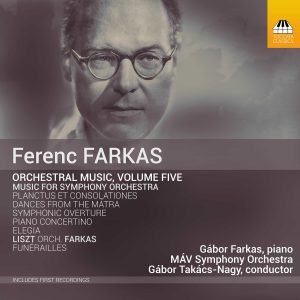
Ferenc Farkas: Orchestral Music, Volume Five
Previous releases in the Toccata Classics survey of the music of the Hungarian composer Ferenc Farkas (1905–2000) have generally presented its lighter side, with quasi-Baroque textures and buoyant good humour. This album shows Farkas working on a larger scale and in generally darker mood, using the full resources of the symphony orchestra in a number of powerful and dramatic works, including two movements from a symphony that he later withdrew – but with a lighter bonne bouche to rounds things off.
Gábor Farkas, piano (Tracks 3 – 5)
MÁV Symphony Orchestra
Gábor Takács-Nagy, conductor
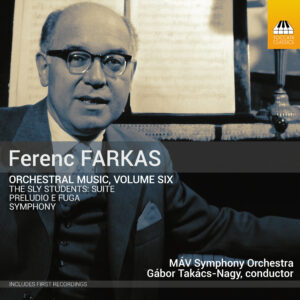
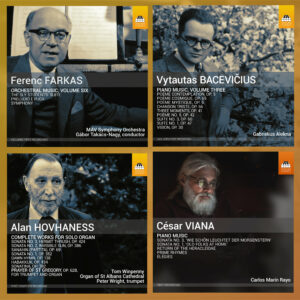
Ferenc Farkas: Orchestral Music, Volume Six
Ferenc Farkas (1905–2000) is often viewed as a gifted miniaturist, sifting through Baroque and popular Hungarian sources to produce glittering orchestral dances of infectious energy. That Farkas does indeed exist, as in the suite from the ballet The Sly Students, but this album also shows an entirely different side to his musical personality. His Preludio e Fuga finds him experimenting with dodecaphony – but he offered a caution: ‘In the twelve-tone theme of the fugue, I did not use Schoenberg’s orthodox model but a softer form, more euphoric, with a rounder and more attractive sonority – I am thinking of works by Luigi Dallapiccola or […] Frank Martin’. His only symphony was a victim of Communist orthodoxy, so severely criticised at Party meetings that Farkas shelved the score. This first complete recording reveals a work that is both big-boned and big-hearted – one of the finest of all Hungarian symphonies.
MÁV Symphony Orchestra
Gábor Takács-Nagy, conductor
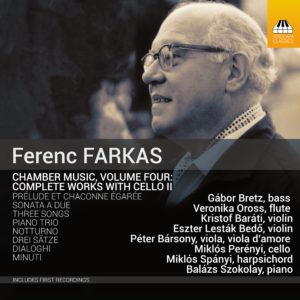
Ferenc Farkas: Chamber Music Volume Four: Works for Cello Volume Two
Toccata Classics continues its exploration of the music of the Hungarian composer Ferenc Farkas (1905–2000) with this second of two releases of his chamber works for cello. As with previous albums in this series, the music here features the characteristics that make Farkas’ music so appealing: catchy tunes, transparent textures, buoyant rhythms and a fondness for Baroque forms and folk-dances. Some of these pieces speak a tougher language that show Farkas to have been in touch with his times, but it is the infectious melodic appeal of most of the music here that carries the day.
Gábor Bretz, bass (Tracks 8–14, 18–20)
Veronika Oross, flute (Tracks 3–5, 21–23)
Kristóf Baráti, violin (Tracks 1–2, 6–7, 24–26)
Eszter Lesták Bedő, violin (Tracks 6–7)
Péter Bársony, viola (Tracks 1–2) , viola d’amore (Tracks 6–7)
Miklós Perényi, cello
Miklós Spányi, harpsichord (Tracks 3–5)
Balázs Szokolay, piano (Tracks 24–26)
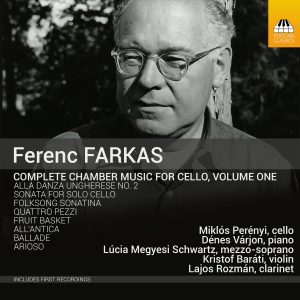
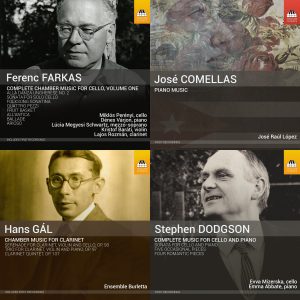
Ferenc Farkas: Complete Chamber Music for Cello, Volume One
Toccata Classics continues its exploration of the music of the Hungarian composer Ferenc Farkas (1905–2000) with this first of two releases of his chamber works for cello. As with previous albums in this series, the music here features the characteristics that make Farkas’ music so appealing: catchy tunes, transparent textures, buoyant rhythms and a fondness for Baroque forms and folk-dances. Some of these pieces speak a tougher language that show Farkas to have been in touch with his times, but it is the infectious melodic appeal of most of the music here that carries the day.
Miklós Perényi, cello
Dénes Várjon, piano (Tracks 1 – 8 , 12–28)
Lúcia Megyesi Schwartz, mezzo-soprano (Tracks 17 – 28)
Kristóf Baráti, violin (Tracks 17 – 28)
Lajos Rozmán, clarinet (Tracks 17 – 28)
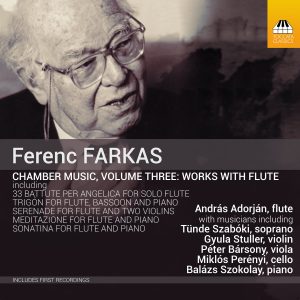
Ferenc Farkas: Chamber Music, Volume Three – Works with Flute
This tenth release in the Toccata Classics exploration of the music of Ferenc Farkas (1905–2000) puts his chamber music with flute in the spotlight. As with previous albums in this series, the music here highlights the characteristics that make Farkas’ music so appealing: catchy tunes, transparent textures, buoyant rhythms, a fondness for Baroque forms and a taste for the folk-music of his native Hungary that marks him out as a true successor to Bartók and Kodály. Some of these pieces speak a tougher language that shows Farkas to have been in touch with his times, but it is the infectious melodic appeal of most of the music here that carries the day.
András Adorján, flute
Tünde Szabóki,soprano (Tracks 9–10, 15–17, 25–27)
Lajos Rozman, clarinet (Tracks 11 – 13)
Andrea Horváth, bassoon (Tracks 11–13, 33–35)
Gergely Kovács, horn (Tracks 28 – 30)
Gyula Stuller, violin (Tracks 4 – 8, 19 – 24)
Márta Abrahám, violin (Tracks 4 – 8)
Péter Bársony, viola (Tracks 15–17, 25–30)
Miklós Perényi, cello (Tracks 15 – 17, 19 – 24)
András Csáki, guitar (Tracks 25 – 27, 31 – 32)
Balázs Szokolay, piano (Tracks 1 – 3, 33 – 35)
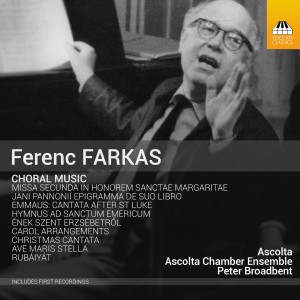
Ferenc Farkas: Choral Music
Toccata Classics continues its exploration of the music of the Hungarian composer Ferenc Farkas (1905–2000) with this selection from his huge output of choral music, ranging in mood from the folklike simplicity of the Missa Secunda in honorem Sanctae Margaritae and his bright carol settings via the asperity of some late a cappella pieces to the fresh and buoyant Christmas Cantata. This recording is also the first by the new London-based chamber choir Ascolta.
Ascolta; Ascolta Chamber Ensemble; Peter Broadbent, conductor;

Ferenc Farkas: Music for Wind Ensemble
Toccata Classics continues its survey of the music of the Hungarian composer Ferenc Farkas (1905–2000) with this sparkling album of works for wind ensemble – from chamber groups to full-blown wind bands. The chief characteristics of all eight scores recorded here are infectious good humour and a high charge of foot-tapping rhythmic energy.
Budapest Wind Symphony
László Marosi, conductor
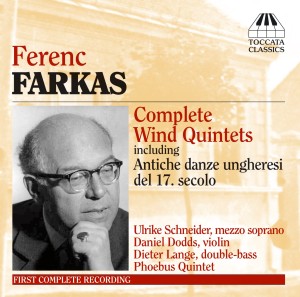
Ferenc Farkas: Complete Wind Quintets
Ferenc Farkas (1905–2000) was one of the longest-lived members of the wave of Hungarian nationalist composers which began with the rise of Béla Bartók and Zoltán Kodály. A student of Ottorino Respighi in Rome, Farkas blended Respighi’s Latin melodiousness with the Magyar folk-heritage that Bartók and Kodály had made the central element of Hungarian music. His Old Hungarian Dances of the 17th Century have become a staple of the wind-quintet repertoire; the other five works on this disk display the same irrepressible joie de vivre.
Ulrike Schneider, mezzo soprano
Daniel Dodds, violin
Dieter Lange, double-bass
Phoebus Quintet, wind quintet
Christoph Bösch, flute
Barbara Zumthurn-Nünlist, oboe
Dimitri Ashkenazy, clarinet
Martinů Roos, horn
Susan Landert, bassoon
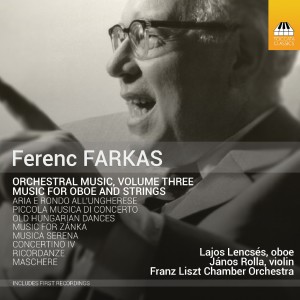
Ferenc Farkas: Orchestral Music, Volume Three — Music for Oboe and Strings
This third release in a series of recordings of orchestral music by the Hungarian composer Ferenc Farkas (1905-2000) — this time featuring works for oboe and strings — highlights the characteristics that make his music so appealing: catchy tunes, transparent scoring, buoyant rhythms and a fondness for Baroque forms and folk-dances. Two chamber pieces featuring the oboe and cor anglais offer textural contrast.
Lajos Lenscés, oboe
János Rolla, violin
Franz Liszt Chamber Orchestra
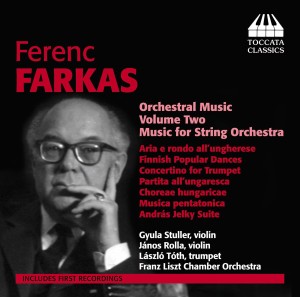
Ferenc Farkas: Orchestral Music, Volume Two
This second release in a series of recordings of orchestral music by the Hungarian composer Ferenc Farkas (1905-2000) — this time featuring works for strings — highlights the characteristics that make his music so appealing: catchy tunes, transparent scoring, buoyant rhythms and a fondness for Baroque forms and folk-dances.
Gyula Stuller, violin
János Rolla, violin
László Tóth, trumpet
Franz Liszt Chamber Orchestra, chamber orchestra

Ferenc Farkas: Orchestral Music, Volume One
This first release in a series of recordings of orchestral music by the Hungarian composer Ferenc Farkas (1905-2000) highlights the characteristics that make his works so appealing: catchy tunes, transparent scoring, buoyant rhythms and a fondness for Baroque forms and folk-dances.
Miklós Perényi, cello
MÁV Symphony Orchestra
Péter Csaba, conductor
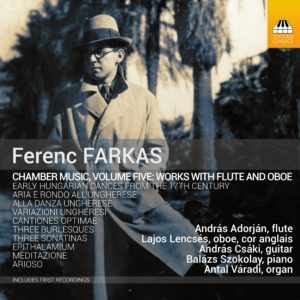
Ferenc Farkas: Chamber Music, Volume Five – Works for Flute and Oboe
This twelfth release in the Toccata Classics exploration of the music of Ferenc Farkas (1905–2000) once again puts his chamber music with flute in the spotlight – here with an oboe chaser. As with previous albums in this series, the music highlights the characteristics that make Farkas’ music so appealing: catchy tunes, transparent textures, buoyant rhythms, a fondness for Baroque forms and a taste for the folk-music of his native Hungary that marks him out as a true successor to Bartók and Kodály. The works in this recording are almost all reworkings – by Farkas or the two soloists here – of music first written for different forces and now taking on a new lease of life.
András Adorján, flute (Tracks 1–15)
Lajos Lencsés, oboe (Tracks 15, 19–22), oboe d’amore (Tracks 23–26), cor anglais (Track 27)
András Csáki, guitar (Track 12)
Balázs Szokolay, piano (Tracks 1–11, 13–21)
Antal Váradi, organ (Tracks 22–27)
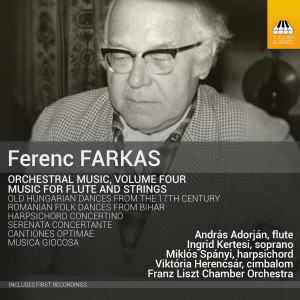
Ferenc FARKAS: Orchestral Music, Volume Four: Music for Flute and Strings
This fourth release in a series of recordings of orchestral music by the Hungarian composer Ferenc Farkas (1905–2000) concentrates on his music for flute and strings, highlighting the characteristics that make his music so appealing: catchy tunes, transparent scoring, buoyant rhythms and a fondness for Baroque forms and folk-dances. Two other concertante pieces – featuring soprano and harpsichord – offer contrast.
András Adorján, flute; Ingrid Kertesi, soprano; Miklós Spányi, harpsichord; Viktória Herencsar, cimbalom; Franz Liszt Chamber Orchestra
October 2016 Bundle
Included in this bundle:
- José Comellas: Piano Music
- Hans Gál: Chamber Music for Clarinet
- Ferenc Farkas: Complete Chamber Music for Cello, Volume One
- Stephen Dodgson: Chamber Music, Volume One: Complete Music for Cello and Piano
*TOCC0345 Not Included in the HDWAV Bundle